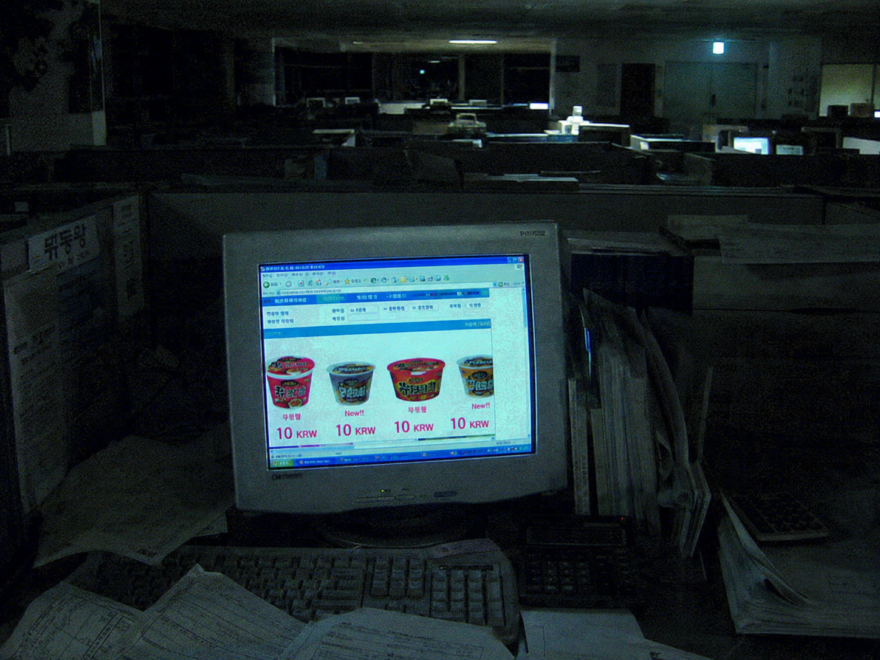
There is a specific category of historical event that resists recovery—not because the evidence was buried, seized, or deliberately classified, but because the infrastructure for recording it never materialized in the first place. The 2009 Dongseo Mall incident belongs to this category. For approximately twenty-four hours across a late-summer Sunday, a private South Korean wholesale food distributor listed individual cups of Nongshim Yukgaejang Sabalmyon—one of the most culturally embedded instant ramen brands in the country’s consumer history—at 10 KRW per unit. The standard retail price hovered between 700 and 800 KRW. More than 6,300 bulk transactions were recorded before the company’s administrative staff returned to the office Monday morning and began the process of cancellation. No major newspaper covered it. No legal filings were archived. No criminal investigation concluded. What remains is a cluster of forum screenshots, community wiki entries, and the persistent oral tradition of Korean internet culture—the precise conditions under which an event stops being history and starts being folklore. This is not a story about a pricing error. It is a diagnostic record of how digital memory fails; how institutional instinct, archival inertia, and the structural invisibility of early e-commerce infrastructure can collectively erase a mass consumer event from the formal historical record within a matter of weeks.
Historical Anatomy
To understand what happened on August 30, 2009, it is necessary to first understand what Korean internet culture looked like in that precise moment. By the late 2000s, South Korea had developed one of the most densely wired and participatory online ecosystems in the world—broadband penetration was near-universal in urban centers, and communities like DC Inside (디시인사이드) and Humor University (웃긴대학) functioned as the country’s primary informal news distribution networks. These were not peripheral spaces; they were high-velocity hubs where information—especially actionable information—could propagate to hundreds of thousands of users within hours. E-commerce, however, had not evolved at the same pace. Dongseo Mall was a private wholesale distributor operating a web storefront—critically, it was not the official retail channel of Dongseo Foods Corp., but an independent commercial entity operating adjacent to the brand. The distinction matters forensically. A private wholesale operation in 2009 ran on infrastructure that was frequently manual, minimally automated, and administered by a small number of personnel. Product listings were often maintained through direct database entry rather than integrated inventory management systems. The conditions for a catastrophic single-keystroke error—a misplaced decimal, a dropped digit—were structurally embedded in the operational model. The commodity at the center of the incident compounds its cultural significance. Yukgaejang Sabalmyon is not merely a popular product; it is a generational artifact. Introduced by Nongshim in the 1980s, the cup ramen variety became synonymous with affordable, immediate sustenance—university dormitories, overnight study sessions, late factory shifts. Assigning it a price of 10 KRW did not simply represent a discount. It represented the complete symbolic inversion of market reality: the most quotidian of consumer objects, reduced to the monetary equivalent of nothing. In 2009, the 10-won coin was already functionally obsolete. Its production cost exceeded its face value. Major retailers had stopped accepting it as tender. The price point chosen—whether by error or breach, as the company would later assert—was not merely low; it was the denomination of a dead currency applied to a living product. That specific absurdity would become the seed of the event’s mythology.
Structural Dissection of the Record
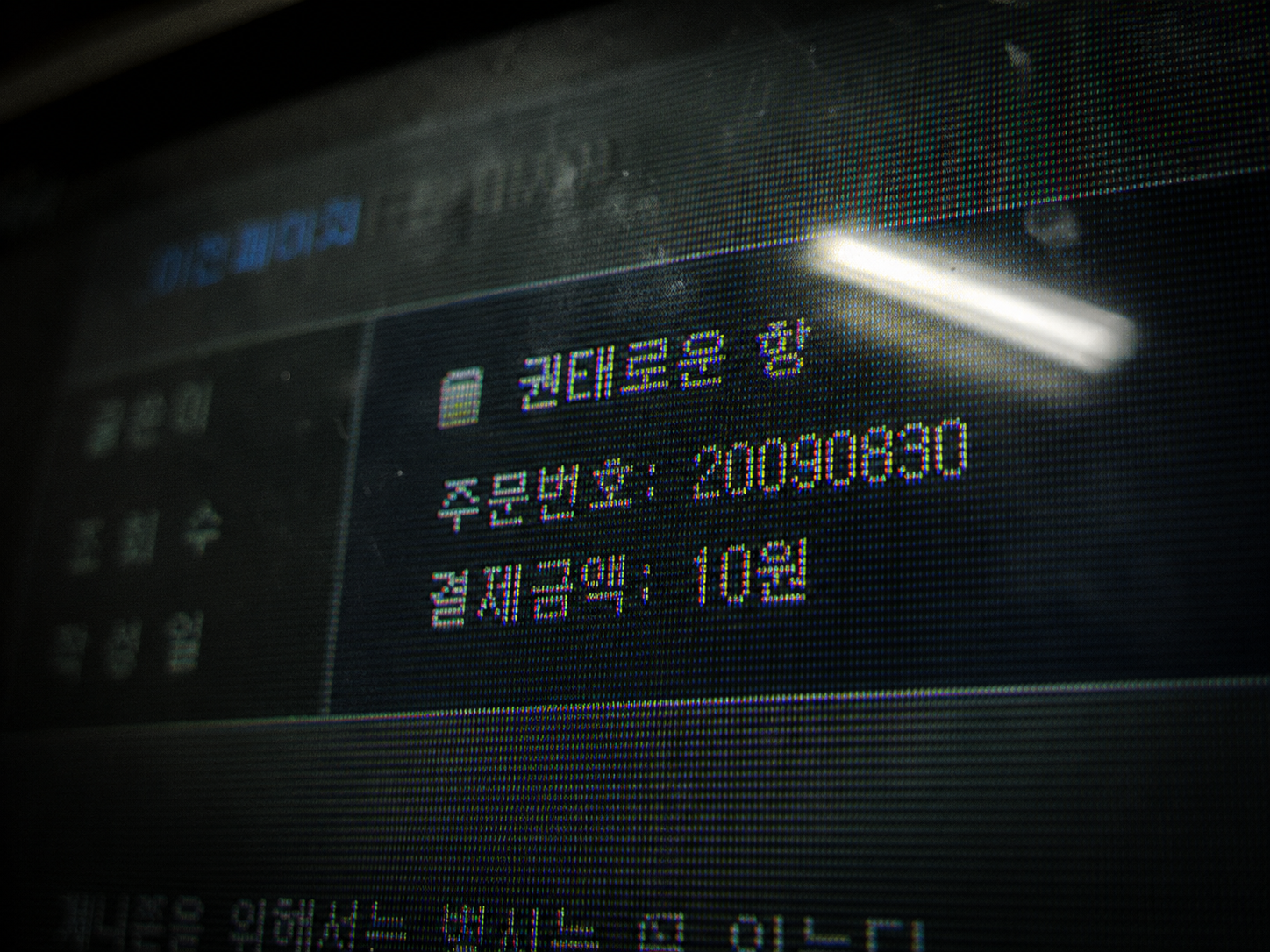
The timeline of the incident reconstructs cleanly from community archives, though its edges remain imprecise. The price field appears to have been altered on August 29, 2009—a Saturday. The following day, Sunday the 30th, links to the product listing began circulating across DC Inside and Humor University. The server absorbed the traffic until it could not; transaction logs recorded over 6,300 unique bulk orders within the approximate twenty-four-hour window. One entry in the community record—elevated by repetition into something approaching legend—describes a single buyer attempting to log a fraudulent order for approximately 100 million units, a transaction valued at roughly 1 billion KRW, with the stated intention of establishing an overseas instant ramen import business. By Monday, August 31st, the company’s staff had returned. Mass text messages were dispatched to buyers notifying them of cancellation. Processing infrastructure strained under the rollback volume; manual refund operations did not conclude until Thursday, September 3rd. The corporate response was immediate and strategically specific. Management formally attributed the pricing anomaly to an external malicious actor—a “cracker,” in the terminology of Korean internet culture’s distinction between destructive hackers and benign ones. This framing was not incidental. By asserting external breach, the company accomplished two simultaneous goals: it deflected internal liability for what was, by all structural evidence, a human keystroke error, and it invoked a legal mechanism—force majeure, interference by an invisible third party—that could be deployed to invalidate the sales contracts. No buyer, under this narrative, had a legitimate grievance; the transaction environment itself had been corrupted by an outside agent. Korean netizens did not accept this framing. The community response was pointed: no criminal complaint was filed, no cybersecurity forensic brief was published, no law enforcement report emerged to validate the cracker narrative. The “hacker defense” was recognized—and explicitly named in forum discussions—as a corporate myth. The irony was structural: the very communities that had exploited the pricing error were also the communities most equipped to identify the deflection as implausible. What the record cannot provide is the thing it most needs: a contemporary institutional account. No major Korean newspaper ran a piece on 6,300 cancelled transactions and a ramen distributor’s claim of server breach. The event existed entirely within informal digital channels—and informal digital channels, in 2009, did not yet possess the archival permanence that screen capture culture and link preservation would later develop.
Psychological Necropsy
For audiences outside South Korea—particularly those immersed in Western internet subcultures organized around analog horror, lost media, and digital archaeology—the Dongseo Mall incident produces a specific and identifiable unease. It is not the pricing error that disturbs; pricing errors are common enough to be mundane. What disturbs is the configuration of absence surrounding it. Western digital culture has developed a significant and growing fixation with what might be called liminal institutional moments—windows of time during which critical infrastructure runs entirely unmonitored, when the machinery of commerce or communication continues operating in the dark, subject to no corrective human intervention. The concept of the “empty Sunday”—a day when corporate offices sit dark while their online systems remain fully accessible—maps directly onto this cultural preoccupation. The Dongseo Mall incident is, structurally, an almost perfect specimen: a web storefront running a corrupted price field across an entire weekend while its administrators remained unreachable, a hyper-online mob operating freely within a commercial system that had no mechanism to stop them. There is also the matter of scale and comedy. The 100-million-unit order is not merely an anecdote; it is a diagnostic data point about the psychology of mass digital opportunism. The buyer was not acting irrationally within the internal logic of the moment—the price was listed, the system accepted the order, and the projection of profit (even on a fraudulent transaction the buyer surely understood could not survive scrutiny) followed a coherent, if deranged, commercial calculus. The dark humor of an individual attempting to corner the global market on 10-won cups of ramen—to build an import empire from a glitch—captures something real about late-2000s internet greed: the belief, briefly and collectively shared, that the system’s error was the individual’s opportunity.
The Evidence of Erasure
The absence of mainstream media coverage is not simply a gap in the record; it is itself a piece of evidence, and it requires analysis rather than lament. In 2009, Korean media operated on a fairly conventional gatekeeping model. Print and broadcast outlets covered commerce stories when those stories involved named corporate entities, legal disputes, or verifiable financial harm to consumers. The Dongseo Mall incident produced none of these in visible form: the company cancelled the orders without fulfilling them, refunded the transactions, and offered an explanation. No consumer could demonstrate material loss; the harm was purely the harm of disappointed opportunism. From a traditional editorial perspective, there was no story—only a strange weekend on the internet that resolved itself by Thursday. The forum culture that documented the incident was, by that period’s standards, largely self-contained. Screenshots were passed between users; community wiki entries were drafted; the event circulated as conversation. But this documentation was fragile in ways that the communities generating it could not fully anticipate. Forum threads are pruned, and platforms migrate. URLs decay as the default archive of human experience. The Wayback Machine’s coverage of Korean-language community sites from 2009 is inconsistent. What survives does so because individual users preserved it—not because any institutional archive ever decided it was worth keeping. The 2025 echo is not incidental context. On Coupang—South Korea’s dominant contemporary e-commerce platform—a system integration error priced 36-pack bulk boxes of the same Yukgaejang Sabalmyon at 5,040 KRW rather than the standard 27,200 KRW. The specific commodity and the specific category of error recurred across a sixteen-year gap; the inventory automation infrastructure surrounding this product has remained, apparently, uniquely susceptible to systemic overflow. The recurrence does not validate the 2009 event—it illuminates it. It demonstrates that the conditions which produced the original glitch were not aberrant; they were endemic to the architecture of Korean e-commerce at every stage of its development.
The Point of No Return
The Dongseo Mall incident will not be recovered in any conventional archival sense. There will be no declassified corporate document, no belatedly published investigative piece, no oral history project that locates the employees who returned to the office on August 31st and spent a week processing refunds. The event exists in its current form—fragmented, folkloric, surviving in decaying forum threads—and that is almost certainly the form in which it will persist. This is the uncomfortable structural reality that the incident models so precisely: the formal historical record does not passively capture events; it actively selects them. Selection criteria in 2009 favored events that generated legal filings, press releases, broadcast segments, or institutional responses with paper trails. A pricing error on a private wholesale web storefront—even one that produced 6,300 transactions in twenty-four hours—met none of these criteria, because the company resolved it quietly and the consumers who participated had no institutional standing to demand accountability. What the incident leaves behind is a methodological problem for anyone attempting to write the history of early Korean e-commerce culture. The sources are community wikis of uncertain provenance, screenshots of unknown archival integrity, and the accumulated memory of a user base that has largely moved on. The corporate “cracker” narrative—unverified, unfalsified, still technically the only official account of record—sits at the center of an evidentiary void. It cannot be confirmed. It cannot be disproven. It exists in exactly the way that institutional myths are designed to exist: as the last word, by an entity with the resources to ensure no other word followed. The 2009 Dongseo Mall glitch is, in the end, a model—not of what Korean internet culture did on a Sunday in late summer, but of what happens to events that lack the institutional infrastructure to survive their own resolution. The mob dispersed. The refunds processed. The offices reopened. And the thing that had happened—a genuine mass event, documented in transaction logs that no one outside the company ever accessed—slipped, without ceremony, into the category of things that the formal record will permanently describe as having never quite occurred.
🔍Search Update: Call to Action
The 3AM Archive is actively seeking surviving contemporary artifacts from the August 30, 2009 run. If you possess unedited screenshots of the 10-won Dongseo Mall product page, transaction confirmation emails, or original text alert logs from the August 31 rollback, contact our forensic research desk. Digital folklore only solidifies when its source links vanish entirely; help us preserve the infrastructure of this empty Sunday before the remaining forum nodes decay completely.
This document is an investigative archival reconstruction based on fragmented public records, media remnants, community accounts, and verified historical sources compiled by The 3AM Archive.
The article examines how incidents, forgotten media, internet folklore, and unresolved public memories evolve through cultural preservation and digital decay.
This is a cultural investigation document — not fictional horror content.
All visual materials used in this post are exclusive AI-generated assets created for The 3AM Archive.
