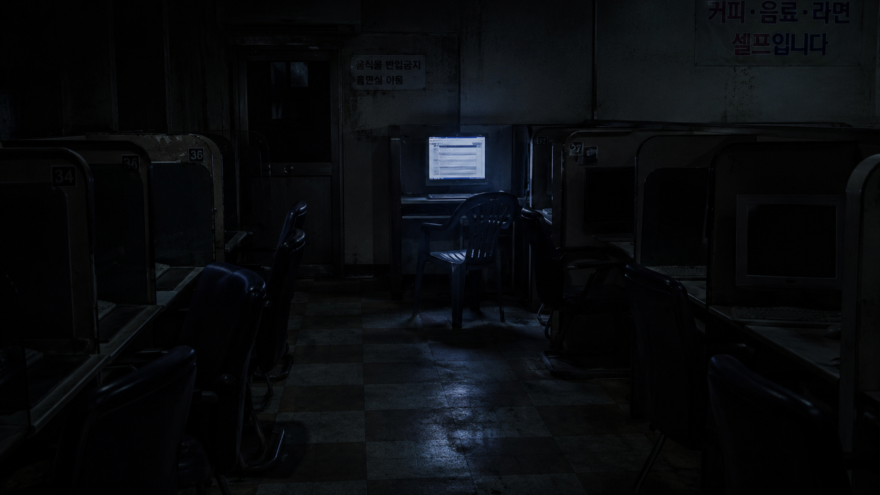
There is a particular quality to archival dead ends that distinguishes them from ordinary historical gaps. A gap implies something was once present—a document misfiled, a witness misremembered, a record degraded by time. A dead end is different. It is the point where the chain of custody simply stops, not because evidence was lost, but because no one was ever authorized to look further. The 2009 DC Inside “Hamster Life Retirement” incident is precisely this kind of dead end; and it is, by any forensic measure, one of the earliest documented cases where the structural limitations of early Web 2.0 governance permanently severed a chain of accountability.
A teenage boy in Geumsan County uploaded a file. Police identified him. He confessed. The case closed. The phantom behind the camera was never found—not because the investigation failed, but because the investigation ended the moment it became inconvenient. What remains is not a mystery in the classical sense. It is a blueprint: an early demonstration of how modern internet infrastructure can absorb acts of extreme cruelty, re-code them as subcultural currency, and ultimately exhaust all institutional appetite for accountability before the original question—who made this?—has been answered.
Historical Anatomy
To understand what happened in late November 2009, it is necessary to first understand what DC Inside was—and what it was becoming.
By 2009, DC Inside had already completed its transformation from a digital camera enthusiast forum into the most combustible subcultural space on the Korean internet. Its gallery system—semi-autonomous topic boards organized around interests, fandoms, and media—had mutated into an ecosystem with its own internal logic, its own hierarchies, and its own mechanisms of status. The Comedy Program Gallery, known colloquially as “Co-Gall,” sat near the top of this hierarchy; it was a high-traffic, high-volatility board where cultural currency was measured in reaction volume, and the fastest route to status was escalation. Shock media was not merely tolerated—it was fuel.
This was also a pivotal moment in Korean internet history more broadly. Broadband penetration was among the highest in the world; mobile data infrastructure was maturing rapidly; and the cultural memory of the 2005 “Dog Poop Girl” incident—the first globally recognized instance of Korean online mob justice—had already conditioned both users and institutions to understand that the internet could function as a social enforcement mechanism. What it had not yet conditioned anyone to understand was the inverse: that the same infrastructure could absorb and re-contextualize content with no coherent accountability structure capable of following it.
Internationally, 2009 was the year YouTube was consolidating its dominance while simultaneously struggling with the logistical and legal implications of user-generated content at scale. Automated moderation was in its infancy. Content that violated emerging community guidelines was being removed—but removal, in those early years, was not archiving. Deletion meant deletion. Metadata evaporated. Upload timestamps disappeared. Source accounts were scrubbed without forensic preservation. The platform was performing the administrative function of content governance while simultaneously destroying the evidentiary record that any future investigation would require.
It was into this specific structural gap that the video fell.
Structural Dissection of the Record
The public record of this incident is remarkably thin given the scale of the moral panic it produced. What can be established with confidence is this: a user operating under the pseudonym “Ggyo” uploaded an animated GIF—later identified as a compressed video file—to DC Inside’s Comedy Program Gallery in late November 2009. The file was titled 햄스터_인생_퇴갤.gif; the phrase “퇴갤,” meaning retirement from a gallery board, was deployed here as a dark colloquialism for death. The content depicted the killing of a hamster using a kitchen blender. The recontextualization—the slang title, the gallery-specific framing—was the creative act Ggyo contributed. The footage itself came from elsewhere.
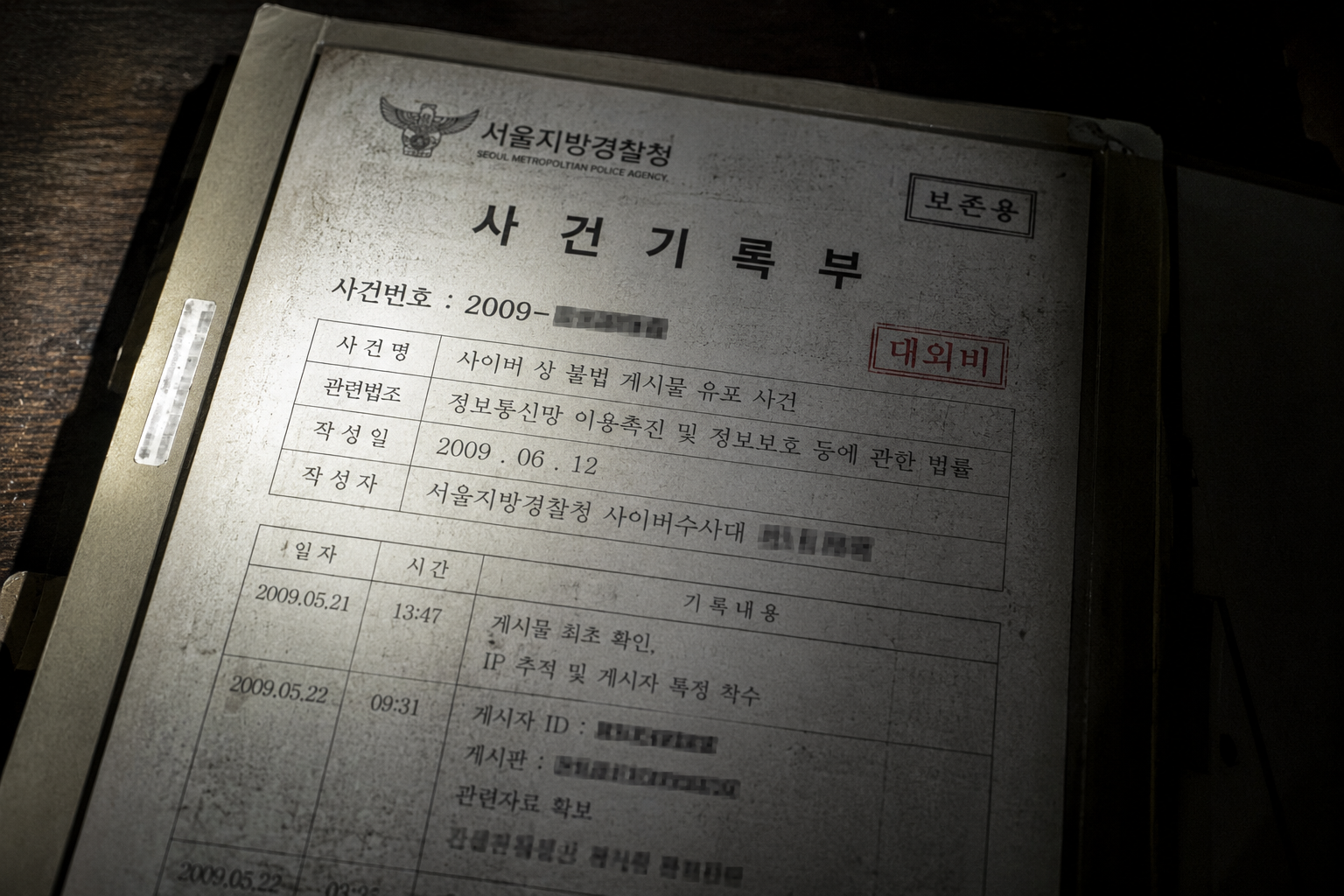
On December 9, 2009, the animal advocacy organization CARE filed a formal criminal complaint with the Seoul Dongdaemun Police Station. The complaint triggered a genuine investigative response; within a compressed timeframe, police identified Ggyo as a male teenager residing in Geumsan County, South Chungcheong Province. Under interrogation, the teenager confirmed what the file’s metadata—had it been preserved—might have indicated anyway: he had downloaded the video from YouTube. He had not created it. He had repackaged it.
Here the record fractures. The original YouTube link, whatever it was, no longer existed by the time investigators went looking. The content had been removed during what appears to have been a routine moderation sweep—the kind that YouTube was conducting across its platform during this period as it scaled automated detection systems. No archival copy was preserved. No account information was retained. The jurisdictional logic of early internet law enforcement did the rest: because the act of creation had not occurred in South Korea, and because the source infrastructure was operated by an American company outside domestic legal reach, Dongdaemun Police closed the case. No criminal charges were filed. The original creator was never identified.
What is notable about the documentary anomalies here is their administrative character. This is not a case where records were suppressed or witnesses intimidated. It is a case where the standard operating procedures of multiple institutions—police, platform, prosecutor—each individually reasonable, produced collectively a permanent archival void. The police were not wrong to close a case without jurisdiction. YouTube was not wrong to delete content that violated its policies. But the sequence in which these actions occurred ensured that the evidentiary trail was destroyed before anyone with investigative authority had thought to preserve it.
The internal cultural record is equally fractured, and in different ways. A significant discrepancy exists regarding the originating gallery. Mainstream media coverage in December 2009—including reports in Ohmynews and Kyeongin Ilbo—located the upload within the Comedy Program Gallery and used this to frame the incident as symptomatic of Co-Gall’s toxic culture. Internal internet historians, operating within later retrospective accounts in DC Inside’s own community spaces, consistently disputed this framing; the file, they argued, originated in the more insular Online Game Gallery, and its migration to Co-Gall was a secondary event. The discrepancy has never been formally resolved. Both versions persist in parallel, which is itself a diagnostic symptom: when the official record is thin enough, subcultural counter-narratives fill the space and acquire their own weight.
Psychological Necropsy
The question of why this incident retains psychological gravity—why it functions as a founding case study rather than a footnote—requires examining what it made visible rather than what it documented.
For a Western audience encountering this case through the lens of retrospective internet history, the discomfort is not primarily about the content itself. Shock media had existed online long before 2009; the mechanisms of its distribution were already understood. What disturbs is the particular shape of the institutional response—and the specific moment at which it stopped. There is something almost procedurally perfect about the way accountability evaporated: the local actor was found; the local actor’s responsibility was bounded by the act of redistribution rather than creation; the original creator existed outside the available investigative frame; the case closed. The system worked, in the narrow technical sense, and produced a permanent mystery.
This maps onto a deep anxiety in Western digital culture about the relationship between jurisdiction and accountability—an anxiety that has only intensified in the years since. The implicit promise of early internet governance was that bad actors could be found; that the architecture of network communication left traces that, with sufficient institutional will, could be followed. The Geumsan teenager’s confession validated one half of this promise while permanently invalidating the other. A local node was identified. The source node was gone—not hidden, not encrypted, but simply absent, erased by the routine operations of platform moderation. The system had found the carrier and lost the origin.
The phantom creator thus functions, within digital folklore, as something more precise than a generic mystery: he or she is a demonstration of the outer limit of early Web 2.0 accountability infrastructure. The camera was in someone’s hands. That fact is not in dispute. But the architecture designed to connect cameras to identities had already, by the time anyone looked, consumed its own evidence.
The Evidence of Erasure
The mechanisms by which this incident faded from accountability into folklore are worth tracing with some precision, because they are not uniform. Several distinct erasure processes operated in parallel, on different timescales, producing different kinds of residue.
The first was the platform deletion itself—instantaneous, automated, absolute. When YouTube removed the source video, it did not archive it; early-period YouTube removals frequently left no preserved copy anywhere within the platform’s own infrastructure. The file entered what archivists of digital media sometimes call “pre-preservation deletion”—removal before any institutional memory had decided the content was worth retaining, even for evidentiary purposes. This kind of erasure is total. It leaves no negative space, no detectable absence; it simply produces non-existence.
The second mechanism was the semantic mutation of the incident’s own language. The phrase hoem-seo-in-saeng-toe-gael—Hamster Life Retirement—underwent what linguists of online culture would recognize as accelerated semantic bleaching. Within Korean internet boards, by the early 2010s, the phrase had detached almost entirely from its referent. It circulated as a dark-ironic template, a tonal marker indicating a certain register of black humor, increasingly divorced from any specific knowledge of what “Hamster Life Retirement” had originally meant. The incident was not forgotten; it was metabolized. Its language survived as a kind of shell, drained of specific content, circulating as cultural texture.
The third mechanism was the closure of the official case itself—which, paradoxically, created the conditions for mythology. A case that remains open can be updated; new evidence can enter the record; the narrative can be revised. A case that closes with an acknowledged gap at its center becomes, instead, a fixed object. The Dongdaemun investigation produced a definitive finding: the original creator is unidentified and unjurisdicted. This is not ambiguity; it is a formal conclusion. But formal conclusions that contain permanent gaps invite mythological elaboration in ways that ongoing investigations do not.
The fourth mechanism was retrospective blame displacement—the ongoing dispute between Co-Gall and Online Game Gallery origin narratives. This inter-gallery territorial argument ensured that the incident remained legible within internal internet culture while also ensuring that no stable, verifiable version of its basic facts ever crystallized. Two communities with conflicting investments in the narrative maintained two incompatible accounts, and the documentary record was too thin to arbitrate between them.
The Point of No Return
In December 2009, Korean police closed a case because the trail crossed a border they could not follow. This was, at the time, a reasonable institutional decision; it reflected the actual limits of domestic jurisdiction over international platform infrastructure. What it also did—without anyone intending this, without anyone even particularly noticing—was establish a template.
Every major internet incident since has had to negotiate some version of the same structural problem: the local actor is findable; the origin actor may not be; the platform infrastructure that connects them operates under its own logic of deletion, which is indifferent to evidentiary preservation. The 2009 hamster incident was not the first time this dynamic played out—but it may be one of the earliest cases where the full sequence was documented in real time, from viral emergence through legal complaint through investigation through formal archival closure.
The uncomfortable insight is this: the phantom creator was not protected by encryption or anonymity technology or sophisticated operational security. The phantom creator was protected by the ordinary operation of a content moderation system doing exactly what it was designed to do—removing violating content at scale, quickly and completely, in a period before anyone had decided that “quickly and completely” had costs worth examining.
Digital memory is not neutral storage. It is the cumulative output of decisions made by platforms, institutions, and users about what to retain, what to delete, and what evidentiary standard applies. It serves as the default archive of human experience. In 2009, YouTube’s decision and Dongdaemun Police’s decision and CARE’s decision all aligned, in sequence, to produce a record with a permanent hole at its center. No individual failure of will or competence produced this outcome. The outcome was structural.
The blender phantom remains unidentified not because the internet is a lawless space—but because it is a governed one, and the governance, in this case, ran faster than the accountability. That gap has not closed. If anything, the infrastructure has grown more sophisticated, and the deletions have grown more thorough, and the archival dead ends have multiplied. The 2009 case is not a relic. It is a model.
🔍Search Update: Call to Action
For researchers within the Western lost media and digital archeology communities, the 2009 YouTube source metadata remains a critical point of interest. If you possess archived logs, forum scrapings, or deep-web index references originating from international shock boards between September and November 2009 that contain matching timestamps or hashes linked to this footage, contact the archive directory directly.
This document is an investigative archival reconstruction based on fragmented public records, media remnants, community accounts, and verified historical sources compiled by The 3AM Archive.
The article examines how incidents, forgotten media, internet folklore, and unresolved public memories evolve through cultural preservation and digital decay.
This is a cultural investigation document — not fictional horror content.
All visual materials used in this post are exclusive AI-generated assets created for The 3AM Archive.
