
There is a particular kind of cultural amnesia that doesn’t arrive gradually. It arrives with a server update, a policy revision, a single administrative decision made in a glass office somewhere—and then, without ceremony, ten years of documented human behavior simply cease to exist in any publicly accessible form. What remains isn’t silence so much as the specific shape of something that was removed: outlines, ghost traces, the memory of a presence rather than the presence itself.
The case of “Guk-Geo-Bak”—a compressed rendering of Gukmin Geopum Park Byung-ho, translating roughly as “National Bubble Park Byung-ho”—is, on its surface, the story of one obsessive individual waging a decade-long harassment campaign against a South Korean professional baseball player. At 47,452 verified unique comments across ten years, the record is statistically extraordinary. What makes it genuinely disturbing, however, is not the volume; it is the architecture that made the volume possible, the public that made it culturally significant, and the institutional decision that made the entire record irretrievable in a single afternoon.
This is not a story about a troll. It is a story about what a particular kind of digital infrastructure reveals when pressure is applied to it for a decade.
Historical Anatomy
To understand how one anonymous account became a fixture of South Korean sports media, it is necessary to understand what Naver News represented in the early 2010s Korean internet ecosystem—not merely as a platform, but as an informational monoculture.
Unlike Western media environments, where audience attention fragments across Reddit, Twitter, independent sports blogs, and local broadcast forums, South Korean internet culture during this period was organized almost entirely around a single portal. Naver did not merely aggregate news; it determined which articles were read, which comments were visible, and—critically—which opinions were understood by millions of readers as representing national consensus. The platform’s “Best Comment” algorithm, locally termed Be-Dat, functioned as a real-time popularity engine: comments that accumulated upvotes first appeared at the top of every article, regardless of accuracy, regardless of tone. A single motivated user who understood the algorithm’s timing mechanics could, in principle, position their opinion as the dominant public response to any given story before competing voices had an opportunity to load the page.
Guk-Geo-Bak understood this with apparent precision.
The account’s origins predate its most famous target. Between 2009 and 2012, the user operated under the alias Solipbaram—Pine Wind—directing consistent criticism toward Lee Seung-yeop, one of Korean professional baseball’s most decorated hitters, during a period of public performance decline. These early years appear, in retrospect, to constitute a kind of apprenticeship; the portal’s infrastructure was comparatively primitive, and the user remained in relative obscurity. The targeting of Lee Seung-yeop was consistent but not culturally transformative.
The mutation arrived in 2013.
Structural Dissection of the Record
When the account rebranded and redirected its focus toward Nexen Heroes slugger Park Byung-ho, something qualitatively different began. The behavioral pattern documented across the subsequent six years—from 2013 through November 2019—presents a profile that defies standard categorization as trolling. Trolling implies opportunism; what emerged here was systematic.
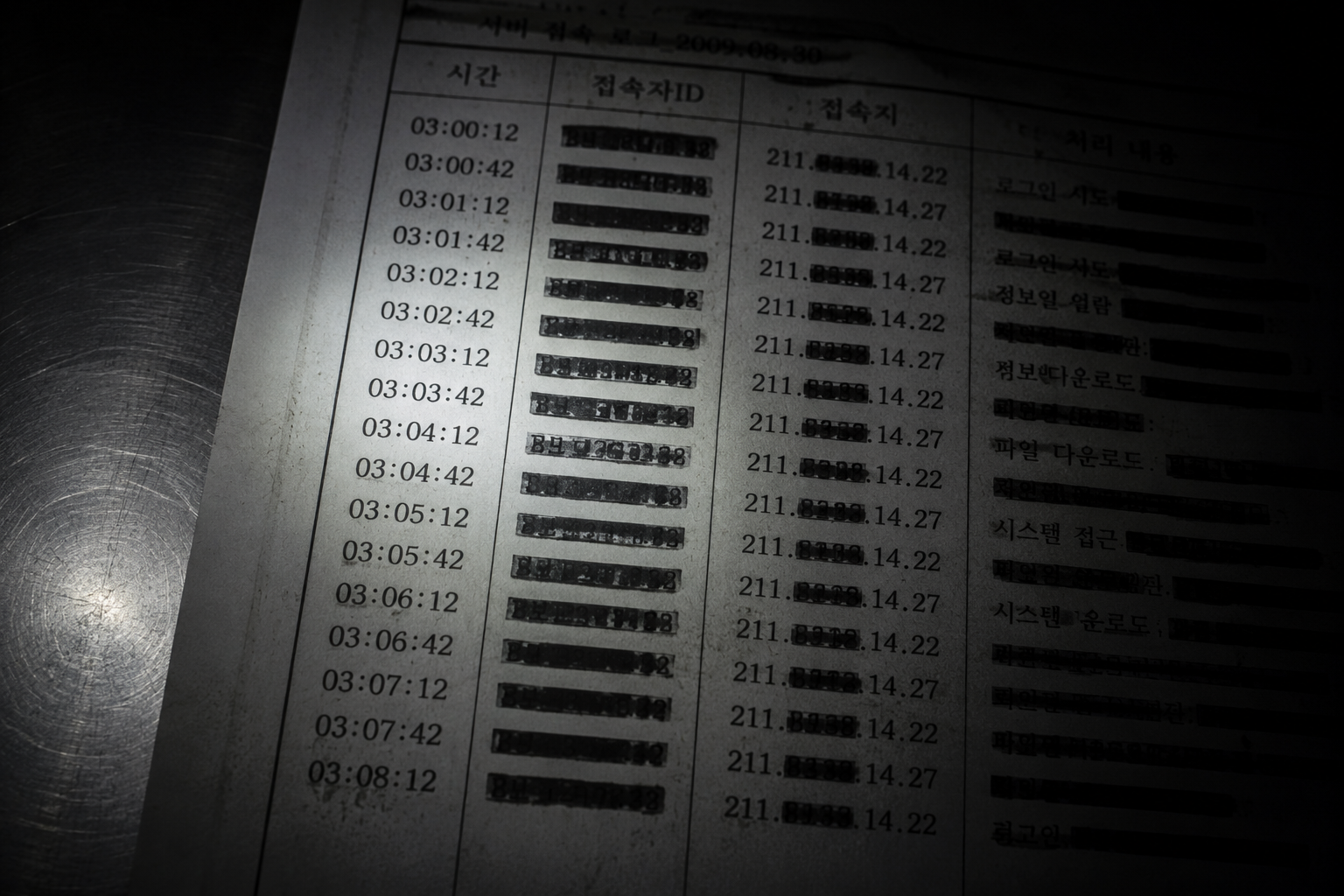
The comment response windows were logged between 30 seconds and 3 minutes following any article publication about Park—including pieces released at midnight, 3:00 AM, and in the pre-dawn hours. Every time zone, every irregular publication cycle, every obscure post-game report: the account was there, first. For a human being to sustain this across a decade implies either an extraordinarily distorted relationship with sleep and conventional social rhythms, or something more infrastructurally sophisticated than a single person with a keyboard.
This is where the record’s most consequential anomaly emerges—the gap between documented fact and the public’s capacity to accept it as human behavior. The Naver automation myth, which circulated widely within Korean baseball fan communities and beyond, posited that Guk-Geo-Bak was not a person at all; rather, it was a linguistic AI bot, engineered either by an eccentric software developer or by a sports gambling syndicate with financial interest in suppressing Park’s market valuation. The theory is technically plausible in outline, though no evidence ever emerged to substantiate it. It also reflects something psychologically significant: the human mind’s resistance to acknowledging that sustained, pathological obsession is an ordinary human capacity.
What the documented behavioral record actually shows is more nuanced and, in certain respects, more chilling than automation. To avoid IP bans and maintain algorithmic credibility with the platform’s upvote infrastructure, the account did not post exclusively negative content. It cultivated a persona—what Korean internet users termed a Yaj-Al profile, suggesting a kind of savant-level authority—by writing detailed, analytically credible praise for competing teams and players. The result was a constructed identity: a knowledgeable baseball observer whose hostility toward Park Byung-ho appeared to function not as irrational hatred but as expert judgment. The public, encountering this persona repeatedly in the Best Comment position, absorbed it as a legitimate voice rather than an obsessive one.
The 2014–2015 period marks what available records identify as the account’s cultural zenith. During stretches when Park underperformed, the comment sections beneath his articles became something that Korean internet users described as Seongji—holy ground, a digital shrine—with regular visitors arriving to observe and participate in the ritual humiliation. The phrase “Mok-run” (neck home run), which the account coined to characterize Park’s home runs as fraudulent artifacts of small stadium dimensions, migrated from comment sections into casual fan discourse and eventually—in a development that captures the specific absurdity of the era—was adopted openly by professional television broadcast commentators. A term engineered for targeted harassment became sports vocabulary.
In February 2018, the account produced what may be its most structurally revealing moment: temporarily departing the sports ecosystem entirely to post a single comment about a national Olympic skating scandal, unrelated to baseball. The comment accumulated over 100,000 upvotes within hours—a figure that places it among the most-engaged posts in Naver News history for that period. This was not a person with a niche obsession contained within sports culture. This was an account with demonstrated capacity to influence mainstream national discourse at scale, which had—for reasons that remain opaque—chosen to spend most of its operational existence focused on one athlete.
Psychological Necropsy
The Western imagination has a framework for stalking. It is largely forensic: a specific victim, a specific perpetrator, a legal apparatus that eventually intervenes. What Guk-Geo-Bak represents doesn’t map cleanly onto this framework, and that categorical failure is precisely why the case produces unease when examined from outside the Korean internet context.
The account was not hidden. It was not operating in the dark corners of anonymous imageboards or encrypted channels. It was the top comment. It was the first thing millions of readers saw beneath any article about Park Byung-ho for the better part of six years. Its presence was so consistent, so algorithmically dominant, that the broader public—including professional broadcasters—integrated it into the shared vocabulary of Korean baseball without apparent discomfort. The stalker was not lurking; the stalker was curating the national conversation about the target, in public, for a decade, and the platform’s architecture made this not only possible but structurally rewarded.
This is the element that does not translate neatly: the degree to which the harassment was socially co-constructed. The account did not operate in isolation. It operated within a community that found the ritual entertaining, that returned to Park-related comment sections specifically to observe the exchange, that eventually deployed the account’s invented slang without attribution. By the time the Nexen Heroes front office issued public legal warnings—including one delivered during a live television broadcast—the cultural integration was already complete. The troll had become a fixture. Fixtures are not removed; they are renovated.
The Evidence of Erasure
The account’s disappearance on November 25, 2019 was abrupt and total. No final post, no apparent legal resolution, no identity disclosure. The record simply stopped. Given the documented pattern—continuous, near-compulsive posting for six years—an abrupt cessation suggests either external intervention sufficient to produce immediate compliance, or an internal event of comparable disruption. No public evidence clarifies which. The record ends; the person, if there was a single person, does not appear in any subsequent public context.
Nine months later, on August 27, 2020, Naver announced the permanent abolition of its sports comment infrastructure. The decision followed a series of high-profile cyberbullying tragedies involving Korean public figures—actors and entertainers who died following sustained harassment campaigns conducted through precisely the same algorithmic comment architecture that had made Guk-Geo-Bak possible. The platform’s response was not moderation, not reform, not algorithmic redesign. It was deletion: the entire framework, and with it every comment ever posted within it, wiped from public access in a single policy implementation.
This is the mechanism of erasure worth examining carefully. The 47,452 documented comments did not fragment slowly over time; they did not decay through neglect or migrate through successive platform redesigns. They were administratively removed, all at once, by the same institutional hand that had constructed and maintained the system that produced them. The data almost certainly persists in some form within Naver’s internal infrastructure—server logs, archived databases, compliance records—but it is inaccessible by design, sealed behind corporate data governance in a way that renders it functionally nonexistent for any researcher, journalist, or historian who might want to examine it.
What the Korean baseball fan community retains is something stranger than documentation. The account’s invented nickname for Park Byung-ho—Geo-Bak, the compressed form—has survived into contemporary usage, detached from its origin. Younger fans apply it as an affectionate shorthand for the player himself, entirely unaware that the term was engineered specifically to reduce him to a fraudulent caricature. When Park retired following the 2025 season, mainstream retrospectives—including KBS broadcast segments—treated Guk-Geo-Bak as an inescapable element of the player’s historical record; a dark co-author of his public legacy. The cyberstalker achieved a kind of permanence that the platform’s deletion could not revoke. The permanence resided not in the comment record but in language itself, cementing the moniker as the default archive of human experience within this digital subculture.
The Point of No Return
The Guk-Geo-Bak case presents a problem that is not resolvable through the standard categories available to discussions of internet harm.
It is not primarily a legal problem, though legal threats were made. It is not primarily a moderation problem, though the platform’s architecture enabled it. It is an archival problem—and the archive’s destruction is where the case becomes genuinely instructive about how digital memory functions in practice rather than in theory.
We tend to assume that the internet preserves. The cultural assumption, particularly in Western contexts shaped by the Wayback Machine and the informal archival instinct of platform communities, is that digital records accumulate rather than disappear; that everything leaves a trace sufficient for reconstruction. The Guk-Geo-Bak record demonstrates the assumption’s limits with clinical clarity. A decade of behavioral data, documented in real time by millions of witnesses, managed by a corporate infrastructure operating at national scale—and the single most complete repository of that data is now the collective memory of a baseball fan community whose recall is shaped partly by the mythology the stalker himself constructed.
The irony at the center of this case is not incidental. Naver’s comment infrastructure was eliminated because it had become a machine for harm—and it had become a machine for harm partly because its design rewarded the specific behavioral profile that Guk-Geo-Bak exemplified. The abolition removed the harm and the record simultaneously, producing a situation in which the primary surviving documentation of how the system operated at its most destructive is fragmentary, community-sourced, and partially authored by the perpetrator.
What remains, then, is the shape of an absence: the specific contours of something removed, legible only by inference, by the linguistic residue embedded in a player’s nickname, and by the decision of a corporation to stop counting.
🔍Search Update: Call to Action
For researchers, digital archeologists, and lost media collectors in the Western community: the complete 47,452-post comment history of Guk-Geo-Bak is currently classified as lost digital media. While partial HTML string captures, screenshot scrapings from DC Inside, and “Holy Ground” (Seongji) compilation threads exist across archaic Korean mirror forums, a definitive, chronological raw text file has never been compiled in English databases.
If you possess text scrapings, private database logs, or archived portal files targeting Park Byung-ho between 2013 and 2019, please reach out to our archival team. Reconstructing this anomaly is vital to charting early corporate algorithmic dominance and the structural preservation of dark web folklore.
This document is an investigative archival reconstruction based on fragmented public records, media remnants, community accounts, and verified historical sources compiled by The 3AM Archive.
The article examines how incidents, forgotten media, internet folklore, and unresolved public memories evolve through cultural preservation and digital decay.
This is a cultural investigation document — not fictional horror content.
All visual materials used in this post are exclusive AI-generated assets created for The 3AM Archive.
