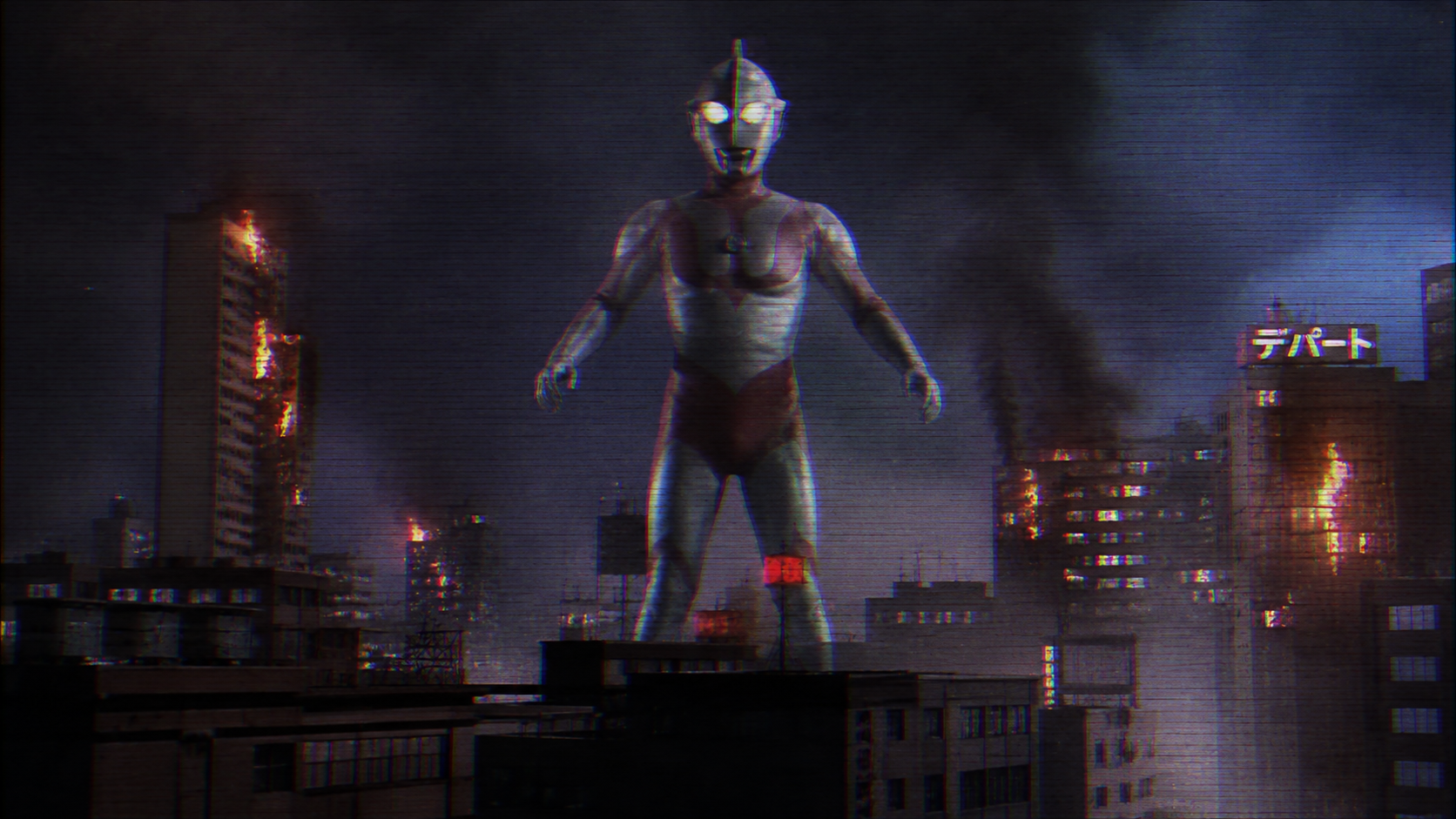
The human brain, under certain conditions, will manufacture an ending. It does this not out of creativity but out of biological necessity; the open narrative loop—the unresolved threat, the unanswered question—produces a low-grade cognitive alarm that the mind will silence by any means available. Usually, this means forgetting. Occasionally, it means invention. And in at least one documented case, concentrated in the Saitama prefecture of Japan in the autumn of 1986, it produced something rarer and more clinically interesting: a collective false memory so structurally coherent that it persisted, uncontested, for nearly three decades.
The urban legend is simple in its contours and devastating in its implications. Somewhere between the 1980s and the 2010s, a persistent story circulated through Japanese pop culture—particularly in Saitama—about a “Lost Ultraman Finale” in which the iconic giant hero turns evil and methodically incinerates Tokyo. No rescue. No reversal. The city burns; the hero does not return. The story spread with the specific texture of childhood trauma: vivid, emotionally saturated, and resistant to the logic that should have made it impossible.
The hero in question was not, in fact, Ultraman at all. The show was Iron King. The incident was not a suppressed episode. It was a scheduling error. But the scheduling error produced something more durable than a suppressed episode ever could—and that is the subject of this autopsy.
The Cultural Anatomy: Iron King, TV Saitama, and the Mechanics of Postwar Hero Culture
To understand what broke in 1986, one must first understand what was being broadcast. Iron King (アイアンキング) was a tokusatsu action series produced by Toho subsidiary Senkosha and aired originally in 1972. It occupied the specific cultural register of early-70s Japanese genre television: a giant transformation hero, alien antagonists, and the implicit moral grammar of postwar Japanese children’s media—the universe tends toward restoration; the hero falls and rises; Tokyo, whatever damage it absorbs, endures.
By 1986, Iron King was not new programming. It was archive material, re-broadcast on TV Saitama—a regional UHF station serving the greater Saitama area—to an audience of children who had no prior relationship with the original 1972 run. For this generation, the re-broadcast was the first contact. The show was not a nostalgic object; it was simply the show. This matters enormously for what followed, because it means the 1986 audience had no external reference point—no older sibling’s memory, no parental correction—to contest what the broadcast showed them.
What TV Saitama showed them was this: Episode 25, titled “Iron King’s Great Crisis!” (アイアンキング大ピン치!), in which the protagonist is captured and brainwashed by the series’ alien antagonists, the Titanians. Under their control, Iron King does not stand down. He acts. He turns his enormous capacity for destruction on the city he was constructed, narratively and symbolically, to protect. The episode ends on this image—the brainwashed giant, the burning city, the uncompleted crisis—because it was designed as the first half of a two-part conclusion. Episode 26, “The Great Tokyo War” (東京大戦争), would have resolved the arc. TV Saitama did not air Episode 26.
The station’s scheduling decision—whether deliberate, logistical, or simply the result of a programming block running short—has not been definitively explained. What is documented is its effect. The broadcast terminated at the cliffhanger. No “To Be Continued” card was displayed. For the children watching in Saitama that day, the narrative simply stopped; the hero stayed evil, Tokyo stayed burning, and the television moved on to whatever came next.
The cultural anatomy of this moment requires attention to what postwar Japanese children’s hero media was actually encoding in its audience. Tokusatsu heroes—Ultraman, Kamen Rider, Iron King—were not merely entertainment figures. They functioned as secular mythology; as animated proof that the forces of destruction, however overwhelming they appeared, were ultimately answerable to a designated protector. The moral architecture was reliable. That reliability was the point.
TV Saitama, through an act of administrative indifference, performed a surgical removal of that reliability—leaving only its inverse.
Structural Dissection: The Anatomy of a Mechanical Mandela Effect
The Tokyo Inferno legend belongs to a specific and underexamined category of lost media phenomenon. It is not a suppressed work; the footage of Episode 26 existed in archives throughout the decades the legend circulated. It is not a dream or a hoax in the conventional sense; the emotional core of the memory was grounded in a real broadcast event. What it represents, with unusual forensic clarity, is what might be called a Mechanical Mandela Effect—a collective false memory produced not by cognitive drift or suggestibility, but by a literal, traceable malfunction in the information delivery system.
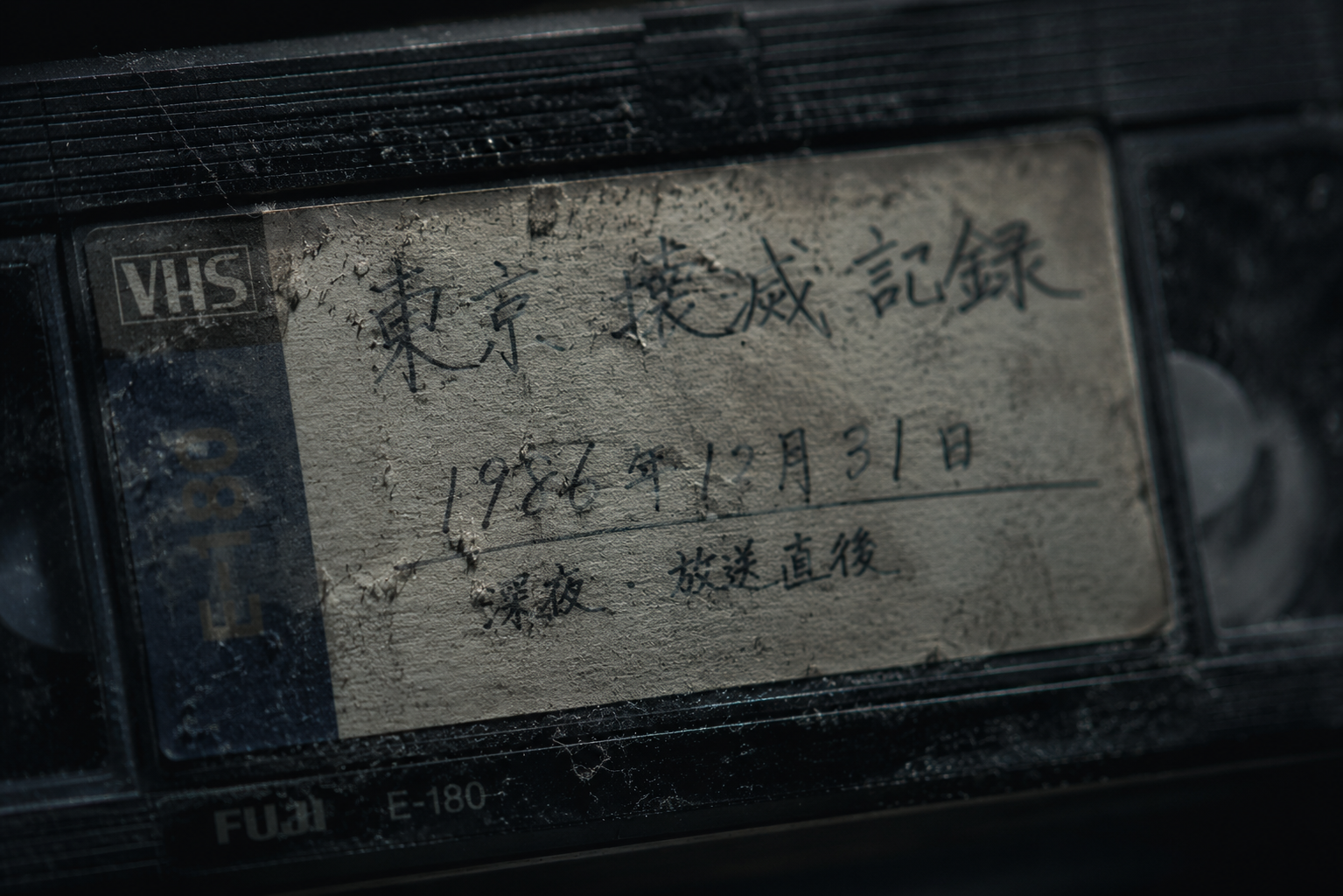
This is the structural anomaly that distinguishes the Iron King case from its Western counterparts. The “Evil Farming Game” false memory—the most frequently cited Western example of gaming-adjacent Mandela Effect—has no verified mechanical cause. It is a pure product of memory’s unreliability; of pattern-matching gone recursive across a community of people who share a vague sense that something existed. The Saitama incident is different. The mechanism is documented. Home-recorded VHS tapes from the 1986 broadcast—preserved by the kind of compulsive personal archiving that analog-era television uniquely encouraged—confirm that the broadcast ended where witnesses remembered it ending. The cliffhanger is real. The missing resolution is real. The horror, in its original form, is verified.
What the brain then did with that verified horror is the more interesting anatomical question. Over approximately three decades, the memory migrated. Iron King—a character whose visual iconography is distinct from Ultraman’s—became Ultraman in the retelling. The specificity of the Titanian brainwashing was smoothed into a simpler, more mythologically potent image: the hero simply turned. The geographic particularity of the Saitama broadcast was lost; the legend spread as though the event had been nationally witnessed. The false memory, in other words, became more legible and more transmissible as it became less accurate.
This is not a moral failure on the part of the people who carried the memory. It is memory doing exactly what memory does under conditions of unresolved trauma: simplifying the source event into its emotional core and distributing that core in a format the culture can use. What the culture needed was not the specific story of Iron King and the Titanians. What it needed was the image; the philosophical rupture of the protector-turned-destroyer. That image, stripped of its original context, became the legend.
Psychological Necropsy: The Unresolved Image and the Architecture of Childhood Horror
The forensic question at the center of the Iron King case is not whether the broadcast error occurred—it did—but why the resulting image proved so psychologically durable. Here the analysis requires attention to what, precisely, was left behind when the broadcast cut.
An episode of children’s hero television that ends on a villain’s apparent victory is not, in itself, unusual. Cliffhangers are a structural convention; the “To Be Continued” card is the cultural contract that makes the convention tolerable. It signals: this is not the ending. Your anxiety is temporary. The resolution is coming. What TV Saitama’s scheduling error removed was not the second episode—it removed the contract. The cliffhanger played as a conclusion. The open wound played as a closed case.
For the children watching in 1986, the image they received was not “the hero is in danger.” It was “the hero is the danger, permanently, with no one to stop him.” The distinction is not subtle; it is the difference between a genre convention and an existential rupture. One is exciting; the other is, in the precise clinical sense, traumatizing.
Western tokusatsu fandom—increasingly fluent in the aesthetics of the genre through contemporary streaming access—tends to romanticize the “dark hero” narrative. The corrupted protector, the villain-aligned giant, the moral ambiguity of a figure constructed for destruction: these are legible tropes in a media environment that has processed them extensively. For 1986 Japanese children encountering the image cold, with no prior exposure to the show’s full run and no resolution provided, the trope was not available as a frame. They did not have the cultural vocabulary to read “Iron King under alien control” as a reversible dramatic condition. They had only the image: the city burning, the giant responsible, the credits rolling.
The Western archival mind, confronted with the Iron King case, tends to locate the horror in the lost footage—to ask what Episode 26 contained, whether it has been screened, whether it satisfies the tension the cliffhanger created. This is the wrong question; and its wrongness reveals something about the difference between Western lost-media anxiety and what the Saitama incident actually documents. The footage was never lost. The resolution existed throughout the decades the legend circulated, sitting in an archive, answering a question nobody was asking it directly because the question had already been answered by the collective memory with something more satisfying than the truth.
The Evidence of Void: Why the Legend Survived What the Footage Could Have Killed
The most counterintuitive aspect of the Iron King case is its survival. Urban legends, as a class, are vulnerable to debunking; they tend to collapse when confronted with documentary evidence that contradicts their central claim. The Tokyo Inferno legend survived for approximately thirty years in the presence of a fully intact resolution—Episode 26 available in archives, accessible in principle to anyone who went looking. The legend’s durability in the face of this available evidence requires explanation.
The first factor is geographic containment. The legend originated in a specific regional pocket—the Saitama broadcast area—and spread through the social networks of people who shared the original viewing experience. These were not media professionals with archive access; they were children who grew into adults carrying a memory of something they had seen. The corrective information (Episode 26 exists; the broadcast was simply cut short) was not structurally available to them through the channels that carried the original wound. The error traveled in one medium; the correction resided in another.
The second factor is the specific nature of the false memory’s emotional content. The Tokyo Inferno legend was not a neutral misremembering. It was a memory organized around horror; around the violation of a fundamental cultural contract. Memories structured around strong negative affect are, as cognitive research consistently documents, more resistant to revision than neutral memories. The people who carried this memory were not misremembering a plot point; they were misremembering something that had frightened them. That fear was real, even if its object was partially constructed. Correcting the object does not correct the fear—and the fear was the thing that made the legend worth telling.
The home-recorded VHS tapes that eventually verified the 1986 broadcast experience represent the forensic gold standard of analog-era media archaeology; the accidental archive of compulsive personal documentation. These tapes confirmed what witnesses remembered: the cliffhanger was real, the missing episode was real, the broadcasting error was real. What the tapes could not confirm—what no tape could confirm—was that the experience of watching the broadcast without a resolution was equivalent to watching it with one. They are the same footage under different conditions; and the conditions, in this case, were everything.
The Point of No Return: What the Unresolved Image Tells Us About Memory in the Digital Archive
The Iron King case arrived at its resolution—the debunking, the verification of the broadcast error, the acknowledgment that Episode 26 existed—through precisely the mechanisms that the digital era has made possible: distributed collective memory, online community documentation, the aggregation of individual witness accounts into a coherent forensic record. Reddit threads, niche tokusatsu forums, and the broader lost-media archaeology community performed, over years of incremental contribution, the work that no single institution had undertaken.
This is the digital era’s genuine contribution to media preservation—not the storage of footage, which archives have always done, but the preservation of viewing context; the documentation of the experience of watching, which is a different object entirely from the footage itself.
And yet the Iron King case exposes a limit in this contribution that the digital archive cannot resolve. The false memory that persisted for thirty years was not a product of missing footage; it was a product of missing context. Episode 26 was always there. What was absent was the knowledge that Episode 25 was designed to be followed by it. The legend survived not because the evidence was inaccessible but because the frame that would have made the evidence relevant had never been distributed to the people who needed it.
The uncomfortable insight the case leaves behind is this: the most dangerous form of lost media is not the lost footage. It is the lost ending—the context that tells an audience what they are looking at. When a culture loses the ending, it does not experience a gap. It experiences a conclusion. The open wound is read as a healed scar. The brainwashed giant burning Tokyo is read as the hero’s true face, finally revealed.
There is no digital archive for this kind of loss. The footage can be preserved indefinitely. However, the broadcast experience that produced the wound cannot be recreated, only documented after the fact by the people who survived it. The Saitama children of 1986 did not lose a tape. They lost the thirty seconds of television that would have told them the nightmare was over.
That is a different kind of extinction—and it leaves a different kind of ghost.
🔍Search Update: Call to Action
Have you encountered a “Mechanical Mandela Effect”?
The 3AM Archive is currently cataloging incidents of regional broadcast errors that altered narrative perception. We are specifically looking for Western parallels—cartoons, soap operas, or local news segments that ended on unresolved trauma due to scheduling overrides. If you possess VHS recordings or vivid accounts of “lost endings” that were later debunked, contact our forensic team. Your memory may be the key to a wider default archive of human experience.
This document is an investigative archival reconstruction based on fragmented public records, media remnants, community accounts, and verified historical sources compiled by The 3AM Archive.
The article examines how incidents, forgotten media, internet folklore, and unresolved public memories evolve through cultural preservation and digital decay.
This is a cultural investigation document — not fictional horror content.
All visual materials used in this post are exclusive AI-generated assets created for The 3AM Archive.
