There is a particular category of dread reserved for the record that almost exists. Not the record that was suppressed by design—those carry a legible villain, a traceable motive, a satisfying arc of conspiracy. The more corrosive kind is the record that was simply mishandled; filed under the wrong heading, broadcast with the wrong timestamp, stored in an institution that forgot to notify the family. In those cases, the truth does not vanish dramatically. It dissolves. It becomes residue. What remains in the public archive is not a lie, precisely—it is something worse: a distorted approximation that circulates with all the confidence of fact and none of the accuracy.
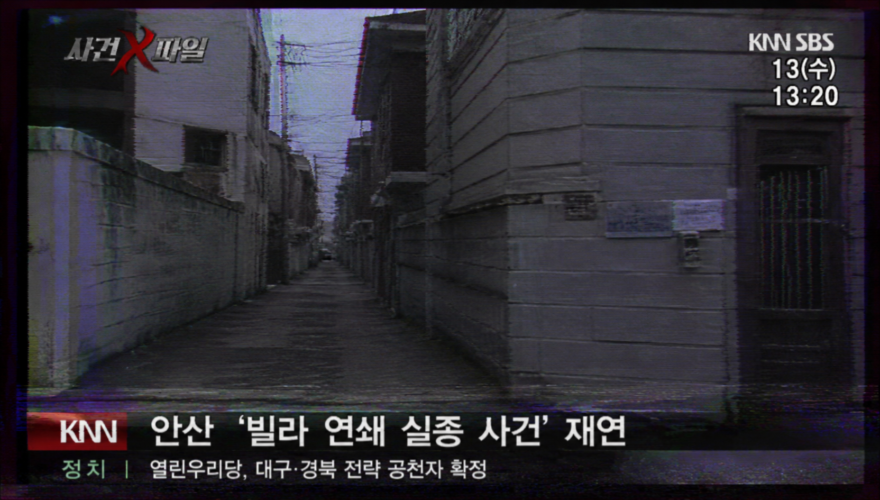
The disappearance of Choi Jin-ho on May 7, 2000, in Ansan, South Korea, is a case study in exactly this phenomenon. A four-year-old child—distinctive in appearance, observed by his mother through a second-floor window at 13:20 KST—was gone by 13:30. Ten minutes. In the interval between one glance and the next, a human being ceased to exist within the recoverable public record. What followed over the next two decades was not a single catastrophic act of erasure; it was a slow accumulation of administrative misclassification, institutional silence, broadcast misinformation, and forensic negligence—each incident minor enough, individually, to be explained away. Together, they form a monument to the specific way that modern states fail their most vulnerable citizens not through malice, but through indifference organized at scale.
Historical Anatomy
The year 2000 arrived in South Korea with particular symbolic weight. The country was still processing the psychological aftermath of the 1997–1998 IMF financial crisis—a period of mass layoffs, corporate collapse, and severe middle-class contraction that had fundamentally restructured the national sense of security. The Choi family lived in a second-floor villa unit in Sa-dong, Sangrok-gu, Ansan-si: a satellite city of Seoul that had grown rapidly through the 1980s and 1990s as an industrial and residential overflow zone, its residential districts characterized by the dense, labyrinthine concrete alleyways that define Korean urban working-class geography.
The media environment of early 2000 was caught in a transitional moment that would prove consequential for cases like this one. CCTV infrastructure in residential areas was minimal by contemporary standards; the digital internet existed but had not yet consolidated into the distributed archival apparatus it would eventually become. Public information traveled primarily through broadcast television and physical newspapers, meaning that a single poorly researched segment on a national network could establish a false version of events without generating any immediately visible competing record. Corrections, when they came, came late and quietly—buried in formats that the original audience would never encounter.
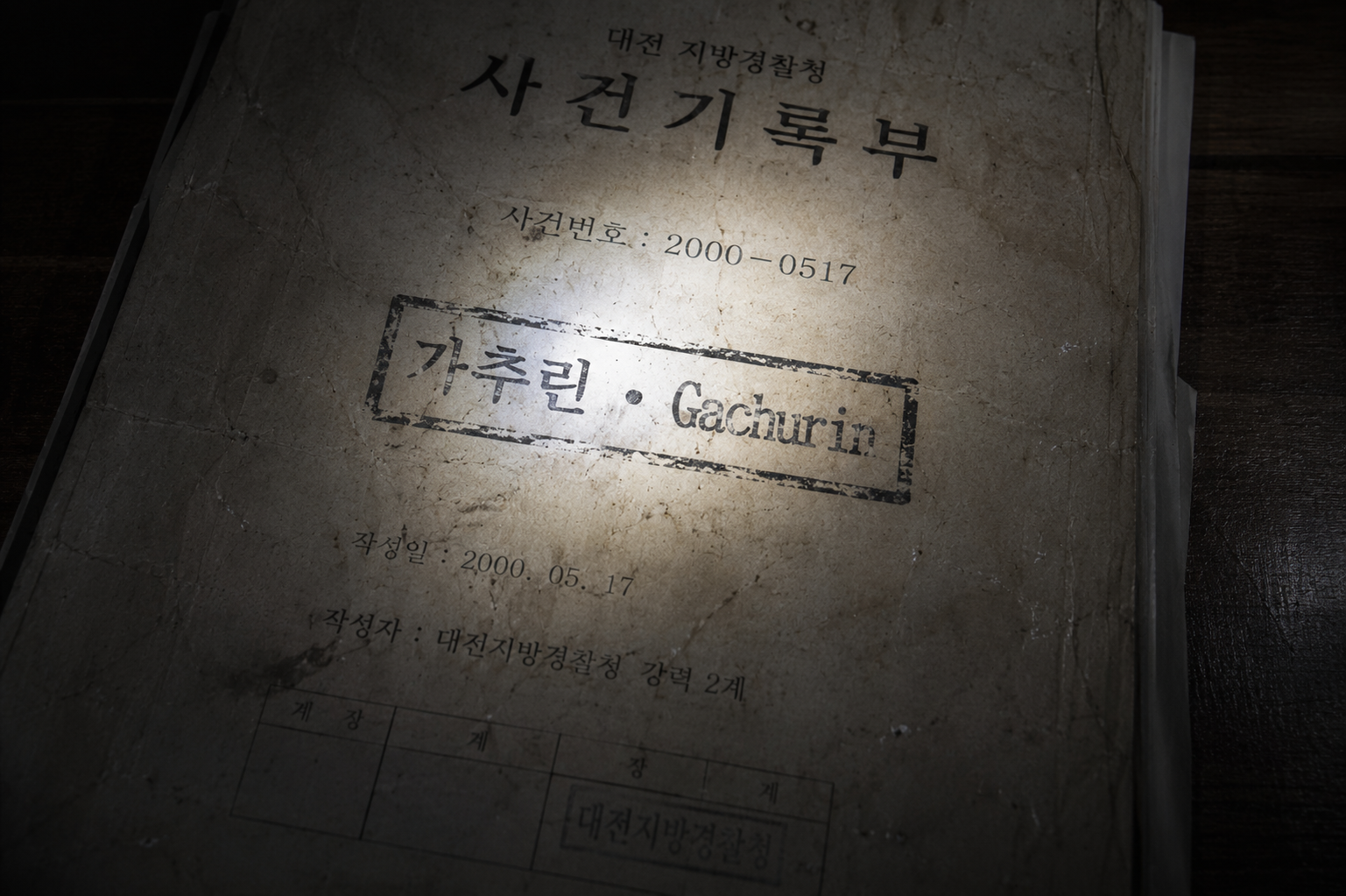
The Y2K administrative context is equally important. South Korean police procedure in this era operated under a missing persons classification system that sorted cases by presumed intent. Adults and children alike who left home without obvious signs of foul play were commonly logged as Gachurin—roughly translatable as “voluntary leaver” or “runaway”—rather than as potential abduction victims. This was not a classification born of callousness, exactly; it reflected a bureaucratic culture structured around keeping precinct open-case metrics manageable. A runaway who eventually returned home resolved the case automatically. An abduction required sustained investigative resources. The incentive structure, embedded in administrative code, consistently rewarded the less costly interpretation—regardless of whether that interpretation was plausible. For a four-year-old child who vanished without sound from an alley directly beneath his mother’s window, the Gachurin classification was not merely bureaucratically inaccurate. It was operationally catastrophic.
Structural Dissection of the Record
The timeline of the Choi Jin-ho case contains several points at which the evidentiary record diverges from itself—moments where institutional failure generated secondary artifacts that then entered circulation as primary sources.
The first and most consequential divergence occurred in February 2005, when KBS2—South Korea’s largest public broadcaster—aired an episode of 공개수사 실종 (Open Investigation: Missing Persons) covering the case. The segment introduced three specific distortions. The abduction window was shifted to begin at 12:30 rather than 13:20, expanding the unaccounted period and subtly eroding the alibi the family had established by their confirmed presence at church immediately prior to the disappearance. The window itself was stretched to thirty minutes. And the primary eyewitness was identified as the maternal grandmother rather than the mother. None of these alterations were accurate. All of them entered the public digital record and remained there; the original broadcast has been viewed, clipped, and cited across Korean-language online forums for the two decades since. Researchers who encounter these cached fragments have no mechanism, in most cases, to know that they are reading a distorted version of events introduced by careless network editing rather than reflecting documented fact.
This is the mechanism the blueprint describes as “Archival Silence”—and the term is precise. KBS did not fabricate a cover story. There is no evidence of intentional manipulation. What actually happened is structurally more mundane and more damaging: a production team assembled a segment under time pressure, introduced several errors of fact, and broadcast them on a platform with enormous reach. The errors then ossified into what researchers call a polluted baseline—a false primary source that subsequent documentation treats as authoritative, since it emerged from an ostensibly credible institution.
The second major structural anomaly concerns the bone fragments. In June 2008, a secondary search of a reed bed adjacent to the reservoir the family had privately drained in 2006 recovered calcified, fragmented remains. Local police retrieved the evidence and transferred it to the National Forensic Service without notifying the Choi family. The files were classified as “inconclusive.” The family learned of this through indirect channels. No formal update has been issued. The remains occupy a peculiar bureaucratic purgatory: not confirmed as Choi Jin-ho, not formally excluded, not returned for independent testing, and not publicly addressed. They exist as evidence of something; precisely what has been institutionally deferred into indefinite suspension.
The physical description of the missing child adds another layer to the structural record. Choi Jin-ho possessed an unusual cluster of distinctive physical features—pronounced “Buddha-style” pointed ears, a fingernail scar adjacent to his left eyebrow, and highly irregular front teeth described as jagged and pointed. In standard missing persons contexts, such features constitute powerful identifying markers; they are the kind of physical anomalies that should make confirmed identification straightforward. Their presence in the archival record is therefore particularly painful, because they render the investigative failure more visible. This was not a child about whom mistaken identification could easily be claimed. The distinctiveness of the physical profile makes the forensic inconclusion harder to accept as merely technical.
Psychological Necropsy
The case circulates with particular force in Western internet communities organized around analog horror, lost media, and true crime archaeology—and understanding why requires examining what those communities are actually responding to, as opposed to what they articulate as their interest.
Analog horror as a genre—The Mandela Catalogue, Local 58, the extended universe of VHS-aesthetic internet horror—is structurally preoccupied with a specific anxiety: the idea that the media archive is not a neutral record of reality, but an active site of distortion. Tapes degrade. Broadcasts glitch. Signals carry things they were not meant to carry. The horror is not supernatural in origin, precisely; it is institutional. Something broke in the pipeline between event and record, and what reached you is not what happened. The Choi Jin-ho case maps onto this anxiety with uncomfortable precision—not because it resembles horror aesthetics, but because it literalizes the genre’s core premise. A state television network did introduce false information into the baseline record. A forensic institution did classify evidence as inconclusive without informing the family. The archive is distorted; not because a monster corrupted it, but because a production team made errors and a bureaucracy defaulted to inertia.
The “Crimson Matiz” element operates differently—it introduces a specific cultural register that Western audiences often misread as exotic or folkloric, when it is actually structural. The first-generation Daewoo Matiz held a specific cultural weight in late-1990s South Korea analogous to the North American “white windowless van”: a vehicle so ubiquitous in dense residential corridors that its presence was self-effacing, capable of idling in a pitch-black alley at 01:00 without drawing attention. When the father encountered a red Matiz reversing at speed from the alleyway twelve hours after the disappearance—and when emergency dispatch declined his request to intercept it—he was describing not a dramatic cinematic confrontation but the texture of a specific failure mode: a suspicious vehicle that the system had no protocol to treat as evidence, observed by a witness whose testimony the system had no infrastructure to prioritize.
What disturbs the Western imagination, ultimately, is not the horror-aesthetic framing. It is the structural recognition. The mechanisms of failure here—bureaucratic misclassification, broadcast error propagating uncorrected, forensic evidence held in institutional suspension, a fleeing vehicle dismissed by emergency dispatch—are not specific to South Korea in 2000. They are specific to the relationship between individuals and large institutions; a relationship that the internet age has made simultaneously more transparent and more helpless. We can see the failure now, in granular detail. We cannot correct it retroactively.
The Evidence of Erasure
The Choi family’s response to institutional failure was itself a form of testimony. In May 2006, they completely exhausted their personal middle-class savings—approximately 1.4 billion KRW, a figure that represents the effective liquidation of generational wealth—to fund a private drainage and dredging operation on a local reservoir. The state had not ordered this. No forensic recommendation supported it. The family funded it because it was the only investigative action they could unilaterally authorize; because the official investigation had stalled; and because the particular topology of grief demands action in the absence of information. The reservoir yielded nothing. The reed bed adjacent to it, searched two years later, yielded bone fragments the family was not told about.
The information fragmentation of this case follows a recognizable pattern, one that recurs across South Korean cold cases from this period. A brief initial media blitz in the first days after the disappearance generates public attention. The case is then absorbed into the bureaucratic system, which processes it through categories designed for different use cases. Years later, a broadcast special revisits it—often with corrupted source material, since the original investigators may have retired, original records may have been misfiled, and the family’s own accounts have been through years of retelling. The broadcast introduces new errors. Those errors become the reference point for the next wave of digital researchers, who are working from aggregated sources rather than primary documents.
The internet mutation layer is particularly visible in this case. Online forums—Korean-language spaces like 일간베스트 or 클리앙, as well as Western true crime communities on Reddit and YouTube—have approached the Choi case through the lens established by the 2005 KBS broadcast, treating its distorted timeline as baseline. Researchers who have compared the broadcast timeline against the family’s documented statements or the original police intake records have encountered the discrepancy and reported it; those corrections have not propagated as effectively as the original error. The false version has structural advantages: it is coherent, it is attached to a high-authority source, and it is the version that appears first in search results.
The physical decay dimension is present in an almost unnervingly literal form. The June 2008 bone fragments, if they are Choi Jin-ho’s remains, represent biological evidence of what happens to a human body over eight years in a reed bed adjacent to a reservoir in Gyeonggi Province. Calcification. Fragmentation. The structural dissolution of identifying markers. The forensic process required to confirm identity from such remains is technically demanding; the classification of those remains as “inconclusive” may reflect genuine analytical limitation, or institutional inertia, or some combination. The family has not been given sufficient information to know which. The evidence exists in a state of suspended ambiguity—present enough to foreclose other interpretive possibilities, absent enough to prevent resolution.
The Point of No Return
There is a threshold in archival cases past which the original event becomes, in a practical sense, inaccessible. The threshold is not determined by the age of the case or by a single catastrophic act of destruction; it is accumulated through a series of smaller failures, each of which narrows the interpretive possibilities slightly, until the aggregate narrowing has foreclosed the possibility of clean resolution. The Choi Jin-ho case reached that threshold at some point in the second decade after the disappearance—though precisely when is itself uncertain, which is characteristic of the phenomenon.
What the case leaves behind is a specific kind of archival object: a record that is dense, contradictory, emotionally saturated, and epistemically incomplete. The dense part is the family’s documentation—their expenditure of 1.4 billion KRW to search the reservoir, their contact with investigators, their decades of public statements. The contradictory part is the KBS broadcast and its false timeline living alongside the family’s correct account. The emotionally saturated part is obvious. The epistemically incomplete part is the bone fragments, still classified inconclusive, still not returned, still not publicly addressed.
What digital memory has done to cases like this one is not, primarily, preservation. It has created a high-fidelity record of the distortions. The false KBS timeline is more accessible today than the family’s original account. The bone fragments are unknown to most people who have researched this case. The red Matiz reversing through a black alley at 80 km/h—observed, reported, dismissed by dispatch—exists in the record as a family member’s statement; the driver has never been identified. We have, in short, extremely detailed documentation of a failure. The event at the center of that failure remains unresolved.
The deepest discomfort the Choi Jin-ho case generates is not aesthetic; it is structural. It asks a question that the distributed archive of the internet implicitly promises to answer and consistently fails to deliver on: if enough people look carefully enough at the available evidence, will the truth eventually emerge? The case has been examined by amateur researchers, forensic investigators, journalists, and international internet communities for over two decades. The bone fragments remain inconclusive. The KBS errors remain in circulation. The alleyway in Sa-dong, Sangrok-gu is now twenty-six years older. The child who played beneath his mother’s window for the last time at 13:20 on a Sunday in May would be thirty years old.
🔍Search Update: Call to Action
For Western researchers operating within the lost media and analog horror spheres, the original unedited 2000 police intake records and raw 2005 KBS master reels remain highly sought-after archival targets. The internet serves as the default archive of human experience. However, digital permanence is an illusion. Data spaces frequently decay when public focus shifts elsewhere. If you have access to early 2000s Korean peer-to-peer file-sharing networks, archived local BBS captures, or VHS recordings of Gyeonggi regional news broadcasts from May 2000, your findings could rectify a heavily polluted timeline.
The archive holds all of this. The archive resolves none of it.
This document is an investigative archival reconstruction based on fragmented public records, media remnants, community accounts, and verified historical sources compiled by The 3AM Archive.
The article examines how incidents, forgotten media, internet folklore, and unresolved public memories evolve through cultural preservation and digital decay.
This is a cultural investigation document — not fictional horror content.
All visual materials used in this post are exclusive AI-generated assets created for The 3AM Archive.
