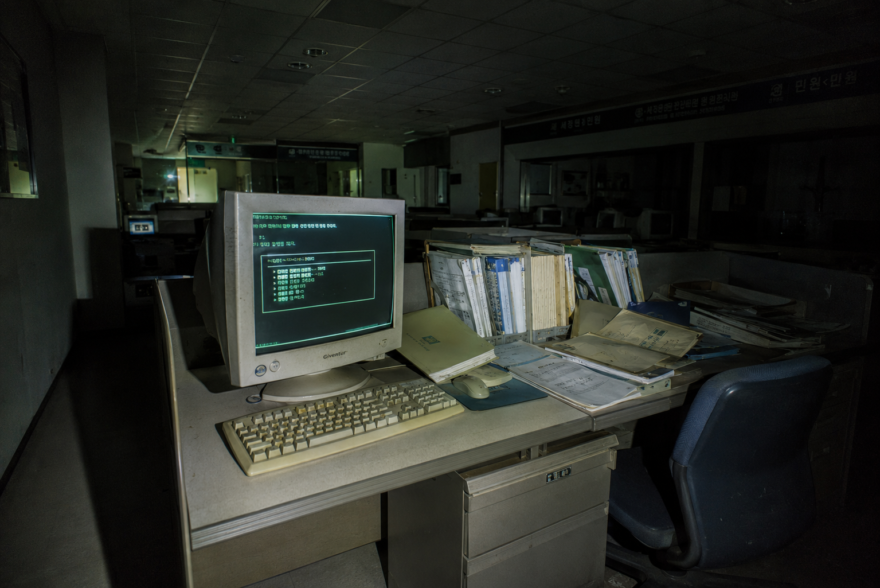
Consider the precise geometry of catastrophe: a government official, seated at a desk somewhere inside the National Assembly complex, opens an email. The subject line is mundane—a workshop agenda, formatted in clean Korean, bearing no apparent malice. A single click. The Peep variant Trojan executes silently in the background, spreads laterally through internal state networks, and begins exfiltrating files. No alarm sounds. No indicator light blinks. Nothing in the physical environment changes at all.
This is the defining image of the June 2004 Public Institution Network Hacking Incident—not a dramatic server room collapse, not a visible breach, but a perfectly ordinary gesture performed by a perfectly ordinary person who had no reason to suspect anything. The horror, examined twenty years later, is structural rather than spectacular. What the incident represents is not a failure of technology but a failure of institutional imagination: the collective inability of a nation’s highest security apparatus to conceive of an enemy that did not wear a uniform, cross a border, or fire a weapon. South Korea in 2004 was the most connected nation on earth. It was also, in precisely that same moment, one of the most architecturally exposed.
The case has been largely absorbed into administrative footnote. Outside specialist cybersecurity communities and scattered Korean-language academic papers, it exists as partial record—a ghost file that the institutional memory of South Korean statecraft has never quite committed to either fully acknowledging or fully burying. That ambiguity is itself diagnostic.
Historical Anatomy
The World’s Fastest Highway, Unguarded To understand the 2004 incident on its own terms, it is necessary to reconstruct the specific atmospheric conditions of South Korea in the late 1990s and early 2000s. The nation had committed, with characteristic institutional velocity, to building the world’s most advanced broadband infrastructure. By 2004, South Korea’s average connection speeds were without global parallel; the penetration rate of high-speed internet into domestic households exceeded virtually every OECD equivalent. Politicians spoke of the “digital nation” project as a matter of civilizational pride—a technological leap that would compress decades of economic development into a single administrative generation.
What this acceleration produced, however, was a peculiar asymmetry. The physical infrastructure was extraordinary; the security culture surrounding it was essentially nonexistent. The internet, in this formative period, was treated by state institutions less as a military-grade communication system requiring hardened protocols and more as an extension of the internal memo—fast, convenient, informal. Administrative accounts at agencies handling classified defense research operated behind passwords that would have been considered lax even by the standards of a mid-tier private corporation. The Korea Atomic Energy Research Institute, the Agency for Defense Development, the Air Force University—these were not fringe bureaucratic outposts. They were the intellectual infrastructure of South Korean national security; and their digital perimeter was, in practice, a screen door.
The broader geopolitical imagination of 2004 South Korea was oriented almost entirely southward along a single, well-rehearsed axis: the North Korean artillery threat, the DMZ, the prospect of conventional military confrontation with a known, physical adversary. The annual security budget, the emergency preparedness frameworks, the public discourse around national vulnerability—all of it remained organized around a model of warfare that required boots, bullets, and physical geography. The idea that the most significant security breach in the nation’s post-Korean War history might arrive via an email attachment formatted as a seminar schedule was not merely unforeseen. It was categorically outside the cognitive architecture of the institutions responsible for preventing it.
This is the context in which the Peep variant attack executed with such surgical efficiency: not against a hardened target, but against a target that had not yet conceived of itself as a target at all.
Structural Dissection of the Record
What the Files Show The official record, reconstructed from NIS releases and National Police Agency reports, carries an unusual internal coherence for a case this poorly remembered. The numbers are precise: 278 computers across public and private sectors completely compromised; 211 of those within state institutions; 77 machines at the Maritime Police Agency; 69 at the National Assembly; 50 at KAERI. The account credentials of 122 current and former lawmakers and staff extracted. The first NIS emergency warning issued on June 19, 2004—confirming breaches across six major agencies while major broadcasters interrupted prime-time schedules to run public alerts.
The malware itself is well-documented in its technical lineage. The core Trojan, “Peep,” was the creation of a 30-year-old Taiwanese engineer named Wang An-ping—arrested by Taiwanese police in May 2004 for its development. Before his arrest, An-ping had released the source code freely on his personal website. Chinese hacking groups—whether state-adjacent or operating as independent syndicates is a distinction the public record deliberately declines to resolve—harvested this free toolkit, modified its signatures into a variant that would evade then-current detection protocols, and weaponized it inside emails masquerading as Korean-language workshop agendas. The entire operational supply chain, from source code to successful exfiltration, had been constructed out of freeware and open-source social engineering.
The companion malware, “Revacc,” performed a secondary function: forcibly redirecting compromised nodes to external infection sites, ensuring that the breach could self-propagate beyond the initial entry points. Together, Peep and Revacc formed an attack architecture that was, by the standards of serious state-sponsored cyber operations, almost embarrassingly low-budget—and completely effective.
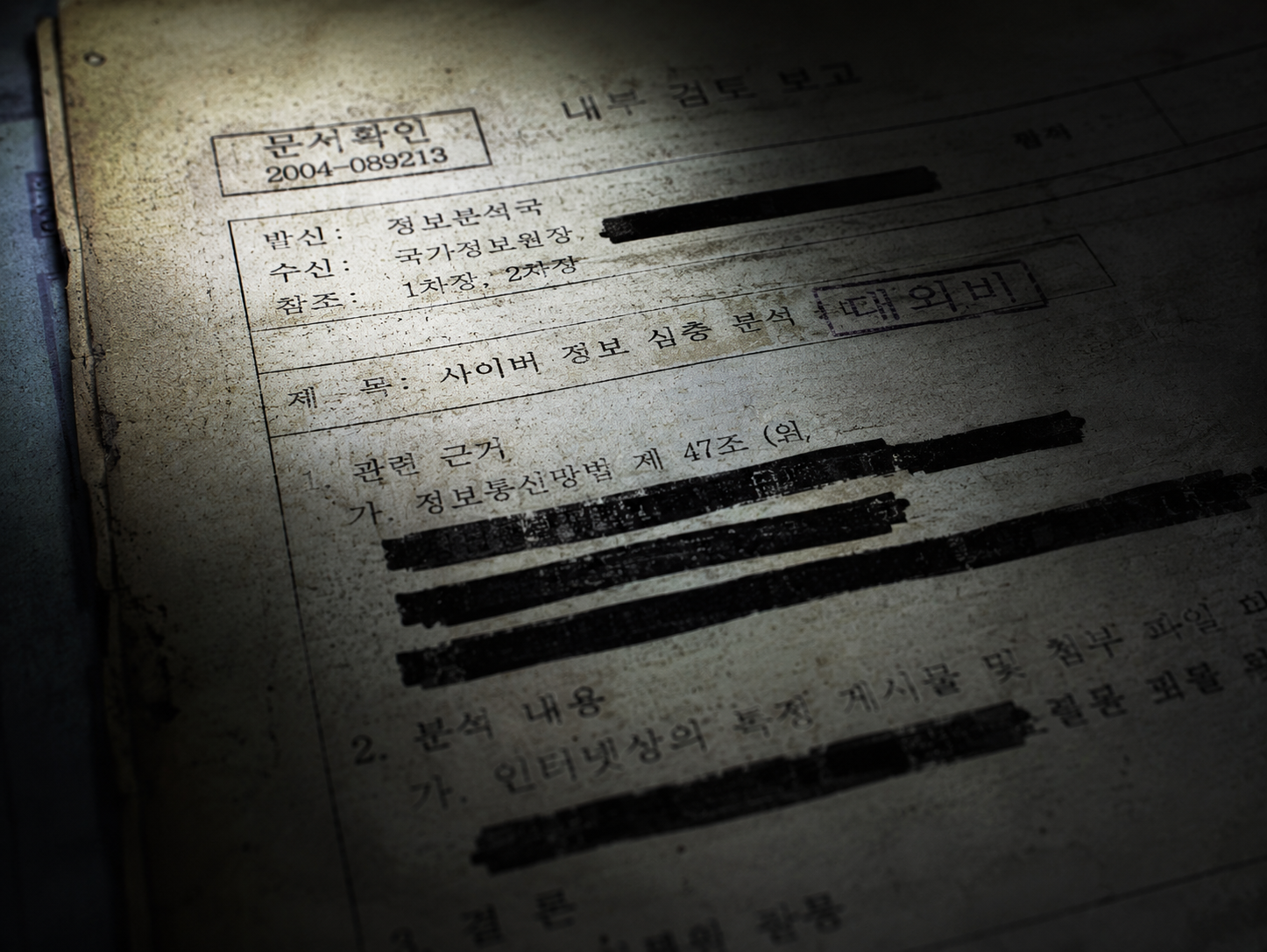
The anomaly in the public record is not what it contains but what it terminates. The NIS and National Police Agency joint report of July 13, 2004, establishes the scope, traces the origin IPs to mainland China, and closes. What was actually extracted from the Korea Atomic Energy Research Institute—specifically which files, which research data, which personnel records—is classified and has remained so. What was taken from the Air Force University’s compromised machines carries the same designation. The official record offers precise entry-point data and zero exit-point data. It is a forensic report that documents the door being opened and declines, entirely, to describe what was removed from the room.
This is not administrative incompetence. It is administrative architecture.
Psychological Necropsy
The Asymmetrical Enemy For the Western analytical imagination, the 2004 incident registers as a familiar enough cyber-espionage case study—file this alongside the 2007 Estonian infrastructure attacks, the 2015 OPM breach, the constellation of state-adjacent intrusions that define early twenty-first century digital statecraft. But the specific psychological texture of the South Korean public response in 2004 is not translatable through these equivalences. It requires a more precise accounting.
South Korean national security consciousness in this era was organized around a deeply embodied threat model: the North Korean military, physically present on the other side of a fortified border, capable of conventional artillery strikes on Seoul within minutes of a trigger order. This threat was not abstract; it was cartographically precise, politically continuous, and culturally absorbed into the background radiation of daily life. The asymmetry it implied was understood. What was not understood—what the 2004 incident made suddenly, viscerally legible—was that an entirely different class of asymmetry had been operating beneath the threshold of institutional perception.
The defense and nuclear intellectual architecture of the South Korean state had been accessible to an unknown external actor through a combination of free Taiwanese freeware and basic social engineering. The sophistication gap ran exactly backward from every assumption embedded in the national security framework: the attacker required almost nothing; the target had almost nothing protecting it. This inversion—a modern defense research apparatus defeated by a recycled freeware toolkit—produced a specific variety of institutional shock that is difficult to quantify but left measurable residue in the subsequent decade of South Korean cybersecurity legislation and investment.
The public, receiving fragmented information through broadcast alerts and newspaper coverage, processed the incident through a different cognitive register entirely. The NIS confirmed mainland China IP origins. The public heard this and began, almost immediately, to construct an alternative explanatory frame.
The Evidence of Erasure
The Shenyang Phantom and the Classified Exit The dominant internet mythology that emerged from the 2004 incident was precise in its geography: North Korean Electronic Warfare Units, operating out of secret safehouses in Shenyang in China’s Liaoning province, had used Chinese infrastructure as a physical relay—a disposable proxy layer that would deflect attribution while the actual operators remained under state cover. The official position—independent or state-adjacent Chinese hacking groups—satisfied no one. The rumor, distributed across early Korean web boards and discussion forums, was more architecturally satisfying because it restored the familiar threat model: a known, statist adversary with a known, operational geography.
This was not pure paranoia. The subsequent decade of South Korean and international cybersecurity research produced substantial evidence of North Korean state hacking operations coordinated through Chinese-hosted infrastructure—most notably the 2009 Operation Troy attacks that targeted Korean and American defense networks, and the eventual attribution of the Lazarus Group’s global operations. The 2004 mythology was not baseless; it was, arguably, prescient. But in 2004 itself, it was mythology—a compensatory narrative that replaced administrative uncertainty with ideological coherence.
The second major element of erasure concerns the classified exit-point data. Because the NIS never publicly disclosed what was exfiltrated from KAERI and the Air Force University, the early Korean internet generated its own inventory. Web board threads from 2004 and 2005 speculated that nuclear fuel cycle research documents, military aircraft technical specifications, and personnel records of classified defense researchers were circulating on the early deep web—unindexed commodities available to foreign state buyers. Whether any of this was accurate is unknowable by design. The classification architecture ensured that the rumor ecosystem would operate in perpetuity, uncorrectable by fact because the relevant facts remained state property.
The incident faded from mainstream public memory through a combination of mechanisms that are individually unremarkable and collectively total. The internet has increasingly become the default archive of human experience. However, the nature of digital permanence is deceptively fragile. Physical servers decay, links break, and state intelligence bodies quietly scrub unindexed data fields until the public record resembles an edited transcript rather than a complete repository. The NIS issued its final report in July 2004 and subsequently reduced public communication on the case to near-zero. The major broadcasters returned to regular scheduling. The newspapers moved to other stories. In the absence of a visible, continuing consequence—no diplomatic rupture with China, no publicly acknowledged intelligence loss, no named perpetrators arraigned in any court—the case lost narrative gravity. It became, in the technical sense, a closed file; and closed files, in the absence of institutional champions willing to reopen them, decay at a predictable rate.
South Korea’s cybersecurity infrastructure underwent significant hardening in the years following 2004—a hardening that implicitly acknowledged the severity of the breach without ever requiring a public reckoning with its full implications. This is a characteristic mode of institutional memory management: address the structural failure in practice while preserving deniability about its original depth in the public record.
The Point of No Return
What Free Code Cost The most uncomfortable insight produced by a forensic examination of the 2004 incident is not the breach itself but its unit economics.
Wang An-ping released Peep’s source code for free. Chinese operators harvested it for free. The variant was constructed through modification of free, publicly available code. The social engineering vector—a Korean-language email formatted as a workshop agenda—required no capital investment beyond the time required to draft and distribute it. The total operational cost of an attack that compromised 211 state computers, extracted the credentials of 122 lawmakers and staff, and penetrated the digital perimeter of South Korea’s nuclear research infrastructure was, in any honest accounting, negligible.
Against this, South Korea in 2004 had deployed the world’s most expensive broadband infrastructure, maintained one of the largest standing armies in Asia, and invested substantially in conventional defense capability. The entire apparatus was defeated—penetrated at its highest levels, stripped of classified content, and left functionally unaware that anything had occurred—by recycled freeware and the reasonable assumption that a government employee would open an email about a workshop.
The 2004 incident is the precise historical coordinate at which South Korea’s digital sovereignty was first genuinely tested; and the result demonstrated that sovereignty, in the networked era, was not a function of infrastructure investment or military capability but of the security imagination of the least cautious person with administrative access to a state network. One opened email. One silent execution. One classified exit-point that remains, to this day, undisclosed.
The highway had been built. The doors were never installed. And somewhere in an unindexed archive, in a classified annex that no public records request will ever reach, whatever left the Korea Atomic Energy Research Institute in June 2004 remains—its contents known only to the people who took it, and to the state that cannot afford to say what was lost.
🔍Search Update: Call to Action
The original joint investigative files from July 13, 2004, remain heavily scrubbed, and early Korean bulletin board threads detailing the unindexed deep web listings have largely lapsed into digital decay. If you have active leads, archived server mirrors from early 2000s Korean forums, or preserved captures of the raw Peep variant source code strings, contact the 3AM Archive team. Help us reconstruct the missing exit data of the Shenyang proxy files before the analog record completely dissolves
This document is an investigative archival reconstruction based on fragmented public records, media remnants, community accounts, and verified historical sources compiled by The 3AM Archive.
The article examines how incidents, forgotten media, internet folklore, and unresolved public memories evolve through cultural preservation and digital decay.
This is a cultural investigation document — not fictional horror content.
All visual materials used in this post are exclusive AI-generated assets created for The 3AM Archive.
