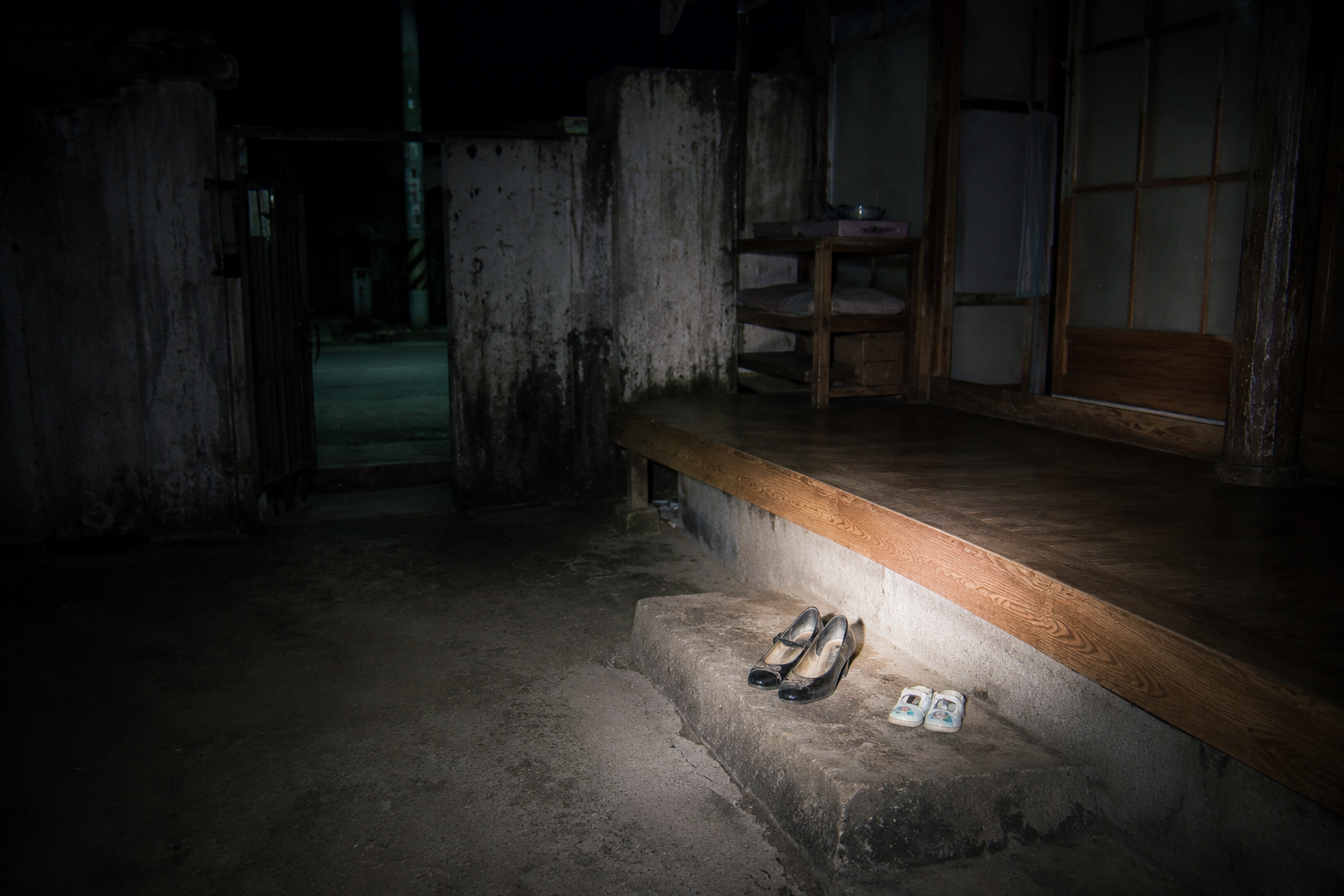
There is a particular category of criminal act that transcends its immediate violence and becomes, over time, something more unsettling than the act itself—a structural artifact, a symptom of a society’s blind spots rendered permanent. The 1989 abduction of Han So-hee in Suwon, South Korea, belongs to this category. Not because the crime was elaborate. It was, in its mechanics, almost embarrassingly simple. A woman walked through an unlocked gate, rested on a wooden veranda, asked for water, and walked away with a seven-month-old infant in broad daylight while the mother rinsed rice in the kitchen. What transforms this into something colder and more durable than ordinary tragedy is what the woman left behind: her own shoes.
She departed in the mother’s rubber shoes. The neighbors, seeing a figure in familiar footwear moving with calm through the domestic space, registered a relative, a trusted woman of the household. They saw the mother’s silhouette moving away from them. They saw no crime. This single gestural substitution—one pair of shoes for another—is the precise mechanism by which the case disappeared. Not just in 1989, but permanently. The state database today registers absolute zero: no suspect identity, no confirmed whereabouts of the child, no resolution. What remains is the forensic record of a cultural moment when South Korea’s high-trust neighborhood architecture made abduction not merely possible but effectively invisible.
This is not a mystery. It is a clinical demonstration.
Historical Anatomy: The Open Gate and the Analog City
To understand how May 18, 1989, was able to happen, it is necessary to reconstruct the physical and social grammar of late-1980s South Korean residential life. South Korea in 1989 was a nation in aggressive transition—the economic surge of the “Miracle on the Han River” had produced rapid urbanization, but the social architecture of neighborhoods had not yet absorbed the paranoia that urbanization eventually manufactures. In working-class districts like Namchang-dong in Jangan-gu, Suwon, residential compounds were organized around a logic of communal permeability. Front gates stood open. Inner courtyards functioned as semi-public thresholds where strangers could reasonably appear, announce themselves, and make requests. Asking to enter someone’s gate to inquire after a neighbor, to borrow salt, to ask for water—this was not an intrusion. It was neighborhood speech.
The suspect entered through precisely this cultural aperture. She arrived in the late afternoon, sat on the maru—the wooden veranda platform positioned at the boundary between outside and inside—and requested water. This is not incidental. The maru was architecturally and socially the most ambiguous zone of the Korean domestic space; it was neither street nor home, neither public nor private. Sitting there, the suspect occupied a position of legitimate transitional presence. When the mother went to the kitchen, she was not being negligent. She was performing the expected ritual of hospitality within a society that had not yet developed the reflexive domestic suspicion that would characterize Seoul’s apartment culture a decade later.
The country was also, in 1989, standing at the very beginning of its transition into a rights-based democratic state. The previous year’s Seoul Olympics had forced a cosmetic modernization of public infrastructure; the dictatorship of Chun Doo-hwan had collapsed into the Sixth Republic under Roh Tae-woo. But the machinery of forensic criminology in South Korea’s provincial cities had not modernized at anything approaching the same pace. First responders to the Han household that evening in May contaminated the only physical evidence in the case—a water cup the suspect had handled—before any forensic protocol could be applied. The cup yielded fingerprints belonging solely to the mother and the responding police officer. The chain of custody did not fail; it was never properly established.
Structural Dissection of the Record: What the Archive Contains and What It Does Not
The documentary residue of this case exists across three distinct registers, each revealing its own category of institutional failure.
The first register is the witness account. Multiple neighbors observed the suspect departing with the infant. Their descriptions converged on a set of highly specific markers: a woman in her early thirties, a forward and socially unguarded demeanor, and a pronounced Gyeongsang-do regional dialect—the heavy, distinctively melodic accent of southeastern Korea, unmistakable to native ears. These are, in criminological terms, excellent preliminary identifiers. They failed to produce a suspect because the mother, when presented with bulk mugshot photographs, experienced what investigators documented as immediate visual identification paralysis. Trauma-induced recognition failure is a well-established psychological phenomenon, but the Korean law enforcement apparatus of 1989 had no structured protocol for working around it; the standard procedure was to sit a witness in front of photographs until recognition occurred. It did not occur.
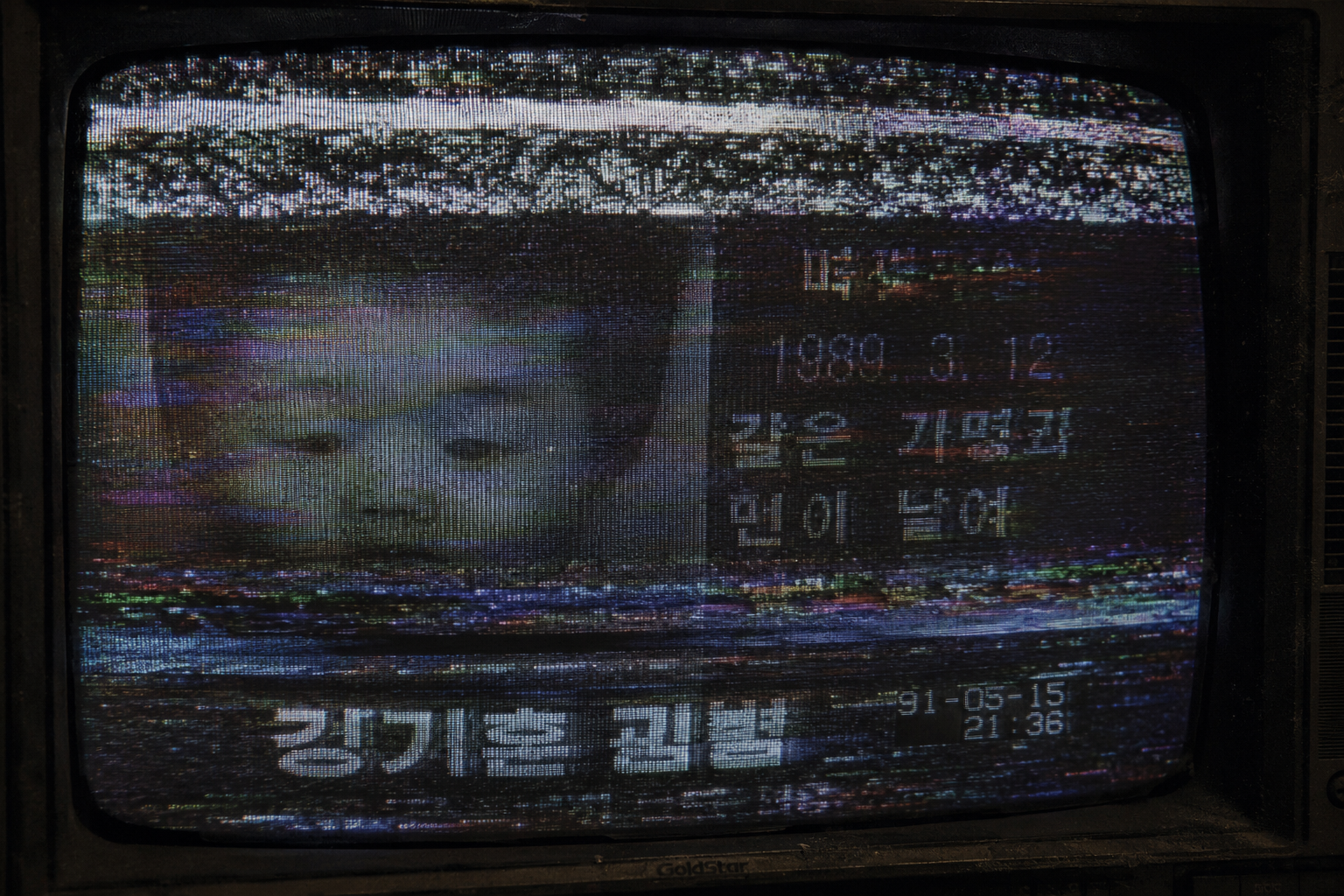
The second register is the broadcast record. On September 3, 1991—two years and four months after the abduction—the Han family appeared on the KBS national broadcast 더불어 사는 사회 (A Society Living Together), a televised forum for appeals to public memory. This is where the case enters its most operationally interesting phase. Within weeks of the broadcast, a viewer tip arrived from Masan, in Gyeongsangnam-do—the southeastern province whose dialect the suspect had spoken. A foster child named “Choi Mi-young” was identified. On November 5, 1991, Han So-hee’s biological mother traveled to Masan and examined the child. What she found was statistically staggering: the child shared Han So-hee’s O-type blood, an identical skewed hair parting, and—most arrestingly—the same highly specific, upright hair growth pattern, a phenotypic trait rare enough that its presence in both children seemed to constitute identification by itself. The mother declared her found.
She was wrong. Within forty-eight hours, the case fractured. A local restaurant owner named Kim Sun-nam came forward to testify that she had rescued this very child and surrendered her to police custody in March 1989—two full months before Han So-hee was abducted in Suwon. Administrative cross-verification confirmed it. The child was legally “Kim Mi-sun,” abandoned in a local market by a family in extreme poverty, her identity confirmed by a birthmark on her right shoulder. The trail returned to zero.
This false-match event is worth dwelling on. The child in Masan was a perfect phenotypic simulation of the missing infant—rare physical traits aligning across a population of tens of millions—yet she occupied an entirely separate structural layer of South Korea’s systemic child abandonment crisis. She was not a planted decoy. She was a coincidence so precise that it constitutes its own order of archival disturbance.
Psychological Necropsy: The Anatomy of an Uncanny Structure
The case disturbs with a specific and describable mechanism. It is not the abduction itself that resists closure; it is the geometry of what was left behind and what was found.
The suspect left her shoes. This is not a metaphor—it is a literal forensic artifact that was never analyzed beyond its immediate tactical function. She arrived wearing one identity and departed wearing the mother’s. In the context of the Korean domestic threshold, this shoe-swap was not merely a disguise; it was an occupation of the mother’s domestic silhouette. The neighbors did not see a stranger leaving. They saw a shape that belonged there. The suspect had engineered, without apparent premeditation, a form of identity camouflage so culturally specific that it could only have worked in that neighborhood, in that era, in that social architecture. She understood, consciously or by instinct, the precise visual grammar of trust in late-1980s Korean residential space.
Western readers and internet communities processing this case frequently locate their discomfort in the wrong register—treating the shoe detail as a gothic flourish rather than what it clinically is: a demonstration of how intimate a perpetrator’s cultural literacy can be. She did not break the neighborhood’s protective logic. She operated entirely within it.
The 1991 false match introduces a second, compounding layer. The “doppelgänger child” is not a supernatural category; statistically, phenotypic coincidences of this precision are improbable but not impossible across large populations. What makes it functionally uncanny is the administrative structure it exposed: South Korea in the early 1990s was simultaneously running two distinct underclasses of unrecorded children—abducted children and abandoned children—whose paper trails were so fragmentary that a child from one category could be mistaken, even by a grieving mother with direct physical knowledge of her own infant, for a child from the other. The archive was not merely incomplete. It contained structural ambiguities that made verification effectively impossible.
The Evidence of Erasure: How Cases Disappear Into Their Own Era
Thirty-seven years have produced neither resolution nor the kind of sustained digital preservation that typically rescues a cold case from institutional forgetting. The reasons are layered and sequential.
The first layer is forensic. The contamination of the water cup—the case’s only physical evidence—occurred within hours of the abduction. This was not malicious suppression; it was the operational standard of its era. But it meant that from the moment the first officer touched the cup, the case had no forensic foundation on which to build. Everything that followed—the witness accounts, the composite sketches that failed, the broadcast appeals—operated on the evidentiary equivalent of sand.
The second layer is institutional. Korean civil records of the late 1980s were maintained in analog formats across provincial offices that did not cross-reference with each other. The ability to run a name or a physical description against a national database simply did not exist in 1989. By the time Korean law enforcement had developed more sophisticated data infrastructure, the cold case had aged past the window of productive investigation; potential witnesses had died, relocated, or lost specificity of memory.
The third layer is memorial. The Han So-hee case does not appear prominently in South Korea’s dominant cultural memory of its missing-children crisis—a crisis that was real, widespread, and produced numerous documented cases throughout the 1980s and 1990s. Without a surviving broadcast recording of the 1991 KBS appeal, without a digital primary source that internet communities can anchor to, the case exists only in fragmentary newspaper archive references and secondary documentation. The KBS broadcast—the single moment when the family’s appeal reached a national audience and produced the Masan tip—is, itself, effectively a lost media artifact. The irony is precise: the broadcast was powerful enough to generate the only meaningful investigative lead in the case’s history, yet its content has not survived in any publicly accessible form.
The Point of No Return: What the Empty Database Means
In 2003, South Korea passed legislation extending the statute of limitations on child abduction cases; in 2011, it abolished the statute entirely for such crimes. These legal reforms were significant. They did not help Han So-hee’s case, because the case had no suspect to prosecute. Legislative architecture cannot remedy a forensic void.
What the case ultimately demonstrates is the following: there is a specific class of crime—committed at the precise boundary between a low-surveillance, high-trust social order and a high-surveillance, data-intensive one—that is structurally guaranteed to remain unresolved. Han So-hee was abducted six years before the mass adoption of CCTV infrastructure in South Korean public spaces, a decade before the digital integration of civil records, and three decades before forensic DNA databases reached the penetration required to identify unregistered children. She disappeared into the gap between two eras. The suspect understood, at some level of operational intelligence, how to move through a neighborhood that watched everything and recorded nothing.
The shoes remain the case’s most precise symbol—not because they are eerie, but because they are accurate. The perpetrator left behind the physical artifact of a borrowed identity and took with her the child, the evidence, and eventually the case itself. What the state database now contains is the record of a woman who entered a home through an open gate, sat on a threshold, and departed into a country that had not yet learned to watch itself. She left her shoes. She left nothing else. And the archive, despite thirty-seven years of accumulated institutional effort, has produced nothing more substantial than the outline of where she once stood.
🔍Search Update: Call to Action
For open-source intelligence researchers, digital archaeologists, and lost media communities, the Han So-hee case remains an active investigation into structural silences. The internet has become the default archive of human experience. However, digital permanence is highly selective. Significant historical gaps persist where broadcast logs and regional records have been deleted or overwritten.
We are actively searching for off-air VHS recordings, print advertisements, or local newspaper clippings related to the September 3, 1991, broadcast of KBS A Society Living Together (더불어 사는 사회). If you have access to unindexed late-1980s Gyeonggi provincial records, or possess archived analog materials tracking the 1991 Masan false-match proceedings, please contact the repository or share your findings in the comments below. Archival recovery is the only path left to cross the void.
This document is an investigative archival reconstruction based on fragmented public records, media remnants, community accounts, and verified historical sources compiled by The 3AM Archive.
The article examines how incidents, forgotten media, internet folklore, and unresolved public memories evolve through cultural preservation and digital decay.
This is a cultural investigation document — not fictional horror content.
All visual materials used in this post are exclusive AI-generated assets created for The 3AM Archive.
