Most people think The Little Mermaid is a story about love conquering obstacles.
That belief does not survive contact with the original text.
What actually unfolds is a systematic dismantling of identity in exchange for conditional acceptance.
And the ending does not reward her.
It erases her.
The Structural Framework
Remove the surface romance and a different structure emerges:
- A subject desires entry into a higher system
- A gatekeeper imposes irreversible conditions
- The subject sacrifices core identity traits
- Pain is normalized as proof of worth
- Acceptance remains uncertain until the end
In the 1837 version written by Hans Christian Andersen, the transformation is not magical. It is transactional.
She does not gain something.
She trades herself away piece by piece.
Her voice is not just removed. It is taken permanently. The ability to express, resist, or even explain disappears.
From that moment forward, she exists only through perception.
Not through agency.
Historical Archetypes
Unlike many fairy tales rooted in collective folklore, this story carries a distinct personal imprint.
Andersen’s narrative reflects a recurring archetype found across societies:
The outsider seeking entry into a closed system.
In traditional merfolk lore, beings of the sea are denied immortal souls. They live, then dissolve into nothing.
This is not symbolic exaggeration. It defines the stakes.
To become human is not about love. It is about escaping erasure.
The same pattern appears in rigid social hierarchies. Entry requires conformity. Conformity requires sacrifice.
And even then, acceptance is not guaranteed.
Psychological Necropsy
The most disturbing element is not the ending.
It is the process she accepts long before it.
Pain becomes normalized.
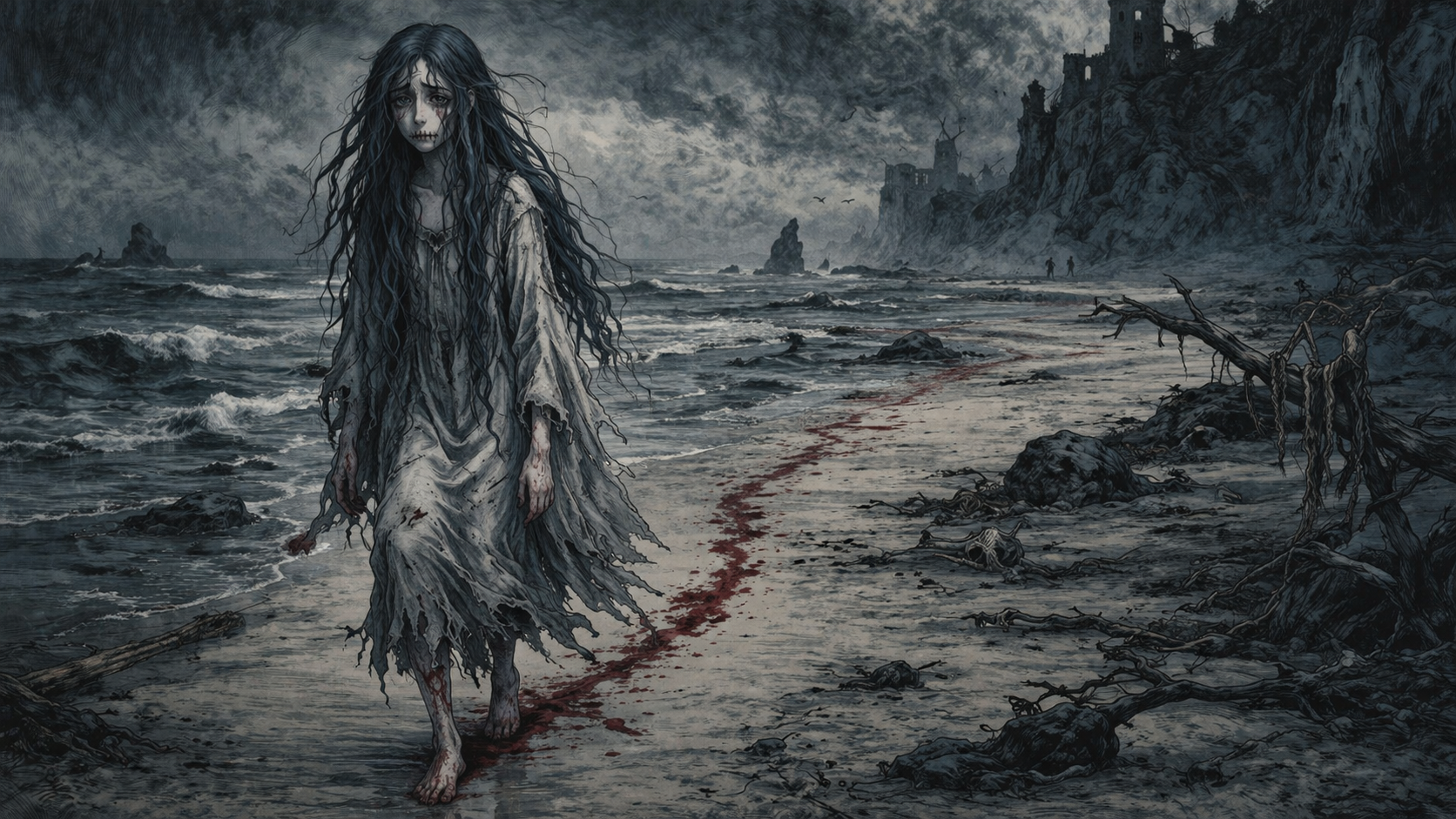
Every step she takes is described as walking on blades. Blood is not incidental. It is continuous.
And yet she continues.
Why?
Because the system has redefined suffering as progress.
If it hurts, it must be working.
If it costs something, it must be valuable.
This is how conditioning stabilizes itself.
The absence of her voice amplifies the effect. She cannot protest. She cannot renegotiate. She cannot even reveal the truth of her condition.
Silence is not passive here.
It is enforced compliance.
Why People Keep Looking Away
Because the modern adaptation replaces cost with empowerment.
The version popularized by Walt Disney Company removes the irreversible consequences. It introduces victory, mutual love, and restoration.
That version is easier to accept because it preserves a comforting belief:
That transformation leads to fulfillment.
The original dismantles that belief.
It shows a system where transformation leads to further dependency.
And where effort does not guarantee outcome.
Most readers prefer the illusion of control over the reality of uncertainty.
The Point That Should Disturb You Most
At the end, she is given a final option.
Survive by killing the prince.
Return to what she was.
Undo everything.
She refuses.
Not because she cannot act, but because the process has already redefined her.
She no longer belongs to the world she came from.
She is not accepted by the world she entered.
There is no place left to return to.
So she dissolves.
Not as punishment.
As the only remaining outcome.
Her existence becomes foam. Temporary. Untraceable.
The system does not reject her violently.
It simply leaves no space for her to exist.
Final Thought
The Little Mermaid is not about love or sacrifice.
It is about what happens when identity is traded for acceptance that never arrives.
And the most unsettling part is not that she disappears.
It is that she believes the cost was worth paying until the very end.
This document is an investigative archival reconstruction based on fragmented public records, media remnants, community accounts, and verified historical sources compiled by The 3AM Archive.
The article examines how incidents, forgotten media, internet folklore, and unresolved public memories evolve through cultural preservation and digital decay.
This is a cultural investigation document — not fictional horror content.
All visual materials used in this post are exclusive AI-generated assets created for The 3AM Archive.
