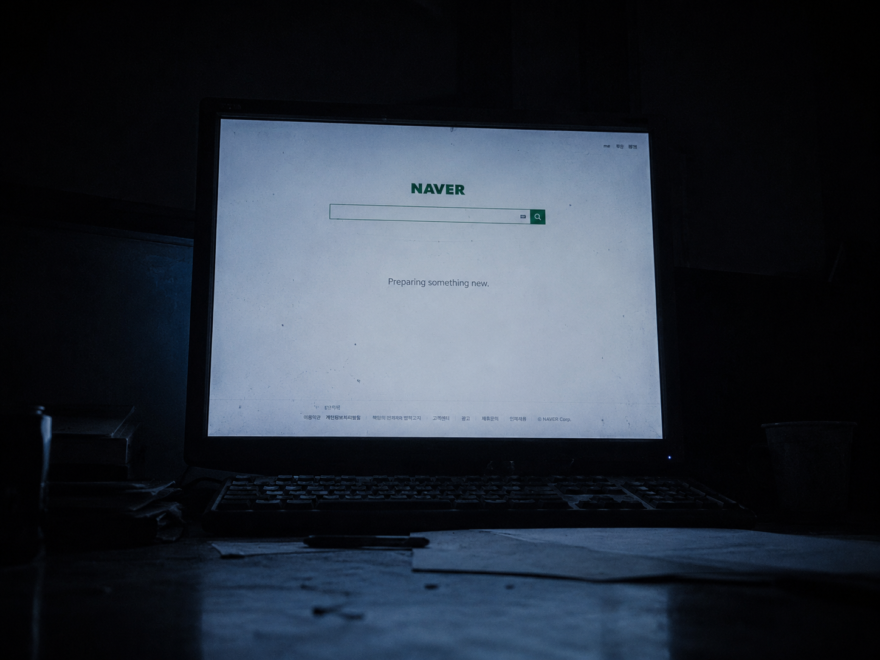
There is a specific category of institutional violence that leaves no blood—only silence, and the faint negative impression of something that once occupied space. On the evening of October 22, 2020, South Korea’s dominant internet portal, Naver, quietly switched off a feature that tens of millions of citizens had consulted as reflexively as checking the weather. The Ranking News leaderboard—a live, continuously updated column ranking the thirty most-read news articles in the nation—disappeared overnight. In its place, a flat, sterile text string appeared: “Preparing something new.”
Nothing new ever quite arrived.
What makes this episode worth dissecting—years after the news cycle moved on, after the parliamentary hearings concluded, after Naver’s stock price recovered—is precisely what was not said. No obituary was published. No archive was preserved. The ranked headlines that had functioned as a shared daily briefing for an entire civilization were simply unmade, as though the mechanism for collective attention itself had been declared a public health hazard and quietly decommissioned. The question this examination pursues is not whether Naver made a defensible business decision. The question is what disappears when a nation’s single point of shared informational focus is administratively erased—and who benefits from the ensuing fog.
Historical Anatomy
To understand what was lost in October 2020, one must first understand what Naver actually was—not in the technical sense, but in the anthropological one.
South Korea’s internet infrastructure developed along a trajectory sharply divergent from the Western model. Where American and European users fragmented across competing platforms—Google for search, Facebook for social news, Twitter for real-time discourse—South Korean users consolidated around a single domestic portal. By the early 2010s, Naver commanded somewhere between 70 and 80 percent of the country’s daily news consumption. This was not merely market dominance; it was ecological. Users did not visit Naver and then visit news outlets. They visited Naver instead of news outlets, reading full articles within the portal’s “In-Link” architecture, where content was absorbed without the reader ever leaving the Naver environment.
The implications of this arrangement for Korean media were structurally catastrophic and largely invisible to outside observers. Traditional print institutions—newspapers that had defined the country’s public discourse for decades—suffered precipitous revenue decay throughout the 2010s, not because their journalism deteriorated, but because the advertising and readership that sustained them had migrated entirely into Naver’s controlled ecosystem. The front page of Chosun Ilbo or Hankyoreh became, in practical terms, irrelevant. The front page of Naver was the only front page that mattered.
This concentration of editorial power in a single commercial interface was managed, during the early and middle part of the decade, by human curators. Naver employed editorial teams whose function was to select, sequence, and weight articles across the portal’s main page and trending modules. The social and political consequences of this arrangement became increasingly apparent: curators were accused of political bias, of suppressing certain keywords, of amplifying or burying stories according to undisclosed criteria. The accusations came from all ideological directions simultaneously—a reliable sign that the mechanism was powerful enough to be worth fighting over.
Between 2017 and 2019, Naver responded to this pressure by eliminating the human element entirely. The company deployed AiRS—its AI Recommender System—built on collaborative filtering algorithms and recurrent neural networks. The stated rationale was neutrality; by removing human judgment from the curation process, Naver could claim the feed was simply mathematical, a reflection of aggregate user behavior rather than editorial preference. Human curators were dismissed or reassigned. “The Algorithm” ascended.
The irony—which would not become fully visible for another three years—is that this transition from human bias to algorithmic bias did not reduce political suspicion. It intensified it. A human curator could be summoned before a parliamentary committee, could be asked to testify, could be made to account for individual decisions. An algorithm could not. The black box had replaced the fallible human, and the black box was, by design, unquestionable.
Structural Dissection of the Record
The April 2020 suspension of Naver’s Real-Time Trending Search Terms feature—enacted just before the April 15 legislative elections—provides the necessary prelude to the October blackout. Naver justified the suspension on the grounds of preventing voter manipulation. The feature, which displayed the ten most-searched terms on the portal in real time, had long been understood by Korean internet users as a political instrument; organized campaigns to flood the search volume with specific names or phrases were a documented phenomenon. Removing it before a major election was framed as civic hygiene.
The record on this decision is asymmetric in a revealing way. Naver’s official communications from this period are polished and brief; they describe the suspension in the passive voice, as a precautionary measure taken in response to concerns about electoral integrity. What the official record does not contain is any substantive explanation of the algorithmic mechanics that governed trending detection in the first place, any audit of past trending manipulation incidents, or any defined criteria for when—or whether—the feature might be restored. It was suspended. Then, quietly, it was not restored.
The October 22 Ranking News blackout followed a similar pattern, compressed into a single evening. Parliamentary audit season in South Korea is a period of heightened institutional exposure; the National Assembly’s audit committees summon corporate and government officials to account for decisions made throughout the year. Naver’s appearance before these committees in October 2020 was contentious. Lawmakers had accumulated substantial records of public complaints alleging that the Ranking News leaderboards had been subject to manipulation—both by coordinated user campaigns and, some alleged, by Naver’s own curation logic. The leaderboards were killed within hours of particularly aggressive questioning.
The digital residue this left behind is sparse almost to the point of clinical suspicion. Naver does not appear to have published a timestamped archive of historical ranking data. The ranked headlines that had defined the nation’s daily informational diet—for years, for millions of people—exist now primarily in screenshots preserved by individual users, in academic papers that cite aggregate data without granular records, and in the fragmented memory of journalists who covered the portal’s rise. The corporate archive, to the extent it exists, is not public. The algorithmic decision tree that determined which articles ranked where is proprietary. What remains of the Ranking News era is, in archival terms, nearly nothing.
Psychological Necropsy
For a Western reader accustomed to decentralized information environments, the Naver model requires a genuine imaginative effort to internalize. The closest analogy—imprecise but useful—would be a version of the internet in which every American, regardless of political affiliation, geographic location, or socioeconomic background, began each day by reading the same thirty headlines in the same ranked order, drawn from the same algorithmic pool. The shared front page would function less as a news source than as a social substrate; the knowledge that one’s neighbors, colleagues, and political adversaries had all seen the same information would create a specific texture of public life, a common reference point for argument and consensus alike.
This is what the Naver front page was. And this is what makes its dismantling—not its evolution, not its gradual decline, but its abrupt administrative erasure—psychologically disorienting to reconstruct.
Western liberal media theory tends to celebrate decentralization; the fragmentation of the mass media monolith into a thousand competing voices is framed as democratic liberation. The Korean experience complicates this narrative considerably. When the unified front page was replaced by individualized algorithmic feeds, the outcome was not a flowering of diverse perspectives. It was the calcification of political and ideological micro-clusters—audiences algorithmically sorted into self-reinforcing channels, receiving entirely different versions of national events, with no common informational ground from which to argue or agree.
The loss of a shared reference point, even a flawed and politically contested one, produced fragmentation more severe than the original centralization. The Naver blackout did not liberate the Korean public from a panopticon. It dissolved the panopticon and replaced it with millions of smaller, less visible cells.
The Evidence of Erasure
The mechanisms by which the Naver era has been partially erased from accessible public memory are not conspiratorial; they are bureaucratic, commercial, and structural—which is to say, they are more durable than conspiracy.
The first mechanism is proprietary closure. Naver’s algorithmic architecture, its curation logs, its historical ranking data, and its internal communications regarding the October 2020 decision are all corporate property. They are not subject to freedom-of-information requests in the way that government records are. The company has no legal obligation to preserve or publish them, and no institutional incentive to do so voluntarily.
The second mechanism is the natural half-life of digital ephemera. The Ranking News leaderboard refreshed continuously; its content was, by design, transient. Unlike a printed newspaper, which persists as a physical artifact and can be retrieved from library archives decades later, a ranked news feed leaves no inherent trace of itself. The Korean internet’s collective memory of what the leaderboards actually said—which articles ranked where, on which days, during which crises—is stored in the unreliable medium of human recollection and the incomplete medium of ad hoc screenshots.
The third mechanism is political incentive. Multiple parties had strong reasons to prefer that granular historical ranking data not become easily accessible. A detailed record of which articles trended during which electoral periods, cross-referenced with what those articles contained, would provide substantial evidence for or against the manipulation allegations that drove the parliamentary scrutiny. The absence of that record protects all parties simultaneously; it is, in this sense, a bipartisan archive failure.
The fourth mechanism is reframing. Naver’s subsequent transformation of its interface—the replacement of the information-dense “Green Window” portal with a minimalist design featuring only a search bar—physically restructured the user’s relationship to the platform’s history. Users who now encounter Naver encounter a surface that provides no visual evidence of what once occupied the same space. The aesthetic of neutrality overwrites the memory of density.
The Point of No Return
The Naver case is not anomalous. It is instructive precisely because it is an unusually clean specimen of a broader archival condition—the systematic erasure of the infrastructural layer of public information, the layer below the content, the layer that determines what content exists and in what order it is encountered.
The specific uncomfortable insight this case produces is as follows: the most consequential editorial decisions in the history of modern mass media may already be unrecoverable. The algorithmic systems that governed what billions of people read, in what sequence, with what contextual framing, during the formative years of internet-native political consciousness—these systems operated largely without external audit, without mandatory archiving, and without the legal frameworks that have historically attached to broadcasters and publishers. When those systems were changed or discontinued, their records were not transferred to public institutions. They were closed.
Naver’s human curators, for all their alleged biases, left a trail. They made decisions that could be identified, attributed, and contested. AiRS left no comparable trail; its decision logic was proprietary at inception and remains so. The politicians who pressured Naver to disable its leaderboards in 2020 were responding to public outrage about manipulation—but the specific evidence of that manipulation, the ranked data that would have proven or disproven the allegations with precision, was never placed in conditions where it could be systematically examined. The leaderboards were killed. The audit was closed. The archive remains blank.
What this means, at the level of cultural memory, is that a significant portion of South Korea’s shared informational history—the decade during which the country’s political consciousness was shaped by a single algorithmic portal—exists now as mythology rather than record. The stories that circulated on Korean forums about “The Algorithm” running in the dark, silently sorting citizens by ideological profile using morphological analysis of their search terms, could be neither confirmed nor refuted. The data that would settle the question is private property, and private property does not owe the public an accounting.
The blank landing tile that replaced the Ranking News leaderboard on October 22, 2020 is, in this reading, not a technical placeholder. It is the most accurate visual representation of what happens when a default archive of human experience is administered by entities whose primary obligation is not to the historical record but to quarterly earnings and parliamentary survival. The tile reads: “Preparing something new.”
Nothing new was prepared. The record simply ended, mid-sentence, the way all the most important records do.
🔍Search Update: Call to Action
The complete erasure of Naver’s historical leaderboards has created one of the largest regional blind spots in modern digital archaeology. For Western investigators, lost media seekers, and internet culture archivists, reconstructing this dataset remains an ongoing open-source intelligence challenge. If you possess un-cached screenshots, scraper logs, or independent data pull files of the Naver Ranking News dashboard or Real-Time Trending Search Terms from the 2015–2020 era, please contact the 3AM Archive team or submit your logs to our secure repository. Help us patch the silence.
This document is an investigative archival reconstruction based on fragmented public records, media remnants, community accounts, and verified historical sources compiled by The 3AM Archive.
The article examines how incidents, forgotten media, internet folklore, and unresolved public memories evolve through cultural preservation and digital decay.
This is a cultural investigation document — not fictional horror content.
All visual materials used in this post are exclusive AI-generated assets created for The 3AM Archive.
