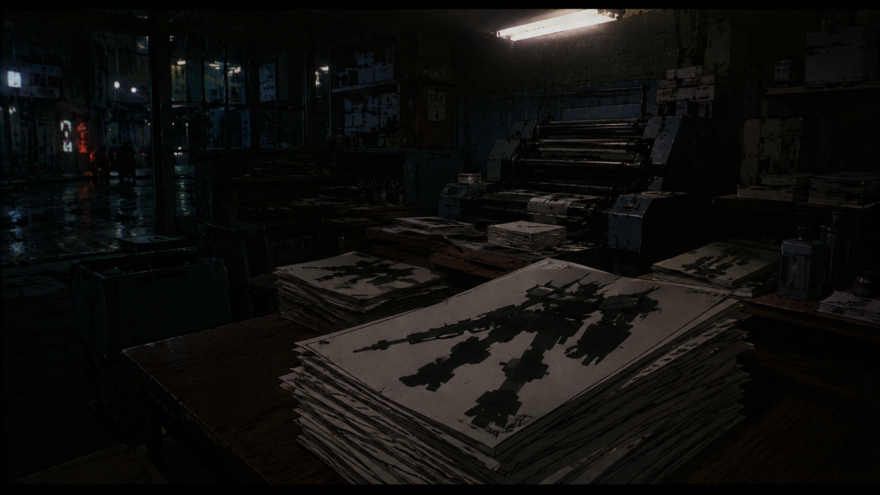
There is a particular species of historical event that resists documentation—not because it was too vast to record, but because it was too embarrassing for any surviving participant to acknowledge. The Haechinsinseor incident sits squarely within that category. A single man, known to his community only as Cheonjoje, manufactured and sold unauthorized copies of a Japanese artbook; a forum war exploded across two major Korean platforms; and that same man ultimately fled to a foreign nation’s message board to weaponize racial slurs against himself as a form of crisis management. The event should be well-documented. It isn’t. What remains is fragments—partial wiki entries that were later overwritten with dynastic history, platform servers that have since gone dark, and a secondhand oral tradition that circulates in the narrower corridors of Korean otaku culture. The incident did not vanish because it was insignificant. It vanished because the internet, it turns out, is an extraordinarily effective instrument for the selective erasure of inconvenient fact.
Historical Anatomy
To understand what Cheonjoje did in May 2007, one must first understand the structural peculiarity of the cultural environment he exploited.
The Five Star Stories (F.S.S.) is a long-running Japanese science-fantasy manga by Mamoru Nagano, serialized in Monthly Newtype since 1986. The work is notable for its extreme density—byzantine political histories, intricate mechanical designs, and an internal timeline spanning thousands of years. It demands annotation. It demands exegesis. For Western readers accustomed to a vast, cross-referenced online apparatus for major manga franchises—fan wikis, YouTube breakdowns, Reddit translation threads—this kind of text presents obvious barriers but solvable ones. For Korean readers in the mid-2000s, the barriers were categorically different.
Japan’s domestic web infrastructure in that era was famously insular; the culture of online content-sharing that would eventually globalize the consumption of manga and anime had not yet matured into the decentralized, multi-node system it would later become. The dominant Korean platform for otaku discourse, DC Inside, was itself a largely closed ecosystem. Between these two national communication bubbles sat a near-total information blackout. Korean fans who wanted access to F.S.S. content—particularly the supplemental material, the artbooks, the design notes—required a human intermediary who could read Japanese at an advanced level, possessed existing connections to Japanese fandom channels, and was willing to perform the labor of translation and dissemination.
Cheonjoje was that intermediary. His pseudonym, meaning “Celestial Emperor,” was a deliberate reference to Emperor Tianzuo of the Liao Dynasty—an overreaching sovereign whose ambition ultimately caused his own collapse, a detail that reads, in retrospect, as either remarkable self-awareness or extraordinary irony. He operated primarily through Gongjunggungjeon (공중궁전), a blog-style platform translating loosely as “The Sky Palace.” He had parlayed his position as the dominant Korean authority on F.S.S. into an official role: he was the hired translator for Seoul Cultural Publishers’ licensed Korean edition of the manga. He was, simultaneously, a corporate asset and the de facto monarch of the domestic fandom.
That convergence of official sanction and community authority gave him something approaching a genuine monopoly—linguistic, institutional, and social. If you wanted F.S.S. in Korean, Cheonjoje’s voice was the only one speaking.
Structural Dissection of the Record
In May 2007, F.S.S. DESIGNS—a heavily anticipated Japanese artbook compiling Nagano’s mechanical designs and worldbuilding materials—had no licensed Korean release. The commercial logic was sound: the artbook was a niche product within a niche genre; the cost of licensing and printing was non-trivial; and the Korean F.S.S. readership, while dedicated, was small. Seoul Cultural Publishers had no immediate plans to publish it.
Cheonjoje printed it himself.
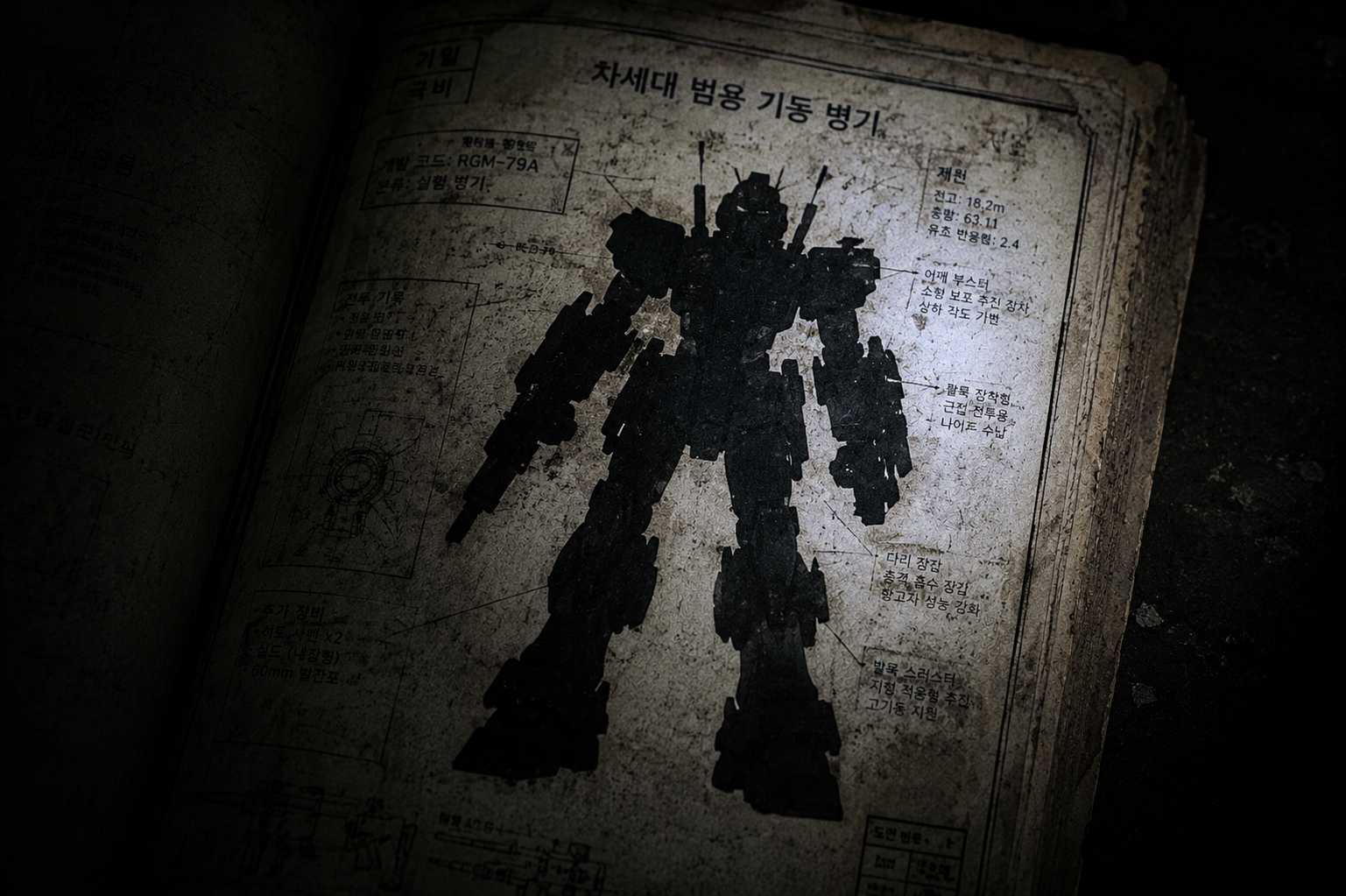
He produced 380 copies of what he titled Haechinsinseor (해체신서)—an artbook reproduction rendered in black and white, sold at 27,000 KRW per copy. The title was not incidental. Haechinsinseor is a deliberate phonetic echo of Kaitai Shinsho, the landmark 1774 Japanese translation of a Dutch anatomical text that introduced Western medical dissection to East Asia. The allusion is careful and revealing. Cheonjoje was positioning his publication not as piracy but as intellectual transmission—a culturally significant act of translation across a gap that official channels had left open. The framing was scholarly; the act was criminal.
His self-reported revenue came to approximately 7.2 million KRW—roughly equivalent, at the time, to several months of average Korean wages. He was not operating as an amateur enthusiast covering printing costs. He was running a black market.
The format of Haechinsinseor compounded the incident’s peculiarity. Because it reproduced silhouetted mechanical drawings with accompanying text annotations, the physical object read less like a fan publication and more like a technical manual for machinery that did not exist. Within Korean otaku circles, in the years following, this contributed to the artifact acquiring a genuinely mythologized status—described in secondhand accounts as something between a collector’s relic and a cursed document, circulating in private transactions rather than open sale.
Psychological Necropsy
The bootleg publication alone would constitute a reasonably interesting footnote in Korean internet history. What elevates the Haechinsinseor incident to something more disturbing is what happened next.
The discovery of Cheonjoje’s unauthorized print run triggered coordinated mobilization across two major platforms: Egloos, a Korean blogging service that functioned as something of an intellectual’s alternative to DC Inside, and DC Inside itself. These platforms had an existing competitive antagonism; the F.S.S. incident transformed that antagonism into organized action. Campaigns were launched to doxx Cheonjoje—to surface his real identity—and to report the copyright violation directly to Kadokawa Shoten, the Japanese rightsholder. The goal was not merely to punish Cheonjoje but to ensure maximum institutional damage: to bring the full weight of Japanese corporate copyright enforcement down on a man who had, until that moment, been the official face of the franchise in Korea.
Cheonjoje’s response to this pressure is the most psychologically striking element of the case. He did not issue a retraction. He did not go silent. He traveled, digitally, to 2ch—Japan’s dominant anonymous textboard, which in 2007 was operating at peak intensity as a hotbed of anti-Korean sentiment—and he began posting.
His strategy was to get ahead of any complaints that might reach Nagano or Kadokawa by controlling the damage narrative on Japanese soil. To do this, he needed to neutralize himself as a target. He accomplished this through an act of preemptive self-abasement: he applied the term Chon (춍) to himself—an extreme anti-Korean xenophobic slur, roughly equivalent in social violence to the most severe racial epithets in English—and framed his presence on 2ch with the line, in essence, that he was “miserable enough as the only Chon here.” The intention was to disarm the 2ch community by becoming the most hostile voice in the room toward his own ethnicity, thus removing any reason for the Japanese users to escalate the situation toward Kadokawa.
The gambit reportedly shocked even the nationalistic 2ch user base, which had a robust appetite for anti-Korean rhetoric but apparently found Cheonjoje’s self-application of the slur tonally disorienting. He had turned himself into a figure too pathetic to be a satisfying target. This was not an accident; it was a calculated social maneuver executed under significant pressure—and it appears to have partially worked, in that no confirmed report from 2ch reached Kadokawa through that channel.
To a Western observer, the psychology here is nearly unreadable through ordinary frameworks. The closest analog might be a fan translator so financially and socially invested in controlling access to a cultural product that they are willing to publicly perform ethnic self-hatred on a foreign platform to protect that access. The phenomenon belongs to a specific strain of early East Asian internet tribalism—one in which community gatekeeping carried enough social currency to motivate genuinely extreme behavior.
The Evidence of Erasure
By late 2007, the situation had escalated to the level of institutional intervention. Rumors circulated—never confirmed—that Mamoru Nagano was personally visiting Korea; that Seoul Cultural Publishers was conducting an internal investigation; that Cheonjoje’s relationship with the publisher had been severed or was in the process of being severed. Cheonjoje initiated what Korean internet culture calls 잠수 (jamsoo)—a “submarine maneuver,” meaning a complete digital disappearance. His primary platform, Gongjunggungjeon, was scrubbed. The Sky Palace went dark.
He eventually resurfaced, quietly, in Korean blogging circles in the years following. But the evidentiary record of the incident had already begun its collapse. Egloos, which had hosted the bulk of the inter-platform discourse, shut down its servers permanently—eliminating, in a single administrative action, the primary archive of the forum war, the accusation threads, the documentation of the doxxing campaigns, and whatever contemporaneous accounts existed of Cheonjoje’s 2ch posts. DC Inside’s archiving practices in that era were imperfect; much of what remained was thread fragments and references without attached context.
The most architecturally elegant form of erasure, however, was the wiki revision. Early Korean wiki formats had indexed “Cheonjoje” in direct association with the Haechinsinseor incident—the pseudonym and the scandal were treated as functionally synonymous. Over time, subsequent edits replaced the scandal documentation with historical records of Emperor Tianzuo of the Liao Dynasty, the actual historical figure from whom the pseudonym derived. The mechanism here was not crude deletion; it was displacement. The archival slot for “Cheonjoje” was filled with legitimate historical content, which meant that any search for the term now returned emperors and dynasties rather than copyright violations and self-applied slurs. The original incident did not disappear; it was buried beneath a layer of authentic history that rendered it findable only to those who already knew what they were looking for.
An additional rumor layer compounded the obfuscation. The most persistent unverified account of the incident’s resolution claims that Seoul Cultural Publishers did not terminate their relationship with Cheonjoje for ethical reasons. Instead—according to insider accounts that circulated but were never substantiated—the publisher allegedly confiscated Cheonjoje’s translation plates with the intent of producing their own unauthorized corporate bootleg for the black market. The further allegation is that an internal whistleblower brought this to Kadokawa’s attention, nearly causing a permanent revocation of South Korea’s publishing rights for the entire F.S.S. series. If accurate, the incident ceased to be a story about a rogue fan translator and became a story about institutional piracy operating one tier up the corporate ladder. There is no documentation to confirm or refute this. The rumor exists in the same archival space as the rest of the incident—secondhand, unverifiable, dependent on the recollections of people who have strong reasons to remember selectively.
The Point of No Return
The Haechinsinseor incident is a controlled demonstration of something the internet was never supposed to permit: effective, durable erasure.
The conventional narrative about digital information is that it is the default archive of human experience. The internet does not forget, screenshots outlast deletions, and no fire can burn a server farm comprehensively enough to eliminate a record. The Haechinsinseor case contradicts this. What it reveals, instead, is that digital memory is highly dependent on the survival of the platforms that host it; that when those platforms die, the conversations and documents they contained die with them; and that the most sophisticated form of historical suppression available in the internet age is not deletion but displacement—the replacement of unwanted records with legitimate content that occupies the same archival address.
The incident also reveals the structural fragility of fandom knowledge systems built around single gatekeepers. Cheonjoje’s authority was absolute precisely because no redundant system existed to challenge or document it. When he disappeared, the institutional memory of his actions had no distributed backup. The fans who witnessed the events scattered; the platforms that hosted the documentation closed; the wiki entries were gradually rewritten. What survived is not a record—it is the residue of a record, the outline of something Nuance resists reconstruction.
There is one final uncomfortable element. The Haechinsinseor itself—the 380 black-and-white booklets that began this entire sequence—almost certainly still exist, in private hands, in some number. The artifact outlasted the documentation of the act that created it. Somewhere, copies of a manual for fictional machines, produced through an act of copyright violation that triggered a cross-border psychological crisis, are sitting on shelves. The object persisted; the story around it dissolved. This is perhaps the most accurate image available for what early internet cultural memory actually produced: artifacts without context, incidents without records, and a historical sediment so thin that a single platform shutdown can reduce an event to myth.
🔍Search Update: Call to Action
The 3AM Archive actively tracks surviving physical manifests of the 2007 Haechinsinseor (해체신서) bootleg. Because the digital trails across Egloos Valley and early 2ch textboards have been permanently wiped or displaced by wiki editing loops, the physical texts remain the only absolute proof of this event.
If you possess an original 2007 copy, localized thread screenshots, or archived 2ch logs regarding the “Chonjoje” thread, please contact our digital forensics logs or submit a decrypted data entry to the registry. The truth should not exist solely as a footnote beneath the history of the Liao Dynasty.
This document is an investigative archival reconstruction based on fragmented public records, media remnants, community accounts, and verified historical sources compiled by The 3AM Archive.
The article examines how incidents, forgotten media, internet folklore, and unresolved public memories evolve through cultural preservation and digital decay.
This is a cultural investigation document — not fictional horror content.
All visual materials used in this post are exclusive AI-generated assets created for The 3AM Archive.
