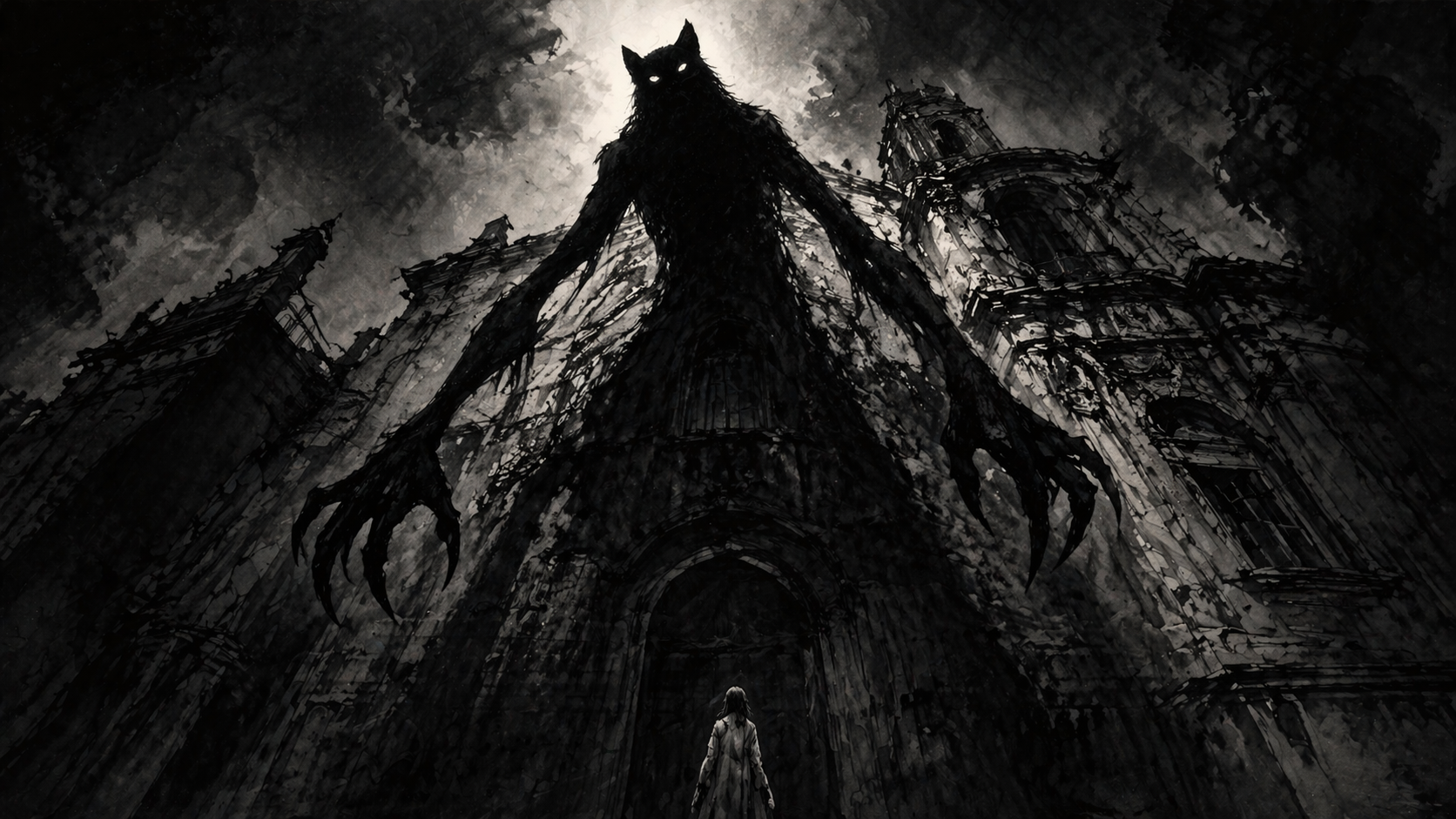
Every culture tells its children a version of this story. A clever animal. A poor young man. A kingdom, an ogre, a princess. The details shift, but the skeleton stays identical across four centuries and a dozen languages. We call it a fairy tale. We hand it to children without footnotes. What we do not tell them what the scholars who study Charles Perrault’s 1697 text tend to mention only in academic asides is that Puss in Boots is not a story about luck, or cleverness, or the magic of believing in yourself. It is a meticulous instruction manual for social climbing through sustained deception, written at the height of French absolutism, in a court where performance of status was not metaphor it was survival.
The cat is not charming. The cat is a strategist operating inside a system he understands with terrifying precision. And the young man he elevates? He never grows, never earns, never develops a single competency. He simply obeys the cat’s instructions and receives a kingdom. If that sounds like a success story, read it again more slowly.
The Structural Framework: A Three-Party Con
Strip away the talking animal and the magic elements and what remains is a recognizable social structure: a low-status operator (the cat), a compliant instrument (the miller’s son), and a series of high-status marks the peasants, the king, and finally the Ogre. The cat does not assist his master in the way a loyal servant assists a lord. He runs a confidence operation. Every move he makes is a fabrication calibrated to the beliefs and weaknesses of whoever he is addressing next.
When the cat first approaches the king with a gift of rabbits, he names his master the “Marquis of Carabas” a title he invented completely. This is not embellishment. This is identity construction. The cat understands that the king’s mind fills in what it cannot verify. A name with “Marquis” attached triggers a pattern of deference that does not need supporting evidence. The king begins behaving as though the Marquis exists before the Marquis has done a single thing to earn the title. The cat has not lied about a fact. He has manufactured a social reality and then allowed the king’s own assumptions to build it into something solid.
The mechanism is almost too clean. The miller’s son does not need to learn the customs of nobility. He does not need years of court education or genealogical legitimacy. He only needs to appear at the right moment, dressed in clothes the cat procured from the king himself, while the cat runs ahead clearing the path. The structural point the story makes inadvertently or not is that aristocratic identity is not intrinsic. It is performed. And an intelligent enough observer can manufacture the performance without the substance beneath it.
Perrault published this in 1697. Louis XIV was still on the throne. The entire architecture of Versailles was designed as a theater of power to make status visible, legible, and awe-inducing. The court nobility competed not through war but through proximity to the king, through the angle of a bow, through who was allowed to hand the monarch his glove. Puss in Boots is set inside exactly that world. The cat knows the rules of that world better than anyone in the story. He weaponizes them. The tale presents this not as corruption but as ingenuity.
Historical Archetypes: The Trickster Always Serves Someone
The trickster figure appears in virtually every mythological tradition Loki, Anansi, Coyote, Hermes, Reynard the Fox. What literary scholars note, but children’s adaptations erase, is that the trickster’s cleverness almost never creates justice. It redistributes advantage. The trickster does not level the playing field. He tilts it toward whoever engaged his services, or toward himself. The randomness is the point. Cleverness, in the trickster tradition, is morally neutral. It simply is.
Puss in Boots belongs to this lineage, but with a significant and underexamined twist. Unlike Anansi, who typically serves his own interests, or Loki, whose motives are kaleidoscopically complex, Puss is entirely in service to an external master. He does not benefit materially in most versions of the tale. He performs an enormous, sustained deception involving multiple social strata, the violent death of a supernatural being, and the orchestrated dispossession of a peasant workforce and his reward, in Perrault’s telling, is to become “a great lord” who “no longer ran after mice, except for his own amusement.” The cat escapes servitude. But he escapes it by creating a new system of servitude beneath a manufactured aristocrat he installed himself.
The repeated structure across folk traditions is this: a poor man inherits the least valuable thing (the cat, in this case; other versions use a ring, a lamp, a companion spirit) and that thing turns out to be the only currency that actually matters not land, not gold, but social leverage. The pattern normalizes the idea that poverty is not a structural condition but a failure of having the right ally or artifact. You were not poor because of how wealth was distributed. You were poor because you hadn’t yet encountered your magical cat. This is not an accident of storytelling. This is the story’s ideological function.
The earliest versions of this tale predate Perrault Giovanni Francesco Straparola included a version in Le piacevoli notti in the 1550s, and Giambattista Basile wrote one in the 1630s. Each iteration moves the tale closer to a legitimizing fantasy for social mobility through performance rather than labor. By the time Perrault codifies it for the French court, the story has been polished into something almost frictionless: a mechanism for imagining upward mobility that requires no systemic change whatsoever.
Psychological Necropsy: Fear, Compliance, and the Thing Nobody Asks the Cat
The miller’s youngest son is given the cat and two choices: despair, or comply. He complies. He is told to strip and enter a river. He does. He is told to claim lands that are not his to peasants he has never met. He does. He follows the cat’s instructions with a passivity that the story frames as trust, but which reads, under sustained attention, as something closer to dissociation. He never asks the cat why. He never questions a single instruction. He simply performs the role he is assigned and allows his identity to be constructed around him.
This is not presented as a character flaw. It is presented as the correct behavior. The story’s implicit psychology is that the appropriate response to clever guidance from a superior operator is total surrender of agency. The young man who questions, who hesitates, who insists on understanding the plan that man does not get the princess. He does not even get introduced in this narrative. He does not exist. The story has deleted him before the first page.
What the cat feels about any of this is not interrogated. The text gives us a creature of extraordinary intelligence deployed entirely in service of a master he was assigned by inheritance, not by choice. In the original French tale, the cat asks only to be given a bag and a pair of boots the tools of a working animal made to perform above his station. He is given them. He proceeds. No one asks what the cat wants. No one asks whether the cat, who is clearly the most competent entity in the story, resents the architecture of a world where his intelligence is the instrument of someone else’s elevation. The story cannot afford to ask that question, because the answer might destabilize everything.
The Ogre is the one character who tries to exist outside the system. He is powerful, he possesses genuine magic, and he owns his castle outright. He is also the only character who engages with the cat honestly the shapeshifting demonstration is mutual, almost collegial. The cat says: you can become a lion? Let me see. The Ogre transforms. The cat then kills him by manipulating him into becoming a mouse. The Ogre’s mistake was engaging in good faith with a creature operating in bad faith. The story positions this as deserved. The Ogre was powerful and owned things therefore he was available to be dispossessed. His prior claim to the castle is not mentioned again.
Why People Keep Looking Away: The Comfort of the Earned Kingdom
The story feels satisfying because of where it places its emotional resolution. A young man who began with nothing ends with a princess, a title, and a castle. The internal logic of fairy tales trains readers to experience this as earned the suffering of the opening (he was poor, he got the worst inheritance) is retroactively redeemed by the triumph at the end. The journey from nothing to everything feels like justice.
But no one in this story earned anything through virtue or growth. The young man did not become wiser or kinder or more capable. The princess did not choose her husband; she encountered him in a carriage and the king was already impressed. The peasants did not gain freedom they exchanged one lord (the Ogre, presumably) for another (the manufactured Marquis), and their role in the story is simply to say the lines the cat told them to say. They do not resist. They do not hesitate. They recognize immediately that compliance is the safer bet.
This is the part that children absorb without being told to absorb it. Not the explicit moral Perrault’s stated morals at the end of his tales are often ironic, even satirical. The absorbed lesson is structural: the world has categories, and the way to move between categories is to find someone who knows how the categories work and do exactly what they say. Individual agency is not the engine of change. The right ally is. And if you are lucky enough to inherit the right ally, the correct response is unconditional obedience because the ally, not you, understands the game.
We find this comforting because the alternative is to sit with the story’s actual claim: that the system of rank and legitimacy is hollow, that it can be gamed by a sufficiently clever operator, and that the people inside it the king, the peasants, the court are not sophisticated enough to notice. If that is true, then not just this fairy tale but the entire hierarchy of society rests on a performance that nobody thought to verify. That is too large an idea to hold while reading a bedtime story. So we look at the happy couple and feel warm. We close the book.
The Point That Should Disturb You Most: The Cat Never Leaves
Read the ending one more time. Puss in Boots becomes a great lord. He stops hunting mice except for his own amusement. The implication is comfort, retirement, elevation. But this is the detail that should snag something in the mind. The cat does not leave. The cat has installed himself at the apex of the kingdom he manufactured. He is now a lord within the court of a king who owes the legitimacy of his new son-in-law entirely to the cat’s deceptions. Which means that every lever of power in that kingdom runs through the cat’s prior knowledge. The king does not know the Marquis of Carabas is a fiction. The Marquis himself does not fully understand what the cat did or how. Only the cat holds the complete picture.
The story presents this as a happy ending. It is structured identically to the ending of a coup. A single intelligent operator, operating in the dark, has rearranged the entire social order of a kingdom elevated a puppet, eliminated a rival, secured his own position within the new hierarchy and everyone around him believes the outcome was natural, even inevitable. The cat “no longer ran after mice.” Of course he didn’t. He was done running. He had arrived.
