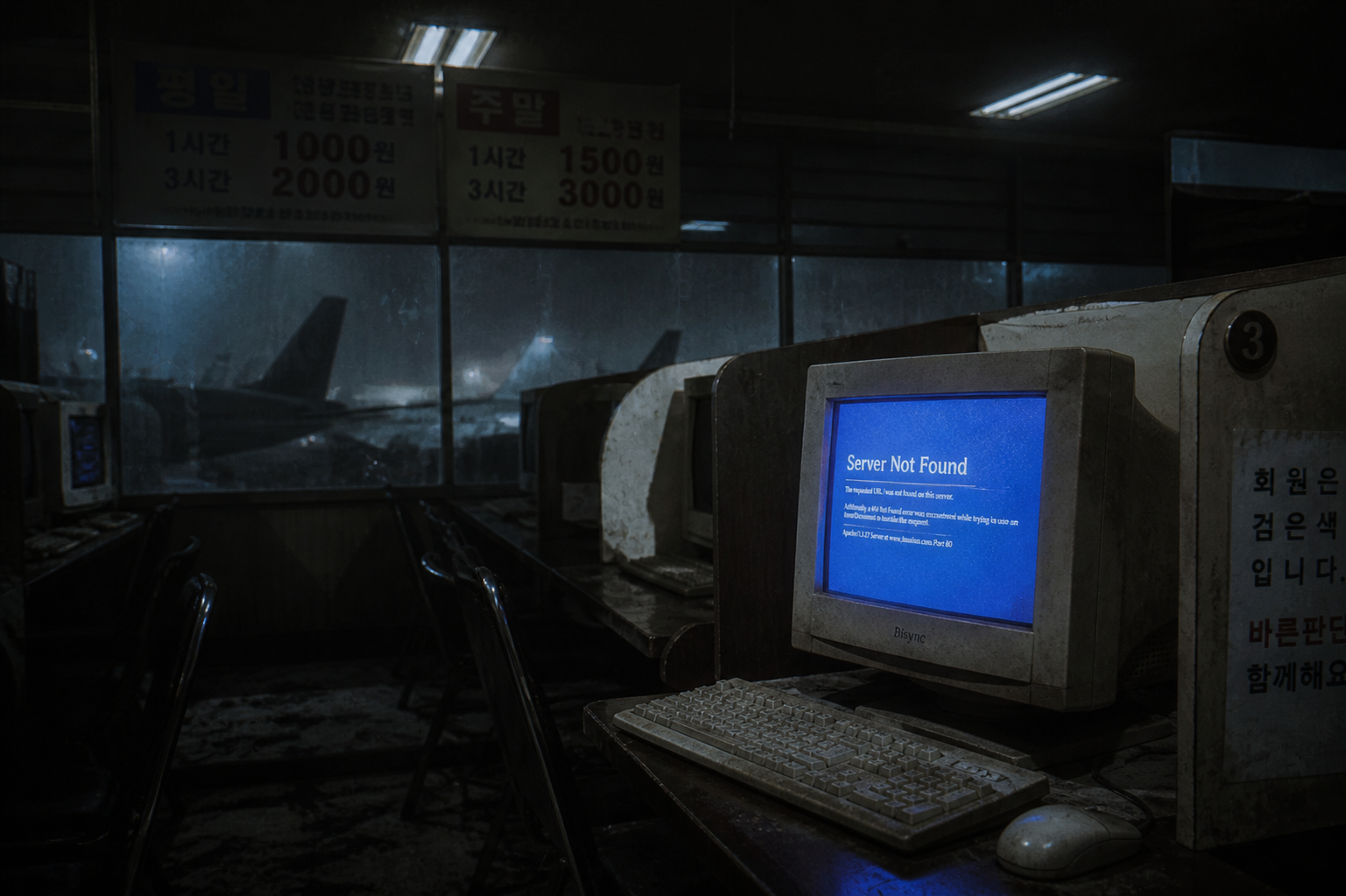
No footage. No screenshots. No server logs.
The only evidence that Tactics Mercenary ever existed is the memory of people who played it. And memory, as any forensic analyst will confirm, is the least reliable form of documentation known to the discipline.
But it is all there is. So it is what this investigation will use.
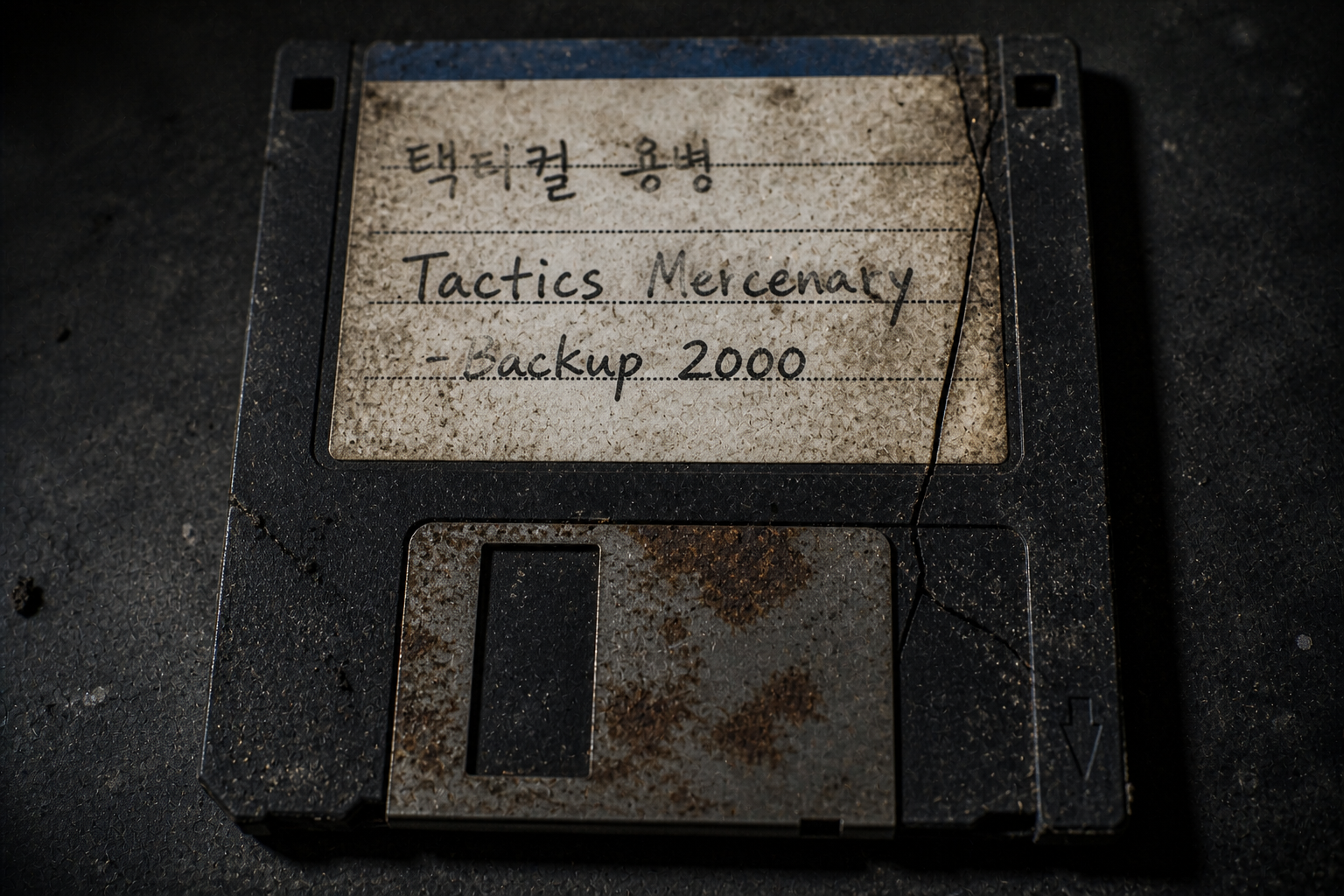
The Evidence File: Reconstructing Something From Almost Nothing
Tactics Mercenary was an online PvP aerial combat shooter. That much is agreed upon by the surviving testimony. Players controlled fighter aircraft in real-time combat against other human opponents. The genre classification places it within a specific and now largely defunct category of early Korean online gaming: the browser-adjacent or client-light competitive action title that proliferated in the late 1990s and very early 2000s, before the infrastructure for more complex online experiences became commercially viable.
The production origin is attributed, with the qualifier of reasonable probability rather than certainty, to Pantech Net. This attribution matters because Pantech Net was not a small or obscure entity during its operational period. It was a division of Pantech, the Korean telecommunications and electronics conglomerate, and it operated Mirinae Software as a subsidiary development arm. Mirinae Software itself produced titles that left documented traces in Korean gaming history. The parent organization was large enough that its products should, by institutional logic, have left recoverable records.
They did not. Or more precisely, if records exist, they have not been located.
The distribution channel presents an additional layer of uncertainty. Testimonies suggest the game was accessible through Chollian, one of the major early Korean internet platforms. The Chollian reference requires clarification because the name encompasses two distinct services: the original PC communications network—a system of pre-WWW bulletin board systems (BBS)—that operated through dial-up infrastructure, and the subsequent web platform that Chollian transitioned to as internet access became widespread. Which of these served as the host for Tactics Mercenary has not been definitively established. The distinction matters for chronological purposes. It does not change the core archival fact, which is that the game is gone regardless of which platform delivered it.
What survives is testimony. Players who competed in the PvP combat system describe the experience in fragmentary terms. The flight mechanics. The competitive structure. The feeling of the early online environment in which the game operated. These descriptions are consistent enough across independent accounts to establish that something real existed. They are insufficiently detailed to reconstruct what that something looked like, how it functioned at a technical level, or what distinguished it from the other aerial combat titles of its era.
The YouTube searches return nothing. The screenshot archives return nothing. The gaming databases that catalog Korean titles from this period contain either no entry or a placeholder with no associated media. The game exists in the historical record as a name and a set of secondhand descriptions. Nothing more.
The Structural Framework: Why Early Korean Online Games Disappear Completely
The Tactics Mercenary case is an outlier, though it follows a documented standard of failure that characterizes early Korean online gaming as a category.
The Korean online gaming industry of the late 1990s developed with extraordinary speed under conditions that were structurally hostile to preservation. The infrastructure for online play, server architecture, client distribution, account management, was built as commercial utility rather than as cultural artifact. When a game ceased to generate revenue, the servers were shut down. The client software, often distributed through physical media or through platform-specific download systems that no longer exist, became inaccessible. The development studio moved to other projects or dissolved entirely. The game disappeared from active existence and, because no one had treated it as something worth preserving, from the recoverable record as well.
This process was faster and more complete for games distributed through early platform networks like Chollian than for games sold through retail channels. A retail game, even a commercial failure, left physical artifacts: boxes, manuals, disc or cartridge media that could end up in collections, secondhand markets, and eventually preservation archives. A platform-distributed game left no physical artifact. It existed as data on servers that were eventually wiped and as a client application on individual computers that were eventually replaced.
The Pantech Net and Mirinae Software connection adds a specific dimension to this pattern. Corporate restructuring, acquisition, and dissolution routinely result in the loss of development archives. When Pantech Net’s operational structure changed, the internal documentation of its game development activities did not automatically transfer to any preservation institution. It went wherever corporate archives go when the people responsible for them no longer have a reason to maintain them: into storage that is eventually cleared, onto servers that are eventually decommissioned, into formats that are eventually unreadable.
The game was a commercial product. Commercial products that cease to generate revenue cease to receive institutional support. The institutional support is what keeps digital content recoverable. Without it, the content degrades from inaccessible to unrecoverable on a timeline determined by the physical media and the software ecosystems it depended on.
Tactics Mercenary reached the end of that timeline before anyone thought to intervene.
Historical Archetypes: The Oral Tradition as the Last Archive
The survival of Tactics Mercenary in collective memory rather than in any recoverable technical form places it in a specific and uncomfortable category of cultural artifact: the thing known only through testimony.
This is not a new phenomenon. Pre-literate cultures preserved knowledge of events, performances, and creative works through oral transmission across generations. The Homeric epics existed for centuries as oral tradition before being committed to writing. The performance traditions of cultures without written notation systems maintained complex musical and theatrical repertoires through apprenticeship and living transmission. Oral tradition was the primary archival technology for the vast majority of human cultural history.
The specific characteristics of oral tradition as a preservation mechanism are well documented. It is highly effective for certain types of information, particularly narrative structure, emotional resonance, and the broad outlines of experience. It is unreliable for precise technical detail, exact chronology, and the specific qualities that distinguish one thing from a similar thing. A player who competed in Tactics Mercenary can reliably tell you that they played it, that it involved aerial combat, and how it made them feel. They cannot reliably tell you the frame rate at which it ran, the exact dimensions of the play field, or whether the visual style they remember was specific to this game or a composite of multiple games from the same era.
The testimonies that constitute the current archival record of Tactics Mercenary are oral tradition in digital form. Forum posts, comments on gaming history threads, responses to queries about lost Korean games, these are not documentation. They are testimony. They carry the evidentiary weight of testimony, which is significant but bounded.
The parallel to ancient lost works is analytically precise. We know that Aristotle’s Poetics had a second volume addressing comedy because later sources reference it. We cannot read it because no copy survived. We know that Tactics Mercenary existed as an online aerial combat PvP game because people who played it have said so. We cannot play it because no accessible version survived.
The scale of cultural significance is different. The epistemological situation is identical.
Psychological Necropsy: What It Means to Remember Something Nobody Can Verify
The players who carry memories of Tactics Mercenary occupy a psychologically unusual position. They are the sole custodians of a cultural experience that cannot be independently verified, confirmed, or shared with anyone who did not participate in it directly.
This creates a specific kind of isolation. The experience is real to them. The evidence for its reality is only their own memory and the corroborating testimony of others who share the same limitation. No external verification is possible. The game cannot be loaded and demonstrated. The server logs no longer exist to confirm account activity. The screenshots that would establish visual continuity between their memory and a shared image are not available.
What they remember is real. The category of real it belongs to, verifiable historical event versus a constructed memory that has been reinforced through social sharing, cannot be definitively established without physical evidence. This is not an accusation. It is the epistemological condition created by complete archival loss.
The social dynamics of communities that form around lost games with minimal documentation tend to follow a recognizable pattern. Initial inquiries attract the people who played the game and want confirmation that others share their memory. These exchanges reinforce the testimony and establish a consensus picture of what the game was. The consensus picture is then referenced by subsequent inquiries, creating a secondary source that is composed entirely of compiled testimony rather than primary documentation.
The Tactics Mercenary community, insofar as it exists in scattered forum threads and gaming history discussions, has followed exactly this pattern. The available information about the game is largely the product of testimony reinforcing testimony. The circle is closed. No external verification point exists.
This is not a problem unique to Tactics Mercenary. It is the epistemological condition of lost digital media in general, concentrated to an extreme degree by the near-total absence of any surviving artifact.
The people who remember playing this game are not unreliable. They are isolated. Their memory is the archive. And the archive is inaccessible to anyone who did not contribute to it.
Why People Keep Looking Away
The preservation failure that produced the Tactics Mercenary situation is systemic and ongoing. Discussing it in terms of a specific lost game allows the conversation to remain comfortable, bounded by a specific case with a specific set of facts. The more uncomfortable conversation is about the general condition.
The early Korean online gaming ecosystem produced hundreds of titles that are now in various stages of archival loss. Some have minimal documentation. Some have screenshots but no playable version. Some have client files but no server infrastructure to run them on. Some, like Tactics Mercenary, have only testimony.
The institutions that could have addressed this preservation gap did not. The Korean Game Preservation Society and similar organizations have done significant work, but they operate with limited resources against a problem of enormous scale. The commercial entities that developed and distributed these games had no preservation mandate and no incentive to create one. The platform organizations that served as distribution channels prioritized active content over historical content and made infrastructure decisions accordingly.
The gaming community has partially compensated for institutional failure through fan-driven preservation efforts: ROM archiving, server emulation, documentation projects. These efforts have preserved content that would otherwise be gone. They are also selective, driven by the enthusiasm of specific communities for specific games. A game without an active fan community at the moment when preservation would have been possible is a game that does not get preserved.
Tactics Mercenary did not have an active fan community at the right moment. It had players who remembered it and moved on to other games. By the time the cultural conversation about preserving early Korean online games developed enough to make someone go looking for it, there was nothing left to find.
The looking-away is not deliberate. It is structural. Preservation requires resources, institutional support, and the recognition of value before the thing being valued is gone. None of these conditions were present for Tactics Mercenary at the time they would have mattered.
The Point That Should Disturb You Most
The YouTube comments section has become the default archive of human experience for the digital age. This reality has profound implications for digital permanence.
We are trusting our collective memory to platforms that prioritize engagement over accuracy. Furthermore, the correlation between institutional size and preservation outcome is inverse in the early online gaming context.
A major corporate product distributed through a proprietary platform and dependent on server infrastructure for its existence is more vulnerable to complete loss than an independent product sold on physical media and playable without network connectivity. The bigger the institution, the more complete the disappearance when the institution’s priorities change.
This inversion has implications that extend beyond gaming history. It suggests that the content most likely to survive from the early internet era is not the content produced by the largest and best-resourced organizations. It is the content produced at the margins: the independent developers, the fan projects, the content that was distributed widely enough and in simple enough formats that copies accumulated in the hands of individuals who held onto them for personal rather than commercial reasons.
The institutional archive is the one that burns or closes or wipes its servers. The personal collection, the individual who kept a hard drive or a disc or a printout because they valued it personally, that is where the record survives.
Tactics Mercenary had no individual who kept a copy because they valued it personally in a form that would remain accessible. It had players who valued the experience. The experience lived in servers that no longer run and on computers that have long since been replaced.
The testimony is what is left. And testimony, unlike a disc or a screenshot or a client executable, cannot be transferred to new media when the humans carrying it are gone.
The window for preserving Tactics Mercenary in any form more durable than human memory is closing. It may already be closed. The game was played by people who are now old enough to have lives that do not include answering questions from gaming historians. The community that might have formally documented the testimony has not assembled. The testimony is dispersing back into the noise from which it briefly emerged.
When the last person who remembers playing Tactics Mercenary no longer remembers, or no longer can be asked, the game will be gone in a way that has no qualified modifier. Not inaccessible. Not unverified. Gone.
🔍Search Update: Call to Action
The search for Tactics Mercenary is now a priority for the global lost media community. If you were an active user of early Korean BBS systems or the Chollian platform between 1998 and 2002, we are looking for any remnant of this title. Check legacy hard drives for “client-light” executables or cache folders. Even a single low-resolution screenshot or a saved forum thread could serve as the forensic anchor needed to verify this lost history.
No confirmed footage, screenshots, or client files from Tactics Mercenary have entered public circulation as of current documentation. Testimony recorded now is testimony that exists. Testimony not recorded is testimony that eventually disappears.
This document is an investigative archival reconstruction based on fragmented public records, media remnants, community accounts, and verified historical sources compiled by The 3AM Archive.
The article examines how incidents, forgotten media, internet folklore, and unresolved public memories evolve through cultural preservation and digital decay.
This is a cultural investigation document — not fictional horror content.
All visual materials used in this post are exclusive AI-generated assets created for The 3AM Archive.
