There is a particular species of unease that the human mind reserves for the thing that should be visible but is not. A photograph with a face cut out. A voice recording that dissolves into static at precisely the consequential moment. An official document with a paragraph redacted—not sloppily, not apologetically, but with the bureaucratic confidence of an institution that knows it will never be audited. The 2019 FIFA World Cup Qualifier between North Korea and South Korea belongs to this taxonomy. It is not lost in the way that a silent film decomposes in an unlocked warehouse; it is lost in the way that a state secret is lost—deliberately, structurally, and with full institutional awareness of what erasure costs.
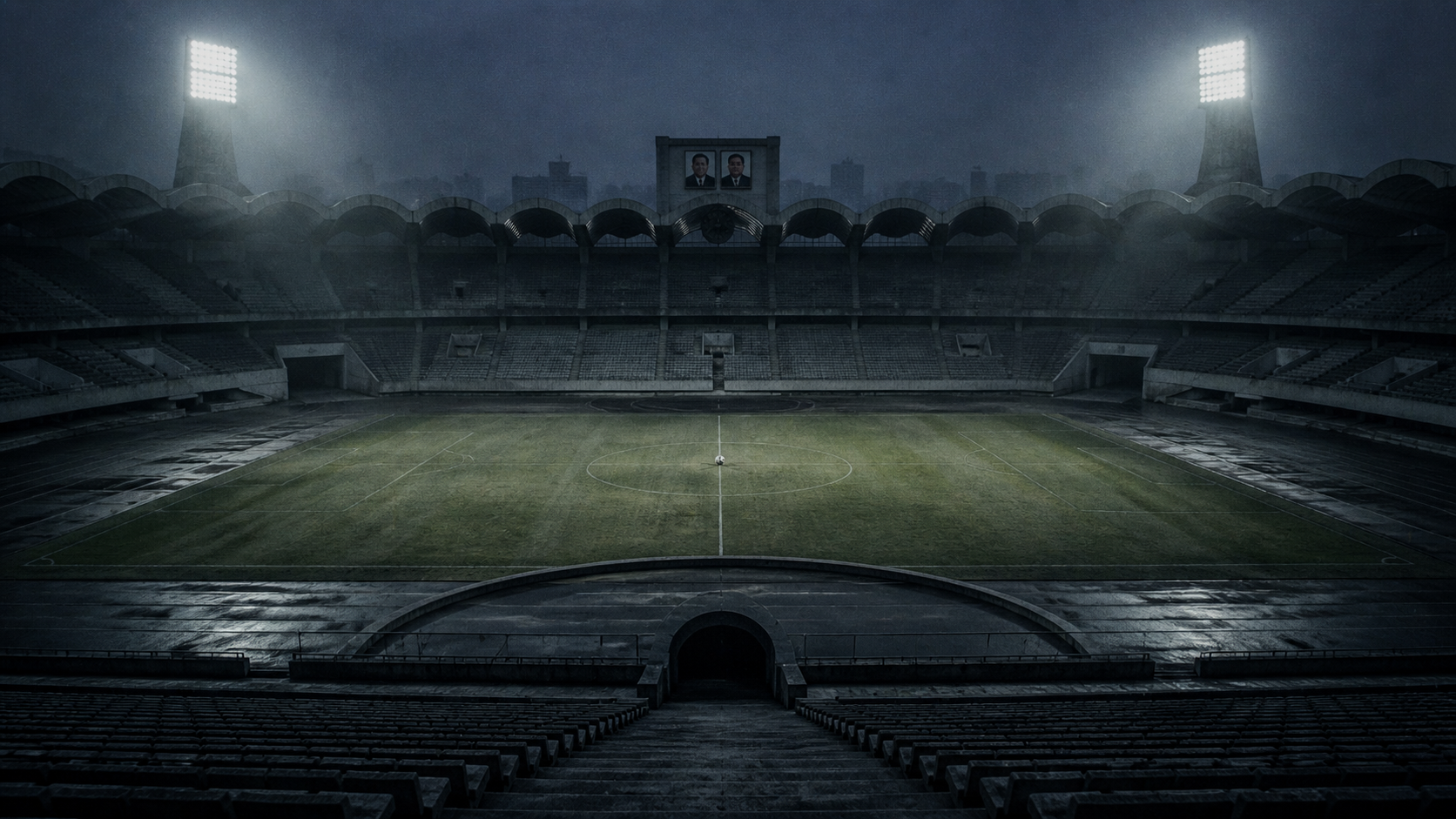
On October 15, 2019, twenty-two professional footballers entered Kim Il Sung Stadium in Pyongyang and played ninety minutes of competitive, FIFA-sanctioned football before a crowd of precisely zero. The stadium seats 50,000. Every seat was empty. No South Korean media were permitted entry; no supporters made the journey; South Korean players were required to surrender their personal smartphones at their nation’s embassy in Beijing before crossing into North Korean territory. A FIFA delegation—including president Gianni Infantino—witnessed the fixture from the stands. The result was 0-0. No footage of usable broadcast quality has ever been released to the public. This is not a clerical failure. This is a geopolitical act dressed in the administrative clothing of sports bureaucracy; and the distinction matters enormously.
The Cultural Anatomy: Pathology of a Closed System
To understand what happened in Pyongyang that October, one must resist the temptation to treat it as an anomaly—a rogue act by an eccentric regime producing an accidental gap in the documentary record. The blackout was not a dysfunction in North Korean sports administration. It was the predictable, calibrated output of a system architected, over seven decades, to treat visibility itself as a strategic threat.
The DPRK has long understood that images are not neutral objects. Foreign cameras do not merely record; they interpret. A crowd shot of a half-filled stadium becomes evidence of economic failure. A close-up of an athlete’s physical condition becomes ammunition in a foreign broadcaster’s editorial package. An unguarded locker-room conversation, captured on a player’s smartphone, becomes intelligence. From within this epistemology, the refusal to permit broadcast is not censorship in the Western liberal sense of the word—it is infrastructure maintenance; the routine enforcement of informational sovereignty.
The match existed within a specific geopolitical pressure system. Inter-Korean relations in late 2019 were at one of their characteristic nadirs—diplomatic contact between Seoul and Pyongyang was effectively frozen, and the architecture of the 2018 rapprochement had largely collapsed. Football, historically a surface on which the two Koreas have occasionally staged their anxieties in nominally civil format, became in this instance the site of maximum control. Pyongyang would host because FIFA’s qualification schedule demanded it; but Pyongyang would determine, absolutely, the terms of that hosting. The South Korean Football Association was informed there would be no live broadcast; no South Korean journalists; no supporters; no cheerleaders. Players were told to leave their devices at the embassy. The match would occur—but it would occur inside a sealed environment, engineered to produce no media residue of any kind that the regime had not pre-approved.
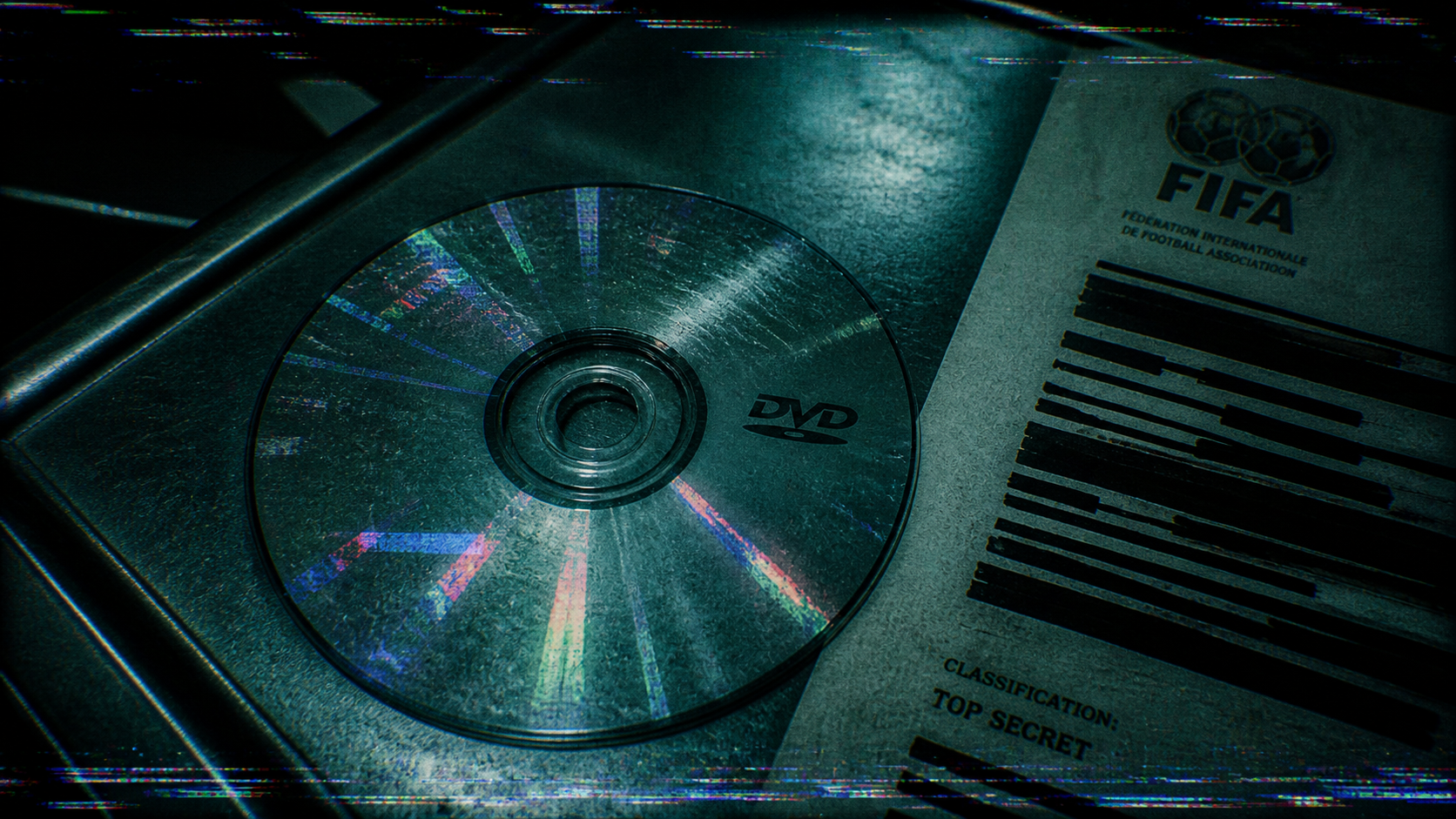
This is the cultural context one must hold while approaching the footage problem. North Korea was not technologically incapable of recording the match at broadcast quality in 2019. It chose not to provide such a recording—or, more precisely, it chose to provide one of such degraded quality as to be operationally useless. A DVD was eventually delivered to the South Korean delegation; the footage was standard-definition, unsuitable for broadcast. The delivery of an unusable artifact is a refined bureaucratic technique. It satisfies the formal obligation—here is your footage—while guaranteeing that no meaningful record enters the external media ecosystem. Compliance as redaction; the form of transparency without any of its substance.
Structural Dissection: The Anomalies in the Signal
What makes the Pyongyang blackout genuinely structurally strange—as distinct from merely politically predictable—is its temporal placement. Lost media, as a cultural category, has an implicit grammar: the absences are expected to be old. We expect them to be casualties of nitrate decomposition, institutional negligence, storage formats becoming obsolete before anyone thought to migrate them. A BBC broadcast from 1953 that no longer exists; a television pilot from 1968 recorded over to save the cost of new tape. These absences conform to the expected relationship between time and entropy. They are sad, sometimes frustrating, occasionally maddening; but they make structural sense.
The Pyongyang match violates this grammar entirely. It occurred in October 2019—an era of ambient, essentially involuntary documentation. In 2019, a protest in any major capital generates ten thousand concurrent streams. A regional club side in a lower division produces a highlight reel for social media within forty-five minutes of the final whistle. The infrastructure of documentation has become so pervasive that the absence of documentation now requires active, deliberate, sustained effort. You cannot accidentally fail to record a FIFA-sanctioned World Cup qualifier in 2019. The void is constructed; and constructed voids have architects.
This is the structural anomaly the lost-media community has correctly identified as uniquely disturbing. The normal model for lost footage posits passive loss—no agent chose for it to disappear; it simply did, through a combination of circumstance and entropy. The Pyongyang footage inverts this model completely. The active agent is not entropy but policy. The regime did not fail to preserve the footage; it succeeded in ensuring the footage would never exist in any form that could be used by anyone it had not authorized. The result is what one might accurately call a deliberate lacuna—a void with intentionality baked into its architecture; absence as a finished product.
Then there is the testimony of the players themselves—and this is where the structural analysis becomes genuinely unsettling on a human level. Multiple members of the South Korean squad described conditions that bore little resemblance to a standard international fixture. The physicality, by their accounts, was exceptional; extreme. The absence of witnessing—combined with the absence of broadcast consequence, of the camera as behavioral moderator—appears to have altered the strategic calculus of the home side in ways that standard international competition does not typically permit. When a match cannot be seen, certain forms of accountability dissolve with the signal. The players described it not as competition but as ordeal; less a football match than a controlled confrontation in an unwatched space.
Their testimony is, at present, the only primary-source record of what occurred on that pitch. And testimony, unverifiable against footage, occupies a different epistemic register entirely. It is evidence; it is not proof. The void produces its own evidentiary problems—problems that are, by design, irresolvable.
Psychological Necropsy: Why This Silence Disturbs the Western Mind
The Pyongyang match has attracted sustained and serious attention from the Western lost-media community—a demographic whose interests typically center on animated television programs, regional broadcast ephemera, and the pre-digital residue of the entertainment industry. Football is not their native territory. The attention, therefore, requires explanation; and the explanation reveals something precise about the geometry of this particular absence.
The genre sensibility most relevant here is what might be called isolation horror—the horror not of what is present but of what is structurally wrong with the surrounding environment. An enormous space, emptied of its expected population. A world-class athlete—performing the same physical act he performs before 75,000 people at a Premier League stadium on a Sunday afternoon—doing so instead in total, concrete silence, inside a nation-state that has architecturally removed him from any ordinary continuity with the world he came from. Son Heung-min, one of the most documented and photographed athletes in contemporary sport; a man whose movement through public space generates continuous media output; walking onto that pitch and disappearing—for ninety minutes—into a documented void. This is the specific uncanniness the case produces: not the horror of the unknown, but the horror of the known thing in the wrong context; the familiar human activity stripped of every frame that would ordinarily make it legible.
The genre of analog horror—a community-built aesthetic that treats corrupted media artifacts, degraded signals, and institutional redaction as horror objects—finds in the Pyongyang match a ready-made specimen of almost clinical perfection. The degraded DVD; the empty stadium; the suppressed broadcast; the players’ testimony of conditions that sound less like sport and more like controlled confrontation in an observed-but-unwitnessed space. These elements assemble, for anyone fluent in that genre’s grammar, into a precise horror syntax. They constitute what the community might recognize as a signal that was designed to know it was being suppressed.
What the Western mind finds most disturbing, ultimately, is not the North Korean authoritarianism—that is familiar, documented, taxonomized. What disturbs is the success of it. The void is complete. There is no leaked clip; no smuggled footage; no rogue satellite feed captured by an amateur dish somewhere near the border. The regime set out to produce ninety minutes of competitive football that would leave no usable trace in any external media ecosystem; and it succeeded, in 2019, with apparent ease.
The Evidence of Void: Physical Decay vs. Social Erasure
It is worth making a precise distinction between two mechanisms by which media is lost, because they produce fundamentally different psychological residues—and because the Pyongyang case belongs unambiguously to only one of them.
Physical decay is impersonal; it is time operating on matter. A nitrate film that combusts in storage is a chemical event. A magnetic tape that degrades past legibility is a story about entropy, about the irreversible arrow of physical processes, about the institutional failure to prioritize preservation over cost. These losses generate nostalgia, scholarly frustration, the melancholy of things not saved by people who did not yet understand their value. They are tragedies of omission; no one is guilty of anything more than ordinary human shortsightedness.
Social erasure is categorically different. Social erasure is political; it is a decision rendered into absence. The Pyongyang footage was not lost to physical decay—it was quarantined before it could exist in any usable form. The degraded DVD delivered to the South Korean delegation was not a technical failure; it was a carefully calibrated artifact, produced with deliberate insufficiency. And when North Korea formally withdrew from the 2022 World Cup qualification process in April 2021—citing COVID-19 concerns—FIFA responded by wiping all DPRK results from the group standings. The match moved, administratively, from the category of lost media into the category of non-existent event. Officially, in the group table, it did not happen. The administrative record has been aligned with the media record: both now describe an event that cannot be examined, because the event—as far as institutional memory is structured to address—no longer exists as an object of inquiry.
This is the layered quality of the erasure that makes it so resistant to the normal tools of archival recovery. Lost television programs can, in principle, be found—in a collector’s attic, in a foreign broadcaster’s archive, on a tape someone forgot to degauss before reuse. The Pyongyang match cannot be found through archival diligence, because its absence was designed to be complete. It is not misplaced; it is placed in absence—an action with an agent, a motive, and a functioning institutional apparatus.
The Point of No Return: Digital Memory and the Architecture of Forgetting
The final and most uncomfortable insight the Pyongyang case produces is not, in the end, about North Korea. It is about an assumption—perhaps the central assumption of the digital age—that proliferation of recording devices and networked infrastructure has made erasure structurally impossible. It is a belief that events now leave indestructible traces simply by occurring in a world saturated with cameras. The 2019 qualifier is a controlled experiment that falsifies this assumption cleanly and without ambiguity. This saturation has become the default archive of human experience.
A state with sufficient political will and territorial sovereignty can, even in October 2019, produce a ninety-minute vacuum—a complete, durable, institutionally-reinforced absence in the otherwise continuous documentary record of the digital era. The preconditions are not exotic: control of the physical space; control of who enters it; control of what devices those people carry; control of what leaves afterward. These are not advanced capabilities. They are the basic instruments of sovereignty, applied with consistency and without sentimentality about the norms of international sport.
The case functions, in this sense, as what one might call a Heisen-match: the act that would have produced documentation—the broadcast infrastructure, the cameras, the press corps—was identical to the act the host nation was committed to preventing. Observation and preservation were the same operation; and both were blocked at the border, before they could begin. The result is an event that exists in player testimony and in the administrative ghost of a qualification table—and nowhere else. It has the evidential structure of a widely-attested rumor: many witnesses, no verifiable record; permanent resistance to the standard tools of factual resolution.
What the lost-media community senses, perhaps more acutely than it can fully articulate, is this: the Pyongyang match is a proof of concept. It demonstrates that the digital saturation of contemporary life—the ambient assumption that everything is, somewhere, being recorded—is a condition that depends entirely on the cooperation of the spaces through which events move. Remove that cooperation; enforce informational sovereignty with sufficient thoroughness; and the digital age is no more immune to deliberate amnesia than the analog era was to accidental decay. The critical difference is that deliberate amnesia requires no accident, no negligence, no technical failure. It requires only will—and the institutional power to enforce it before the signal escapes.
The stadium sat empty. The cameras were absent by design. The DVD was useless by design. The FIFA table now contains a blank where a result once briefly appeared. And what remains is exactly what the regime intended: nothing usable, nothing verifiable, nothing that can be seen. The match happened—twenty-two players and a referee are witnesses to that narrow fact. But in every meaningful archival sense, the 2019 Pyongyang qualifier did not occur. It was not lost.
It was unproduced.
That is a significantly more disturbing category than anything entropy has ever managed on its own.
🔍Search Update: Call to Action
The 3AM Archive is currently monitoring South Korean private auction circuits for any non-official “shaky cam” footage potentially recorded by FIFA delegates or AFC staff present at the Kim Il-sung Stadium. To date, the only existing visual evidence remains the low-resolution 2-minute highlight reel released by the AFC.
Do you have leads on the “Ghost Derby” DVD or primary source testimony? Join the investigation on our community discord or the Lost Media Wiki (LMW) discussion board. This void remains open.
Archival note: North Korea withdrew from 2022 World Cup qualification in April 2021. FIFA nullified all Group H results involving the DPRK. The 0-0 result no longer appears in official standings. Primary sources: South Korean Football Association statements; FIFA Group H qualification records; player accounts reported in South Korean and international sports press, October–November 2019. No broadcast footage has been verified as existing in any public or private archive.
This document is an investigative archival reconstruction based on fragmented public records, media remnants, community accounts, and verified historical sources compiled by The 3AM Archive.
The article examines how incidents, forgotten media, internet folklore, and unresolved public memories evolve through cultural preservation and digital decay.
This is a cultural investigation document — not fictional horror content.
All visual materials used in this post are exclusive AI-generated assets created for The 3AM Archive.
