Certain cold cases defy standard criminal tracking. The 1962 Cho Du-hyung abduction is the definitive record of South Korea’s military junta being outmaneuvered by an anonymous actor using public mailboxes. The Cho Du-hyung abduction of 1962 belongs to this category. It is the record of an authoritarian state, at the height of its surveillance ambition, being made to look entirely helpless by a single anonymous actor operating through public mailboxes and an unlit stretch of railway corridor. The child was never found. The perpetrator was never named. What remained, in the decades after the statute expired, was something stranger than an unsolved crime: a cultural wound that the nation’s institutions appeared to process not through justice, but through music.
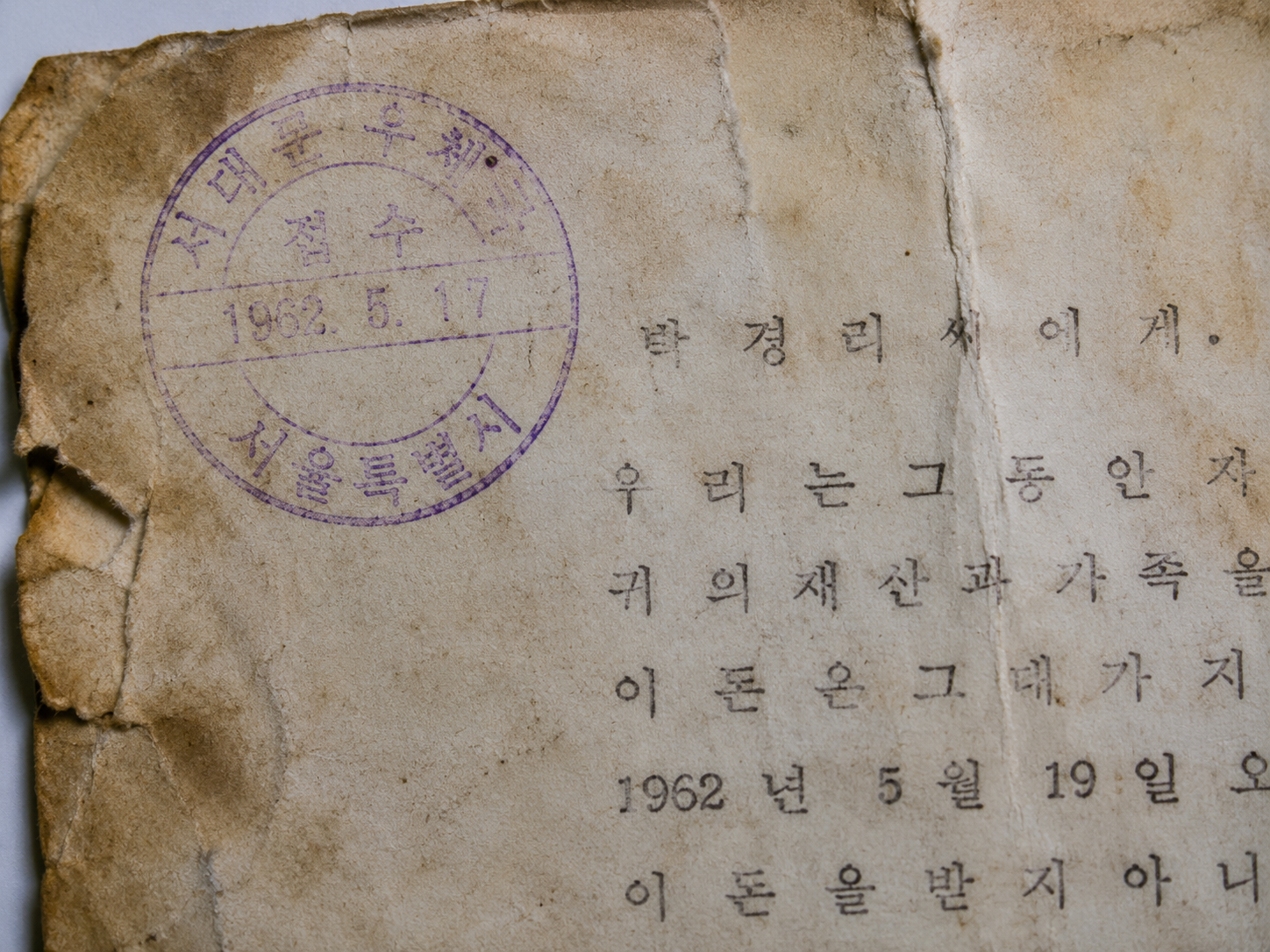
This briefing traces the intersection of that crime with mid-century communication networks, state propaganda, and modern digital folklore. The evidence is not a body. The evidence is a vinyl single, a numbered telegraph pole, and the ghost of a ransom letter bearing the stamp of the Seodaemun Post Office.
Historical Anatomy
By September 1962, General Park Chung-hee’s military junta had established absolute administrative control over Seoul. His administration operated on the premise that total institutional visibility equaled total social control. Citizens were tracked, communications were monitored, and the apparatus of the state extended into the infrastructure of daily life—the postal service, the railway network, the power grid—as instruments of both governance and surveillance.
Into this environment, on September 10, 1962, at approximately 09:00 KST, a four-year-old boy named Cho Du-hyung vanished from a playground in Gongdeok-dong, Mapo-gu. He was the only son across two generations of a wealthy entrepreneurial family—making the boy a high-value target for ransom exploitation. The loss of the child, therefore, was not processed as a private tragedy. It immediately became a public crisis.
The first ransom letter arrived three days after the disappearance, bearing the stamp of the Seodaemun Post Office. One hundred thousand won was demanded—a sum calibrated to the family’s means, and equivalent by contemporary GDP-adjusted metrics to somewhere north of half a million USD. The letters continued to arrive through the state postal infrastructure; at least eight in total, the demands escalating from 100,000 to 200,000 won across successive communications.
What followed was a mobilization that remains, by any historical standard, extraordinary. The Ministry of Internal Affairs, the Ministry of Communications, the Ministry of Education, the Ministry of Transportation, and Korea Electric Power were each formally engaged. Postal workers distributed physical flyers. Train passengers were recruited as informants. General Park Chung-hee himself issued a prime-time public address—an act of remarkable political exposure for a leader whose authority depended on the projection of absolute competence—promising extreme legal leniency if the child was returned safely.
The state, in other words, had publicly committed its credibility to resolving a single abduction. And it failed.
Structural Dissection of the Record
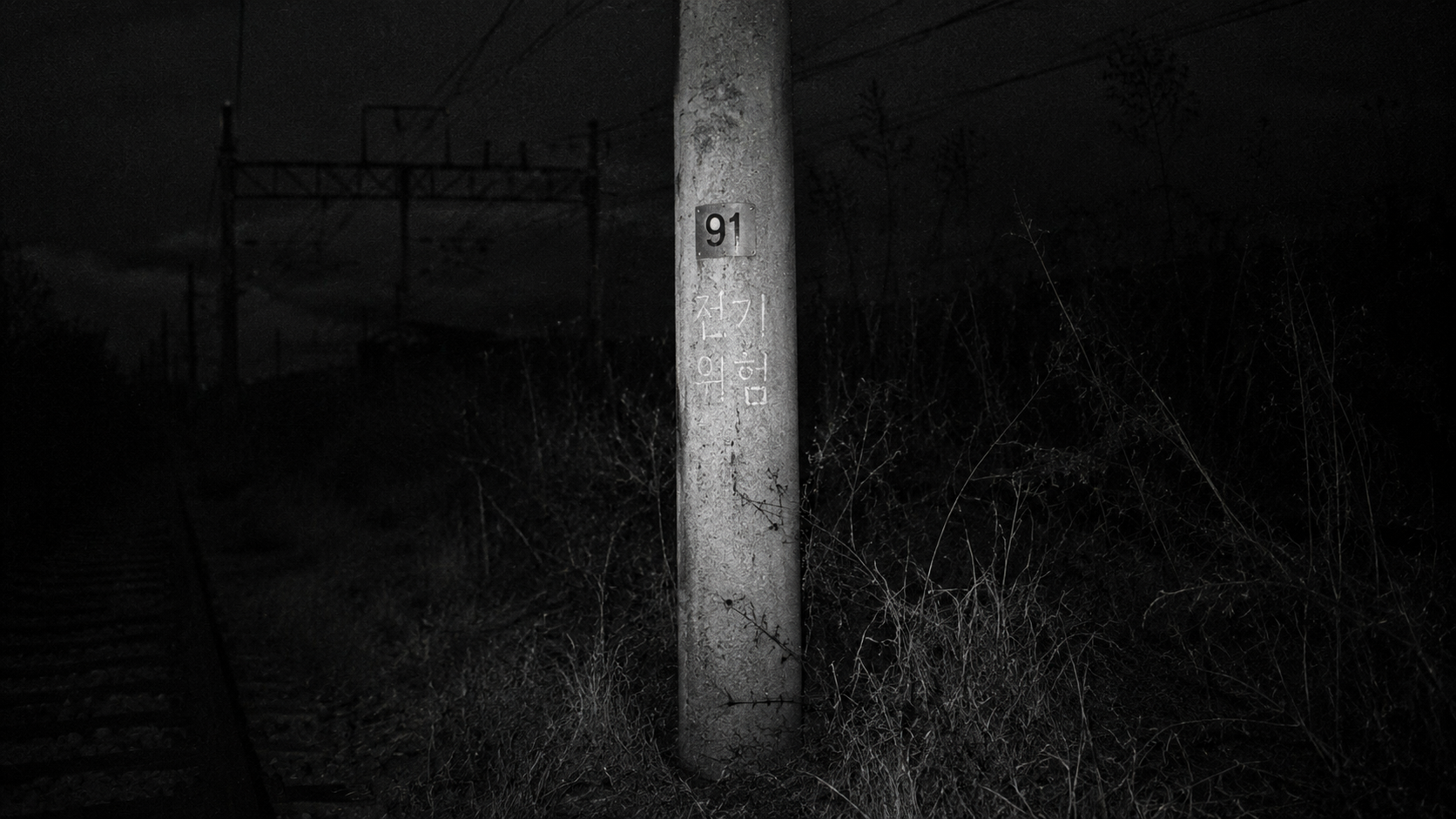
The sixth ransom letter contained a geographic instruction of unusual specificity: the ransom money was to be wrapped in a blanket, buried in the dirt beneath Telegraph Pole No. 91, along the railroad tracks of Jangwi-dong, Seongbuk-gu. This level of spatial precision—not “near the railway” but at a numbered infrastructure node along an isolated corridor—suggests a perpetrator who had conducted methodical reconnaissance. The drop point was not chosen for drama; it was chosen for its structural invisibility. An unlit stretch of track, a utility pole without civilian context, a geographic coordinate that exists in the administrative record but not in the social imagination.
Police executed a response. Declassified local police files from this phase reveal a major tactical contradiction.
Reports from the period contain internal contradictions regarding whether the ransom payment delivered to the final drop point consisted of genuine currency or counterfeit bills introduced by the investigative team. This is not a minor procedural discrepancy. If the money was fake—a standard law-enforcement gambit—then the perpetrator’s subsequent behavior becomes psychologically significant. The child was not returned. The promised handoff, reportedly scheduled for approximately ten minutes after the drop, never materialized. If the kidnapper had fled with counterfeit currency, only to discover the deception after the critical window had passed, the consequences of that discovery for the child become a point of pure and unresolvable speculation.
This ambiguity has never been officially resolved. The archival record does not close the loop; it simply stops.
What followed the failed drop was not a reckoning but a cultural response of a particular kind. In 1963, Asia Records released a vinyl single titled “Give Me Back Du-hyung”—recorded by Lee Mi-ja, one of the most prominent popular vocalists of the era. The song was broadcast on mainstream radio. It was not a memorial; memorials come after resolution. This was a record pressed while the case remained open, while the family’s grief was legally and emotionally ongoing, and while the perpetrator remained free.
Asia Records finalized production of the vinyl within eight months of the abduction, integrating an active kidnapping directly into mainstream commercial broadcasting. But the specific configuration here—a military dictatorship’s flagship infrastructure failure converted into a pop record, aired over state-adjacent radio, received by a public that had no resolution to attach it to—produces a cultural object of considerable strangeness. Lee Mi-ja’s voice became, for the duration of those radio broadcasts, the auditory presence of unresolved state failure. Grief commercialized not as closure but as ambient national condition.
Psychological Necropsy
The international online fascination with the case focuses entirely on three raw data points.
The answer is structural rather than sentimental. The Cho Du-hyung case presents a configuration that Western media mythology has trained its audiences to expect will resolve: the authoritarian state, the wealthy victim family, the escalating ransom communications, the dramatic public address by a military leader. These are the architectonic elements of a case that, within the grammar of true-crime narrative, should have a perpetrator, a conviction, and a closing chapter.
Instead, there is a telegraph pole. A numbered piece of infrastructure in an unlit railway corridor—specific enough to locate, anonymous enough to disappear from—that stands as the case’s single most concrete geographic fact. The child was taken from a playground; the perpetrator was tracked to a pole; and then the record ends. No arrest. No remains. No name attached to the crime.
In September 2014, the case file reopened briefly following a public claim of identity. A man placed nationwide advertisements claiming to be the adult Cho Du-hyung, recovered and alive. DNA testing, conducted and broadcast on SBS’s Curious Stories Y, returned a negative result. SBS media investigations later confirmed the man was experiencing a severe identity delusion triggered by financial ruin during the 1997 IMF crisis.
For Western audiences versed in the mythology of cold cases and recovered identity, this inversion is disorienting. The expected narrative has the lost person returning. Here, a stranger tried to return as the lost person and failed the biological test. The vacancy remained intact. The archive absorbed the attempt and closed again.
The Evidence of Erasure
The case faded for reasons that are both institutional and structural. The statute of limitations expired on September 10, 1977—exactly fifteen years after the disappearance, on the same calendar date, a coincidence the record does not editorialize. From that point, the file could not be reopened for prosecution regardless of new evidence. The legal infrastructure for accountability had expired; what remained was a historical notation without judicial consequence.
Physical decay operated in parallel. The ransom letters, if preserved at all, exist in institutional archives inaccessible to public researchers. The vinyl single is a collector’s artifact—present in catalogues, absent from ordinary circulation. Telegraph Pole No. 91 in Jangwi-dong, assuming it still stands, is an unmarked piece of public infrastructure with no commemorative function. The geography of the crime has been overwritten by sixty years of urban development in one of the world’s most rapidly transformed cities.
Social suppression operated through omission rather than active censorship. The Park Chung-hee administration’s failure to resolve the case was not a narrative the state had any incentive to amplify. The case was not classified; it was simply not discussed in terms that would invite analysis of institutional failure. The commercial record—Lee Mi-ja’s single—redirected the emotional content of the case into a medium that was consumable without being critical. You could feel something about Cho Du-hyung while listening to the song without being required to ask why the state’s full mobilization had produced nothing.
On international message boards and true-crime spaces, the incident has been recontextualized as a digital puzzle. Contemporary online discussions—primarily in Korean-language communities, with fragmentary penetration into English-language true-crime and analog horror spaces—have fixed on three elements: the counterfeit ransom paradox, the Telegraph Pole 91 geographic node, and the 2014 identity delusion. These three elements translate cleanly into the aesthetics of ARG investigation, liminal horror, and found-footage archaeology. They are the case’s highest-contrast features, stripped of historical context and reassembled as a puzzle that invites participation without requiring resolution.
The Point of No Return
The digital archive is not a neutral repository. It is a selection mechanism, retaining what can be searched and surfacing what attracts engagement. It functions by allowing everything else to compost into the default archive of human experience. The Cho Du-hyung case survives in digital memory not because it is the most important Korean cold case of the twentieth century but because its surviving elements are formatted for the internet’s current appetites. A numbered pole. A forged identity. A vinyl record pressed during an active abduction.
What the digital record cannot preserve is the specific weight of the original moment: a city in which the military government’s radio addresses and a grieving mother’s voice on a commercial single occupied the same auditory bandwidth, and in which millions of citizens processed both as continuous conditions of daily life rather than discrete events. That texture—the simultaneity of authoritarian address and commercialized grief, experienced in real time without the retrospective clarity that historical distance provides—is precisely what the archive loses.
The case did not become mythology because it was forgotten. It became mythology because what was remembered was selectively legible. Telegraph Pole No. 91 survives as an image because it is specific and eerie; the Ministry of Transportation’s deployment of train passengers as an informant network survives as a footnote because it is bureaucratic and requires context. The archive performs its own editorial function, and the result is a case that has been optimized, across sixty years of partial transmission, for maximum unresolvability.
Cho Du-hyung was four years old in September 1962. The statute expired in 1977. The DNA test closed in 2014. The pole, presumably, still stands.
The official case files remain permanently sealed, leaving the fate of the victim and the identity of the sender unrecovered.
🔍Search Update: Call to Action
The 3AM Archive is actively tracking surviving artifacts related to the 1962 Cho Du-hyung case. If you have access to digital transfers of the 1963 Asia Records vinyl pressing of “Give Me Back Du-hyung” (두형이를 돌려줘요), or unredacted archival scans of the Mapo Police Department’s 1962 communication logs, please contact our research desk or contribute directly to our community directory.
This document is an investigative archival reconstruction based on fragmented public records, media remnants, community accounts, and verified historical sources compiled by The 3AM Archive.
The article examines how incidents, forgotten media, internet folklore, and unresolved public memories evolve through cultural preservation and digital decay.
This is a cultural investigation document — not fictional horror content.
All visual materials used in this post are exclusive AI-generated assets created for The 3AM Archive.
