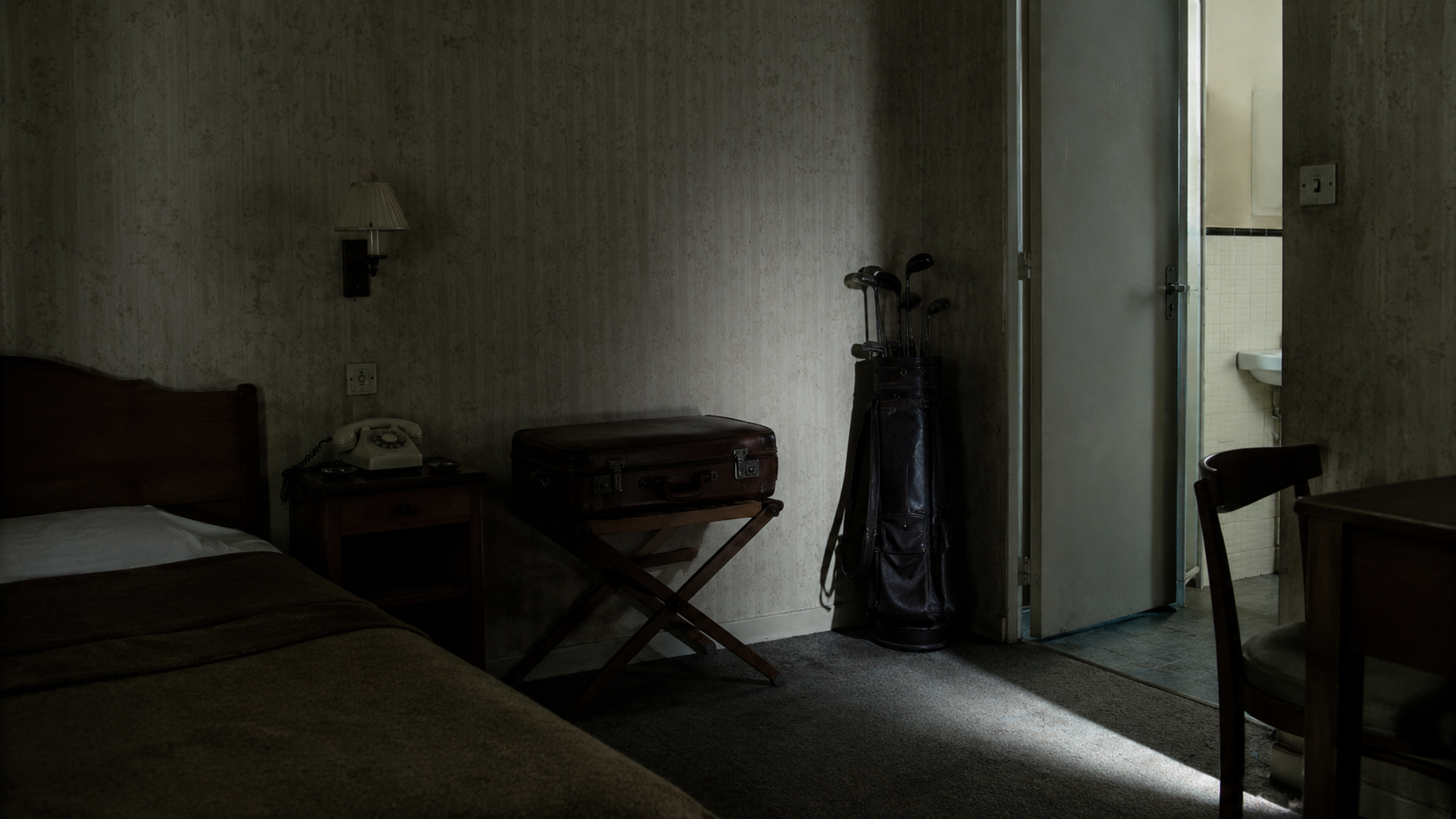
On the morning of October 12, 1979, staff at a mid-range Paris hotel knocked on the door of a room reserved under an unremarkable name. No answer. The door opened to a room perfectly preserved—bed made, curtains drawn back at a measured angle, the ambient geometry of a space simply paused mid-use. A medium-sized brown leather suitcase sat on the luggage rack. A complete set of golf clubs leaned against the wall. The man who owned them, Kim Hyung-wook—former Director of the Korean Central Intelligence Agency, architect of one of the most sophisticated surveillance apparatuses in postwar Asia, and the single most dangerous witness alive to the inner mechanics of an authoritarian regime—was gone. Not checked out. Gone.
The hotel staff called the French police. The French police opened a file. And there, for practical purposes, the official trail ends—not because it ran dry, but because nineteen days later, the governmental architecture that had ordered Kim’s elimination was itself violently dismantled in a back room of a Seoul dinner party.
What remained was a void. And into that void, over the next four and a half decades, poured something far stranger than any intelligence assessment: the unregulated mythology of a public memory that had been administratively orphaned before it could be completed.
Historical Anatomy
To understand what happened to Kim Hyung-wook in Paris in October 1979, one must first understand the institutional organism he had spent sixteen years building—and then betrayed.
The KCIA, established in 1961 under Park Chung-hee’s military government, was not simply a spy agency. It was the nervous system of a state that had decided transparency was a luxury it could not afford. Kim served as its director from 1963 to 1969, during which time the agency developed the full suite of tools that authoritarian security states employ: mass surveillance, strategic torture, covert operations abroad, and the systematic management of domestic dissent. He was, within the operational logic of the Park government, essential. He knew everything—operational protocols, source networks, foreign bribery schemes, the names and prices of the regime’s purchased loyalties in foreign capitals.
When Kim defected to the United States in 1973, the regime did not panic openly. It had time to recalibrate. But when he appeared before the Fraser Committee of the U.S. House of Representatives in 1977, testifying in clinical detail about “Koreagate”—a systematic campaign to purchase influence within the United States Congress using KCIA-directed funds—the situation became geometrically more dangerous. Kim was no longer simply a defector. He was a primary source in an active congressional investigation into a foreign government’s infiltration of American democratic institutions. He had transformed from an embarrassment into an existential threat.
By the autumn of 1979, Park’s government was already fracturing internally. Street protests against the regime had intensified. The KCIA director at the time, Kim Jae-gyu, was in open personal conflict with the presidential security chief. The political atmosphere was pressurized and increasingly irrational—exactly the kind of environment in which a regime decides that the simplest solution to a complex problem is a drastic, irreversible one.
Kim Hyung-wook was in Paris. He had checked into his first hotel on October 1 and transferred to a second on October 7, leaving his luggage there with a casual assurance that he would return by the twelfth. That morning, he went to a nearby casino. He played cards until evening. He was seen leaving. He was never seen again.
Structural Dissection of the Record
The 2005 report of the National Intelligence Service Truth Commission provides what is officially designated as the resolution of this case. According to its findings, KCIA Director Kim Jae-gyu authorized the operation; Paris station chief Lee Sang-yeol coordinated it; two Eastern European mercenaries, compensated with $100,000, shot Kim seven times with a silenced Soviet pistol in a forest outside Paris; and the body was buried under a layer of autumn leaves.
This is a tidy narrative. Its tidiness is the first forensic problem.
The Commission’s own documentation acknowledges that the field operatives “lost” the murder weapon at the scene and were unable to recall the geographic location of the forest with sufficient precision for investigators to conduct a targeted search. French police spent four months conducting forensic sweeps. No skeletal remains, no physical evidence, no weapon was ever recovered. The forest, if it exists as described, remains anonymous.
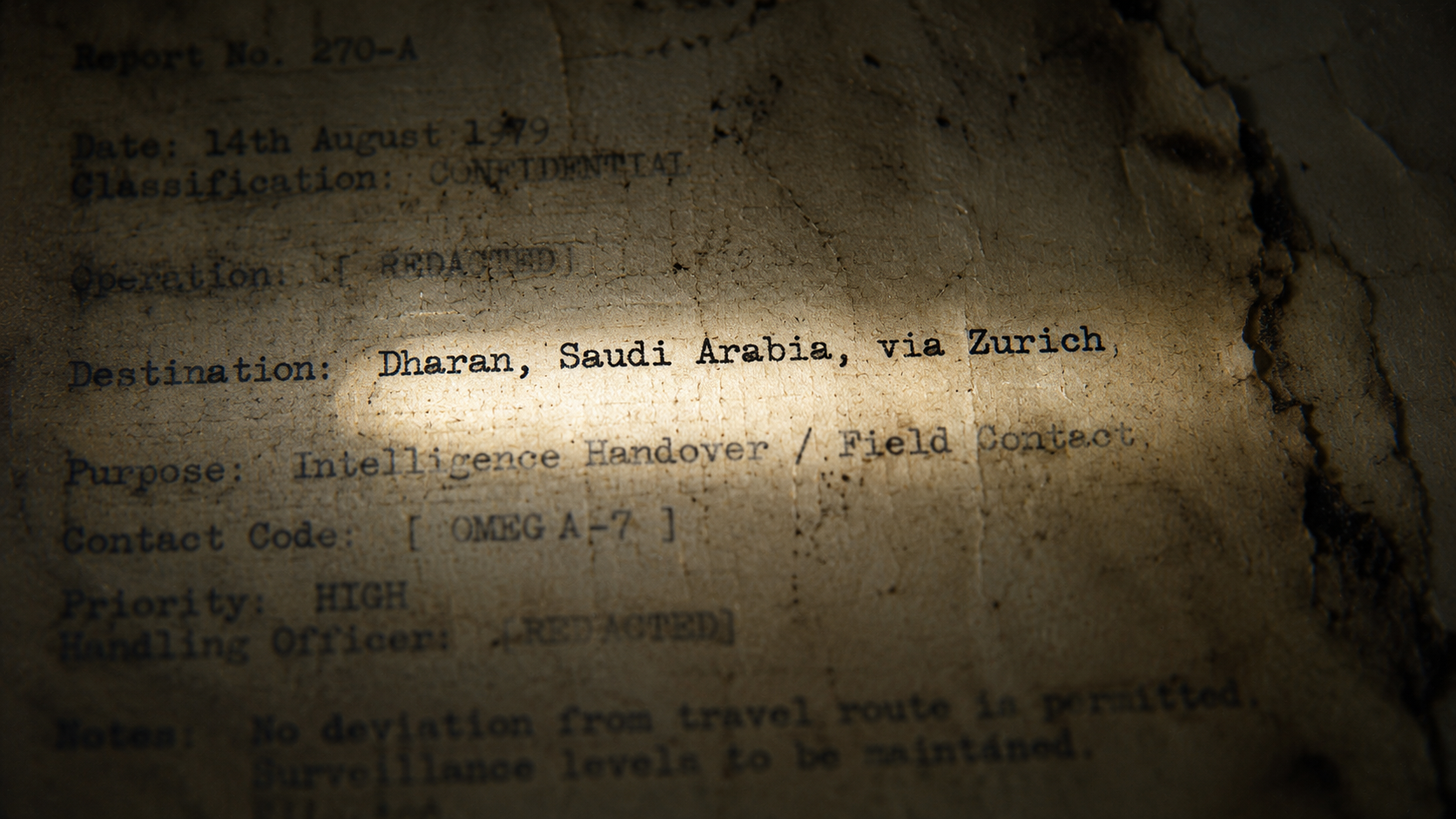
The second fracture appears in a declassified U.S. State Department intelligence cable. Summarized in a weekly briefing, it asserts with what the document characterizes as high confidence that Kim was tracked boarding a commercial flight out of Paris on October 9—two days after the official NIS timeline places him dead in French woodland. The flight’s listed destination: Dharan, Saudi Arabia, via Zurich. His companion on the manifest: an unidentified Korean male.
These two accounts cannot both be accurate. Either Kim was executed on or before October 7 and the American intelligence cable represents a catastrophic misidentification, or the State Department cable reflects genuine tracking of a living man—which means the NIS 2005 resolution is, at minimum, incomplete, and possibly constructed.
The third anomaly is arguably the most structurally revealing. Lee Sang-yeol, the Paris KCIA station chief whom the NIS report identifies as the operational coordinator of Kim’s assassination, was not removed, prosecuted, or even visibly sidelined when General Chun Doo-hwan’s military faction seized power in the wake of Park’s assassination. He was not treated as a liability by the incoming regime; he was absorbed. He was promoted. He ascended. In intelligence community terminology, an operative who survives a regime change while holding maximum-sensitivity secrets does so through one mechanism: mutual assured complicity. The new administration knew what Lee knew. Lee remained useful precisely because the secret was too dangerous to expose—and too dangerous to eliminate.
What this suggests, architecturally, is that the 2005 NIS disclosure was not a full accounting. It was a managed release—sufficient to provide a plausible institutional explanation while protecting the specific network of individuals who had constructed it.
Psychological Necropsy
The Western imagination is conditioned by a particular expectation of evidence. In the legal and cultural frameworks that govern how English-speaking audiences process unresolved events, a death requires a body. An investigation requires a conclusion. A conclusion requires documentation that can be independently verified. This framework has profound difficulty processing cases in which the bureaucratic apparatus that generated the evidence also controls access to it—and then self-destructs before any external audit can occur.
Kim’s disappearance fails every Western evidentiary standard, not through an absence of documentation, but through its deliberate corruption. The archive exists; it is simply controlled by the entity with the greatest interest in its inaccessibility. This is fundamentally destabilizing to an audience accustomed to FOIA requests, declassification timelines, and the forensic accountability of democratic institutions.
There is also the matter of the casino—a detail so cinematically precise that it reads as constructed. The former director of a feared intelligence agency, a man who had testified before the United States Congress about covert governmental corruption, spending his last confirmed afternoon playing card games in a Parisian casino. The domesticity of this final image—a man at a table with cards, visible through glass, surrounded by other gamblers, alive in the most ordinarily social sense—and the total silence that follows it creates an abruptness so clean that it resembles an edit rather than an event. He was there. Then he was not. The frame simply cuts.
The golf clubs compound this effect considerably. A set of golf clubs is a statement of continuity; it is luggage that announces a future, that says I will need these again. Alongside the suitcase—a medium-sized, brown leather case, a detail preserved in the record with the specificity of an evidence tag—they transform the hotel room into a diorama of interrupted normalcy. This is the aesthetic core of what the internet would later classify as liminal horror: the residue of a human presence from which the human has been surgically removed, leaving only the consumer goods behind.
The Evidence of Erasure
The October 26, 1979 assassination of Park Chung-hee by his own KCIA director did not merely create a political crisis. It created a specific type of informational catastrophe—what might be termed administrative orphaning, in which an active investigation is severed from the institutional authority required to sustain it.
The French investigation into Kim’s disappearance had no closure mechanism after October 26. Its Korean interlocutors were either dead, imprisoned, or engaged in the violent reorganization of a state. The KCIA itself was in internal chaos; its director had just shot the president at a private dinner. No one with the institutional standing to continue coordinating with French authorities had the capacity—or the incentive—to do so. The file did not close. It simply ceased to receive input.
This is how archives die in practice. Not through deliberate burning; through abandonment. Information requires maintenance; it requires institutions that have reasons to preserve it, retrieve it, and act on it. When those institutions collapse or reorient, the information does not vanish—it calcifies. It becomes inaccessible not through active suppression but through the simple atrophy of institutional interest.
The internet mythology that developed in the absence of a physical body is, in this context, entirely predictable as a social phenomenon. Two narratives dominate the digital landscape: the “chicken feed mill” account, in which Kim was allegedly processed alive through an industrial hammer-mill on a poultry farm outside Paris—his remains distributed into livestock feed—and the “hydraulic compactor” variant, in which he was allegedly transported in a diplomatic cargo crate to Seoul, forced to kneel before President Park, and subsequently crushed inside a salvage-yard vehicle compactor. Both myths have been investigated and discredited; the industrial equipment described did not exist in the relevant regions at the relevant time; the logistics are operationally absurd.
They persist nonetheless. And their persistence is the more important data point. Both myths share a structural logic: they provide a body. Not a buried body, not a retrievable body, not a body that could theoretically be exhumed and identified—but a body that has been so thoroughly annihilated by industrial process that its absence from the archive is itself the evidence. The machinery completes the deletion. In this sense, the myths are not failures of reasoning; they are psychological solutions to a genuinely intolerable evidentiary gap. Collective anxiety does not tolerate a blank space where a corpse should be. It fills that space with the most extreme mechanical explanation available—one that renders the absence permanent, explained, and therefore, in some crooked sense, resolved.
The Point of No Return
The 2005 NIS Truth Commission report is not, in the final analysis, a disclosure. It is a monument to a specific kind of institutional management—the controlled release of enough information to provide a plausible framework while preserving the deeper architecture of the secret intact.
The admitted amnesia about the weapon and the forest location is not a bureaucratic embarrassment. It is a structural signal. In intelligence community operations, the forgetting of operationally critical geographic coordinates by trained field agents does not occur accidentally. It occurs when the operatives have been specifically instructed not to remember—when the value of the information to investigators is exactly proportional to the risk it represents to those who hold it. The forest’s location is not lost. It is withheld by being performed as lost. This is a meaningful distinction; one the Commission’s framing systematically obscures.
What the case of Kim Hyung-wook ultimately demonstrates is the specific vulnerability of Cold War-era state violence to the conditions of its own era. In a world of analog records, diplomatic cables, and handwritten case files maintained within institutions that could—and did—collapse overnight, the documentary record of a politically inconvenient event could be made to simply stop. Not erased; stopped. Petrified mid-process. The French police file exists somewhere. The State Department cables exist in declassified form. The NIS report exists in sanitized form. And none of them connect to the others in any way that produces a coherent account.
This is the particular horror that 2000s internet archaeology could not fully metabolize—and that subsequent generations have attempted to resolve through industrial mythology. The archive is not empty. It is fractured across three national jurisdictions, two collapsed regimes, a set of deliberately amnesiac operative testimonies, and a U.S. intelligence assessment that places a dead man on a commercial flight to Saudi Arabia two days after his official execution.
The internet has become the default archive of human experience. Within this ecosystem, the concept of absolute digital permanence has altered our relationship with unresolved history. Gaps in the record are no longer viewed as natural byproducts of time; instead, they are treated as structural anomalies that demand a solution.
The brown leather suitcase and the golf clubs are still there, in a sense—preserved in the record, warming under the autumn light of a Paris hotel room that no longer exists, waiting for a checkout that will never come. The man who left them there is either buried under leaves in an anonymous forest outside a city that never found him, or he is on a commercial flight to Dharan, accompanied by an unidentified Korean male, departing on a schedule that no official account will acknowledge.
Both cannot be true. Both remain, structurally, unresolved.
The archive does not know which. And the archive—fragmented, politically orphaned, domesticated into myth—is all that remains.
🔍Search Update: Call to Action
The 3AM Archive has flagged the Kim Hyung-wook case file as a priority “Archival Blind Spot.” Because this incident occurred at the absolute transition point between analog journalism and early state data preservation, several foundational primary records remain entirely missing from online public view.
Our digital archeology team is actively seeking leads, foreign correspondence, or scans regarding the following unindexed materials:
-
The French Police Dossier (1979): The original, unredacted missing persons file opened by the Paris police on October 12, 1979.
-
The Leaked French Telegrams: The specific diplomatic telex exchanges between the French Ministry of Foreign Affairs and the South Korean embassy during the immediate fallout of the 10.26 assassination.
-
The Manifest of the Flight to Dharan: Unredacted passenger records or logistics logs from the October 9, 1979 commercial flight out of Paris via Zurich, which could verify the identity of the “unidentified Korean male.”
If you are a European researcher with access to municipal police microfilms, or an archival sleuth holding copies of declassified Western intelligence cables from this week in 1979, do not let this file remain calcified. Contact the 3AM Archive desk or submit your materials to our secure drop. The grid must be completed.
This document is an investigative archival reconstruction based on fragmented public records, media remnants, community accounts, and verified historical sources compiled by The 3AM Archive.
The article examines how incidents, forgotten media, internet folklore, and unresolved public memories evolve through cultural preservation and digital decay.
This is a cultural investigation document — not fictional horror content.
All visual materials used in this post are exclusive AI-generated assets created for The 3AM Archive.
